Stretching programs for desk workers are planned movement routines that aim to make everyday reaching, turning, and standing more comfortable. Your program needs to fit between meetings, work without a gym, and leave room for walking and strength training—not become another task you avoid.
- Stretching programs for desk workers should combine short movement breaks with a repeatable mobility routine.
- Pliability suits desk workers who want daily video-guided mobility instead of planning every session themselves.
- Start with comfortable movements for your shoulders, upper back, hips, and ankles; never force range.
- Judge your routine by consistency and everyday movement, not by how intense a stretch feels.
Why stretching matters for desk workers
Desk work asks you to repeat a narrow set of positions: looking at a screen, reaching toward a keyboard, and sitting with bent hips and knees. A useful stretching program gives you opportunities to move beyond those positions without turning your workday into a workout.
Your next position matters more than finding one position to hold all day. Use stretching alongside changes in posture, short walks, and regular exercise. A stretch break does not replace those habits.
For your 2026 plan, start with a routine you can repeat in your actual workspace. The mobility apps for beginners guide is a useful next read if you want help choosing a guided format rather than assembling exercises yourself.
The desk-worker constraint is practical: you need movements that suit your clothes, floor space, and schedule. Separate discreet workday movements from longer sessions that need a mat or a change of position.
How to build your desk-worker stretching program
1. Identify the movements you want back
Start without an app or equipment. Stand up, walk around, and notice which ordinary movements feel restricted. Can you turn to look behind you comfortably? Can you reach overhead without forcing your lower back into an arch?
These observations are not a diagnosis or a flexibility competition. They give your program a purpose beyond completing a random collection of stretches. Choose movements you actually use: checking behind you while driving, reaching a shelf, or standing after a meeting.
Write down what feels stiff and what feels painful. Keep those categories separate. Do not use a stretching routine to push through sharp pain, tingling, numbness, or symptoms that travel down an arm or leg; seek medical advice instead.
Use the same comfortable movements when you check progress later. Changing the test every session makes comparison less useful.
- Note whether reaching overhead feels comfortable.
- Turn your head gently in each direction without pulling it.
- Check how standing up from your chair feels.
- Try a supported ankle movement with your heel grounded.
- Choose one everyday movement as your main reference.
2. Build a short routine you can do at work
Use a simple desk break before choosing a longer program. As a starting template, set aside 3 minutes for comfortable movement. That is a scheduling choice, not a required dose or a promise of results.
Clear enough space to stand safely. If your chair rolls, do not rely on it for balance. Keep each movement slow enough that you can stop without momentum carrying you farther.
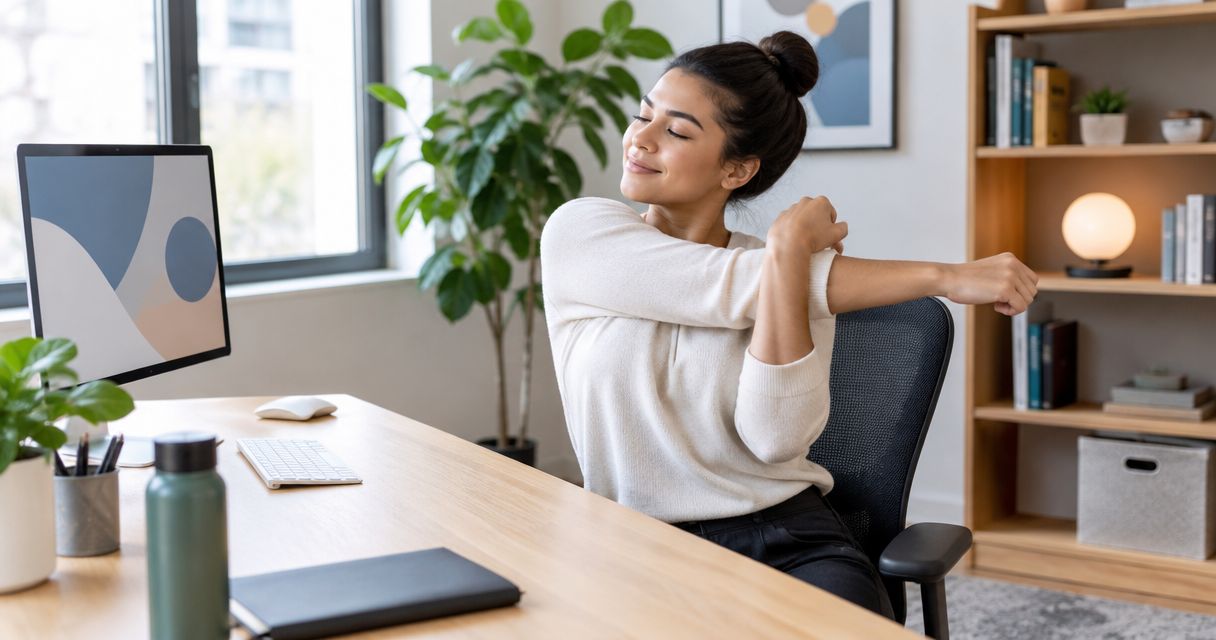
Try gentle shoulder circles, a seated upper-back turn, and supported ankle movements. For the upper-back turn, sit tall, keep both feet grounded, and turn your chest only as far as feels comfortable. Avoid pulling yourself around with the chair.
Your 2026 desk routine should be easy to start in ordinary work clothes. Save floor-based stretches for a setting where you have room and do not need to rush.
- Settle your feet and take a few relaxed breaths.
- Make 5 slow shoulder circles in each direction.
- Turn your upper body gently to each side without forcing it.
- Stand with support and move each knee forward over its foot, keeping the heel down.
- Finish by walking away from your desk before sitting again.
3. Choose guidance only where it removes friction
The manual route is straightforward: save a short exercise list, use a timer, and repeat the same sequence. This suits you if you already understand the movements and do not mind planning your sessions.
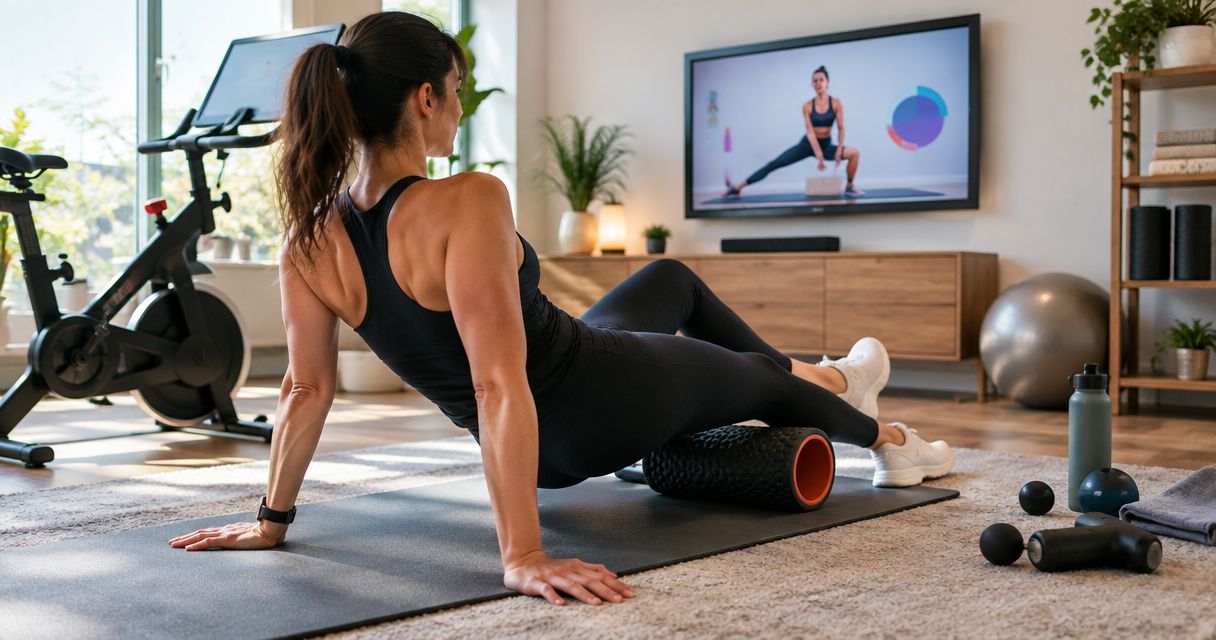
If deciding what to do keeps stopping you, use a guided routine. Pliability offers a subscription app with daily mobility, stretching, and recovery videos. Following a video removes the need to write every session yourself.
Pliability is best for desk workers who want daily video-guided mobility rather than a self-written stretching plan. The trade-off is format: following a video requires attention and a suitable place to move. A short standing break remains simpler between calls.
Choose guidance for the problem you actually have. If your barrier is remembering to move, another library of exercises is not enough; you still need a reliable cue in your day.
- Decide whether planning or remembering is your main obstacle.
- Check whether a routine fits your available space.
- Choose instructions you can follow without rushing.
- Keep a simple standing alternative for crowded workdays.
- Seek individual assessment when symptoms need more than general movement guidance.
4. Give each session a clear place in your day
Build your schedule around events that already happen. A break after a meeting is easier to recognize than an intention to stretch sometime in the afternoon. Pick a cue you control rather than one that depends on a quiet inbox.
Separate your plan into three parts: Desk break, Evening session, and Weekly review. The desk break changes your position. The evening session gives you space for less convenient movements. The weekly review checks whether the arrangement is realistic.
For your 2026 calendar, protect a manageable slot rather than filling every gap with exercises. Start with a 5-minute evening session if that fits. Extend it only when you want more time and can keep moving comfortably.
A missed session does not require a longer replacement. Return to your usual plan instead of making the next session a penalty.
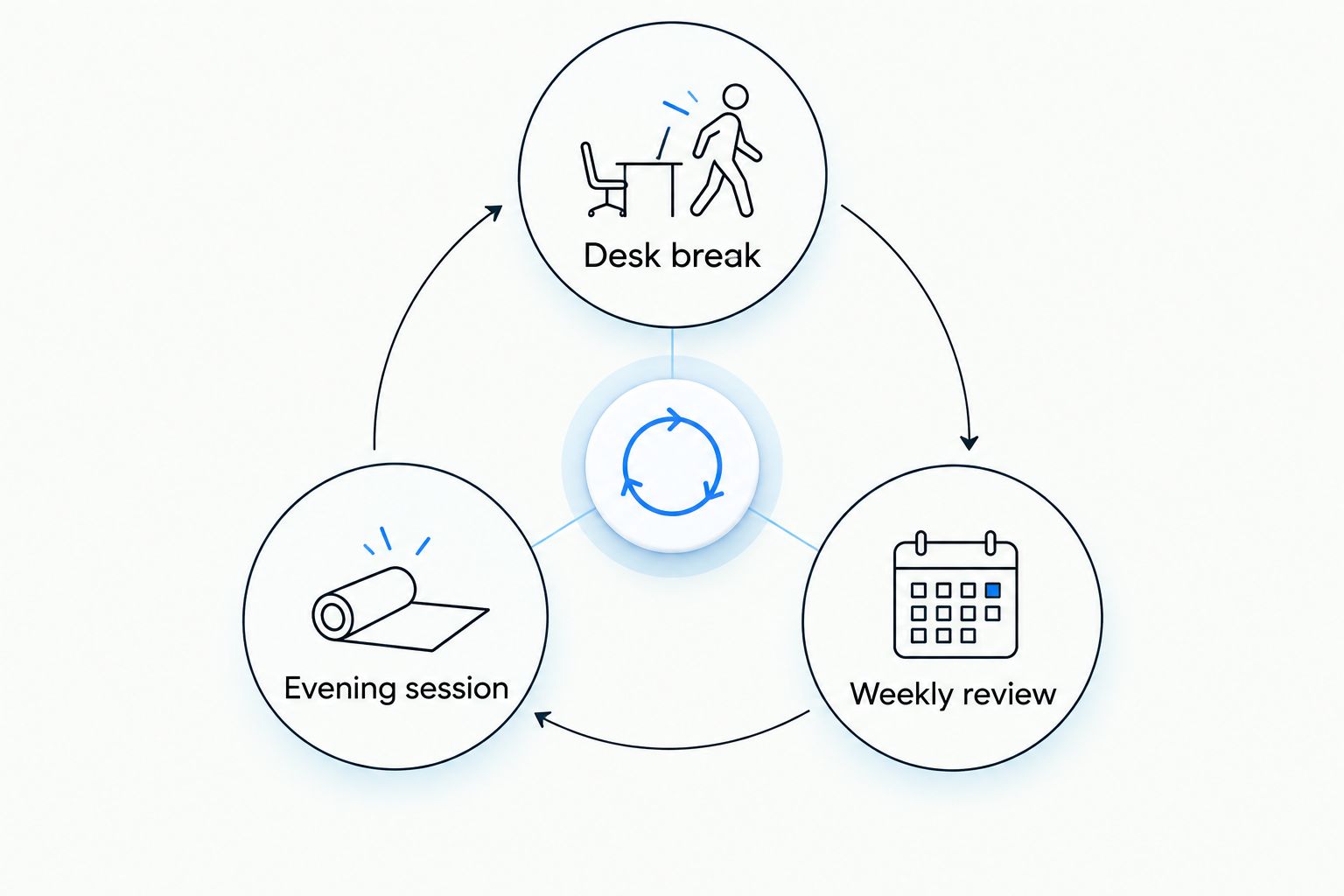
- Desk break: attach standing movement to a recurring work event.
- Evening session: reserve space for a comfortable, unrushed routine.
- Weekly review: check which sessions actually fit.
- Keep your mat or movement space ready before the session.
- Resume your normal schedule after a missed day.
5. Pair gentle stretching with controlled movement
Stretching and mobility overlap, but they are not identical. Flexibility describes available range; mobility includes your ability to move through and control that range. Your desk-worker program should not consist only of holding positions.
For a gentle calf stretch, place your hands against a stable wall, step one foot back, and keep that heel grounded. Move into mild tension without bouncing. Try a 20-second hold as an optional starting point, then release and reassess rather than forcing a deeper position.
Follow static holds with comfortable active movement. After the calf stretch, try supported ankle movements. After a gentle chest stretch, move your arms through an easy range without shrugging or arching to reach farther.
Keep your goal modest: move deliberately, stay comfortable, and retain control. Longer holds and deeper positions are not automatic upgrades.
- Use mild tension rather than pain as your limit.
- Breathe normally throughout each stretch.
- Release a position if you feel pinching, tingling, or numbness.
- Follow a hold with slow movement through a comfortable range.
- Keep strength training and walking separate parts of your activity plan.
6. Track consistency and adjust the right variable
Use a paper calendar or a simple note before adding more tracking. Record whether you completed your desk break, your longer routine, or neither. Add a brief observation about your chosen everyday movement.
Keep completion and comfort separate. Completing every session does not prove that a routine suits you. Equally, one comfortable afternoon does not establish a lasting change.
At your weekly review, identify the obstacle before changing the exercises. If you keep missing the evening session, move the cue or shorten the session. If you avoid a particular movement because it hurts, stop using it and seek appropriate advice rather than trying to build tolerance through force.
For the rest of 2026, keep your plan responsive to your work pattern. Travel days, office days, and home-working days do not need identical routines.
- Mark completed sessions without scoring stretch intensity.
- Note whether your chosen everyday movement feels comfortable.
- Record symptoms that recur during a particular exercise.
- Change one scheduling variable before rebuilding the whole program.
- Keep movements that are comfortable and practical.
Compare stretching program options for desk workers
Choose by the support you need, not by the size of an exercise library. A self-guided routine gives you direct control. Video guidance provides a sequence to follow. Individual clinical assessment addresses symptoms that a general routine cannot evaluate.
For 2026, compare these formats against your actual working day. A program you can follow at home is not automatically convenient in a shared office, and a discreet desk break does not provide the same experience as a dedicated session.
| Option | Best for | Main advantage | Key limitation |
|---|---|---|---|
| Self-guided desk routine | Workers comfortable choosing familiar movements | Easy to adapt around calls and available space | You must choose the exercises and assess your own technique |
| Pliability mobility videos | Workers who prefer a daily guided sequence | Provides mobility, stretching, and recovery video routines | Following a video needs attention and suitable movement space; it is not an individual assessment |
| Individual clinician-led plan | Workers with persistent pain or movement concerns | Allows assessment and advice specific to your symptoms | Requires arranging an appointment rather than simply starting a general routine |
Use the simplest format that meets your needs. If you already know what to do, focus on the cue that gets you started. If exercise selection is the obstacle, guided sessions offer a clearer next action.
Common mistakes desk workers make
Stretching without leaving the chair
Seated movements are convenient, but convenience can become another reason to stay in the same setup. Give standing and walking their own place in your workday instead of treating a seated stretch as the whole break.
Keep a seated option for situations where standing is impractical. Use it as an alternative, not a rule that every movement must happen within reach of your keyboard.
Chasing a deep stretch between meetings
A rushed break is a poor setting for testing your limits. You are more likely to hurry the setup, hold your breath, or pull harder simply because the clock is running.
Choose familiar movements with a clear stopping point. Save any exercise that needs careful positioning for a session where you can pay attention.
Treating every uncomfortable sensation as tightness
A stretching program is not a diagnosis. Sharp pain, numbness, tingling, or radiating symptoms are reasons to stop the provoking movement and seek medical advice—not instructions to stretch harder.
Use everyday comfort as your reference. Do not keep repeating a movement solely because it appears in a routine or because the other side feels different.
Adding sessions without changing the workday
A longer evening routine does not change how you spend the working hours before it. Look at screen placement, reach to your keyboard, opportunities to stand, and whether back-to-back meetings leave room to move.
Keep the evening session, but solve the scheduling problem too. Put a movement cue beside an existing event rather than relying on motivation after an exhausting day.
FAQ
What's the best stretching program for someone who sits all day?
The best fit is a repeatable program that combines comfortable workday movement with a separate mobility session. Choose self-guided exercises if you know what to do, or video guidance if planning keeps stopping you.
How long should a desk-worker stretching session last?
Start with a session that fits your schedule, such as the suggested 3-minute desk break in this guide. That duration is a practical starting template, not a required dose or a guarantee of results.
Can I stretch at my desk without getting on the floor?
Yes, you can use gentle seated upper-back turns, shoulder circles, and standing ankle movements without getting on the floor. Use stable support and keep your movement area clear.
Is Pliability suitable for desk workers who also train?
Pliability offers daily mobility, stretching, and recovery video routines for athletes and fitness enthusiasts. It fits desk workers who want that guided format alongside their exercise, but general videos do not replace individual assessment.
Should I stretch through pain if my hips feel tight?
No, do not force a stretch through pain. Stop a movement that causes sharp pain, tingling, numbness, or radiating symptoms, and seek medical advice.
Is stretching better than walking during a work break?
Stretching and walking serve different purposes, so keep room for both. Walking changes your position and gets you away from the desk; stretching lets you explore a particular comfortable range.
How do I know whether my stretching routine is helping?
Track consistency and the comfort of a familiar everyday movement, such as reaching overhead or standing from your chair. Do not use stretch intensity or a single unusually flexible day as your only measure.
One last thing
Do not make the stretch deeper. Make the start easier. Before your next workday, choose one cue, clear one movement space, and write down your first exercise.
That small setup decision gives your 2026 program a concrete beginning. You do not need to redesign your entire workday before taking a comfortable movement break.