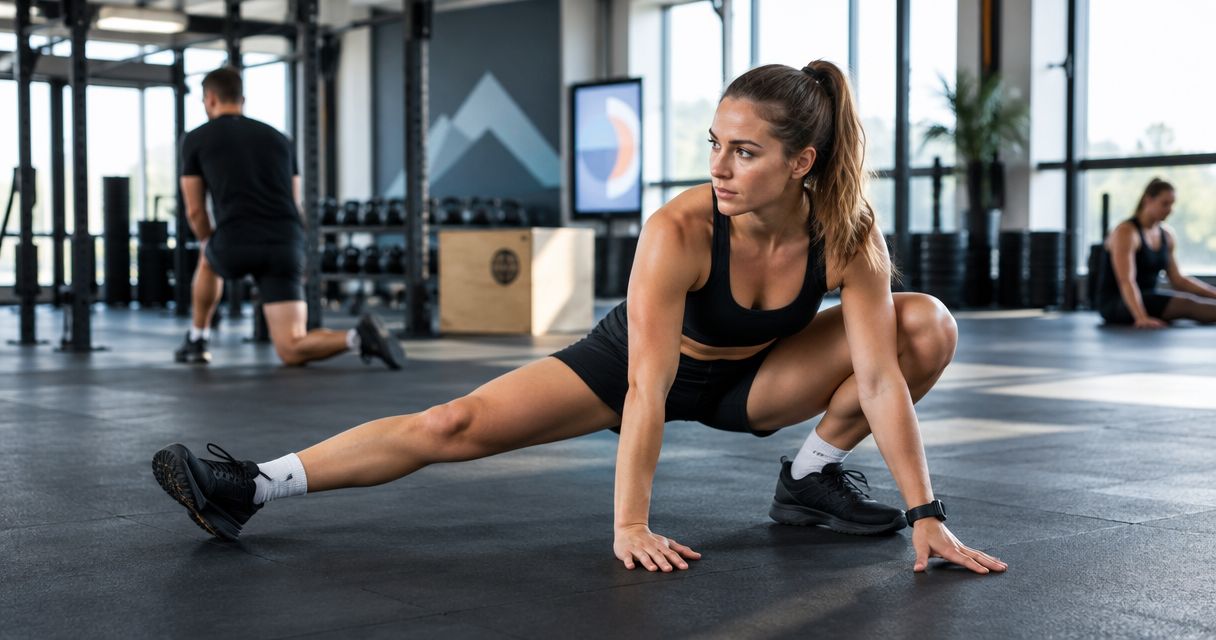
HYROX competitors’ mobility training is controlled joint-range practice with the aim of maintaining useful positions through running and loaded stations. This guide explains how to check your restrictions, prepare for training, and build a repeatable 2026 routine without turning recovery into another workout.
- Mobility training for HYROX competitors should connect ankle, hip, and shoulder range to actual station positions.
- Pliability is best for HYROX competitors who want daily video-guided mobility training.
- Use active movement before hard training; keep longer, relaxed stretching separate from your final race preparation.
- Track movement quality, not stretch discomfort; pain needs assessment, not a deeper position.
Why mobility training matters for HYROX competitors
HYROX asks you to run and then produce force in different positions. Your ankles contribute to squat and lunge positions; your hips need usable motion during running and floor transitions; your shoulders must accommodate overhead work.
The relevant question is not whether you can reach an impressive stretch. It is whether you can enter the position your task requires, control it, and repeat it without forcing another joint to compensate.
Mobility supports your training; it does not replace strength, aerobic preparation, or station practice. A comfortable deep squat does not demonstrate that you can sustain wall-ball technique under fatigue. Equally, adding more hard repetitions does not directly address a restricted ankle.
Keep these jobs separate in your 2026 training plan. For a closer look at the recovery side, use the guide to recovery apps for HYROX competitors.
How to build mobility into HYROX training
1. Check the positions your stations require
Start with simple, unloaded movements before choosing exercises. Look at a supported squat, a split stance, and an overhead reach. These checks help you describe a restriction; they do not diagnose its cause.
For an ankle check, face a wall and move your knee toward it while keeping your heel down. Compare sides using the same setup. Do not borrow someone else’s target distance: limb proportions and setup affect what you see.
For your squat, hold a stable support and descend only as far as you can control. If support changes the movement substantially, balance or coordination deserves attention alongside flexibility. A rounded chest alone does not prove that your ankles are responsible.
- Check ankle motion: keep the heel planted as the knee moves forward.
- Check hip motion: explore a supported squat without forcing depth.
- Check shoulder motion: reach overhead without deliberately arching your lower back.
- Record the setup: note footwear, stance, support, and discomfort.
2. Match each restriction to a training task
Choose a movement because it addresses a position you actually need. Ankle work belongs beside squat and lunge practice when forward knee travel feels restricted. Controlled hip work belongs beside movements that demand hip rotation or extension.
Start manually. Pick one restriction, use a comfortable exercise, and repeat the original check afterward. An immediate change is feedback about that session, not proof that you have permanently changed the joint.
Avoid assigning every technical fault to stiffness. Wall-ball difficulty also involves strength, coordination, pacing, and fatigue. If an unloaded position looks comfortable but fails during a hard set, review the load and execution rather than automatically adding stretching.
- For squat positions: try supported ankle rocks and controlled squats.
- For split stances: try a gentle half-kneeling hip-flexor position with a steady pelvis.
- For overhead positions: try comfortable wall slides without forcing your ribs upward.
- For running transitions: rehearse an easy march and controlled split-stance movements.
- For unclear restrictions: ask a qualified coach or clinician to assess the movement.
3. Build a small daily practice
Write your routine in a notebook or phone note first. Choose a small group of movements you understand, attach the routine to an existing habit, and keep the effort easy enough that it does not compete with training.
As an optional starting template, set aside 5 minutes, select 3 movements, and perform 5 slow repetitions of each before reassessing. These are practice suggestions, not a tested HYROX protocol or a required dose. Stop earlier if control deteriorates.
For guided delivery, Pliability offers a subscription app with daily mobility, stretching, and recovery video routines. Pliability is best for HYROX competitors who want daily video-guided mobility training. The benefit is structure; the limitation is that a video routine does not establish why a movement hurts or replace an individual assessment.
Your 2026 mobility plan should be simple enough to repeat during a busy training week. A routine that requires constant redesign adds another decision before you have even started.
- Choose a cue: practice after brushing your teeth or finishing an easy session.
- Keep a short menu: repeat familiar movements instead of collecting new drills.
- Use comfortable effort: breathe normally and avoid forcing end range.
- Log the response: record easier, unchanged, or more uncomfortable.
- Adjust the dose: shorten the session when training fatigue is high.
4. Warm up dynamically before hard sessions
A pre-session warm-up should prepare you for the session ahead. Begin with easy whole-body movement, move through relevant ranges, and then rehearse the upcoming task at a manageable effort.
Before wall-ball work, that means more than holding a deep squat. Progress toward controlled squats and comfortable overhead reaches, then practice the actual movement. Before running intervals, include running preparation rather than spending the entire warm-up seated on the floor.
Keep prolonged, intense static stretching separate from your final preparation for explosive work. You do not need to ban every brief stretch; you need to finish the warm-up ready to move, not simply feeling looser.
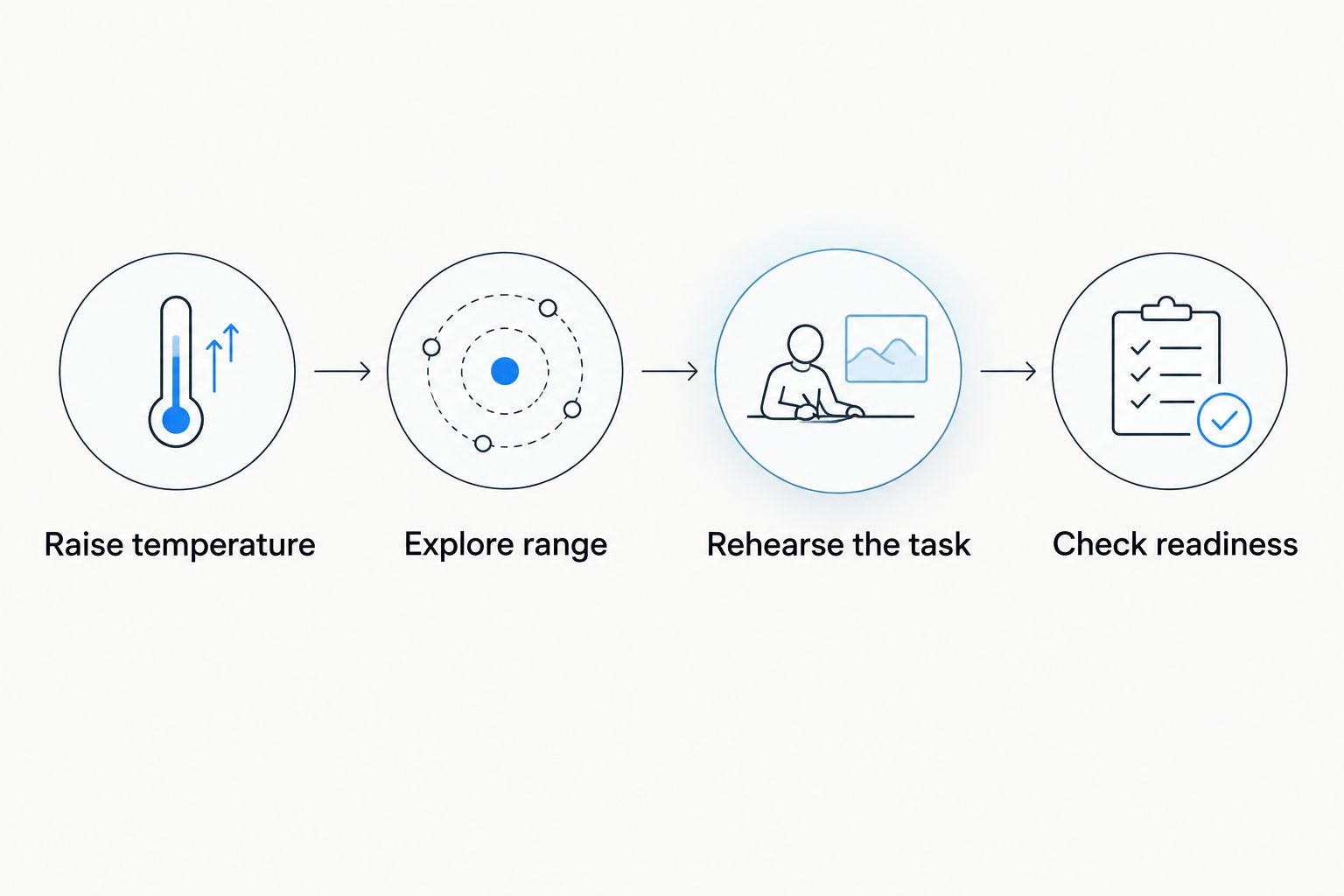
Use this sequence in 2026 as a framework, not a rigid script. The session determines the movements.
- Raise temperature: start with easy walking, jogging, or another familiar movement.
- Explore range: use controlled ankle rocks, hip movements, and shoulder reaches.
- Rehearse the task: practice the squat, lunge, hinge, or overhead pattern you need.
- Increase demand gradually: approach working effort through familiar preparation sets.
- Check readiness: reduce the planned demand if movement remains painful or uncontrolled.
5. Separate recovery work from hard mobility work
Recovery-focused movement should leave you with less demand, not another performance target. Choose comfortable positions, use support when needed, and keep the session distinct from loaded end-range strength work.
For a simple evening option, use an easy calf stretch, a supported hip position, and gentle upper-back rotation. Stay within a range that lets you breathe normally. There is no need to chase soreness or make every session deeper than the last.
Stretching does not replace sleep, food, hydration, or sensible training loads. Treat it as one part of your routine rather than evidence that you are ready for another hard session. Feeling relaxed and being prepared for maximal effort are different judgments.
- Reduce intensity: choose positions you can leave without strain.
- Use support: hold a stable surface when balance distracts from the movement.
- Keep breathing steady: back out if you brace or hold your breath.
- Separate objectives: schedule demanding loaded mobility as training, not passive recovery.
- Respect symptoms: stop for sharp pain, tingling, numbness, or increasing discomfort.
6. Retest and simplify before race week
Review the same movements under similar conditions. Keep the same stance, surface, footwear, and support so that the comparison means something. A different camera angle or a warmer room should not become evidence of progress.
Track whether the movement feels more controlled and whether the relevant training position is easier to reproduce. Also record symptoms. More range with more pain is not a useful win.
During your 2026 race week, keep familiar mobility work and remove experiments. Do not introduce aggressive stretching or unfamiliar loaded end-range exercises because the event is close. Race week is for using the preparation you have built, not testing how much discomfort you can tolerate.
- Repeat the original check: use the same setup and movement instructions.
- Compare control: watch for smoother motion rather than depth alone.
- Check transfer: reassess the squat, lunge, or overhead task during manageable practice.
- Keep familiar drills: retain movements you already tolerate well.
- Escalate persistent problems: seek assessment when pain or restriction continues to limit training.
Compare mobility options for HYROX preparation
Choose support according to the problem you need to solve. A written routine, an app, a coach, and a clinician serve different purposes; none should be treated as interchangeable.
| Option | Best for | Main advantage | Key limitation |
|---|---|---|---|
| Self-directed routine | Competitors comfortable with familiar, pain-free movements | Direct control over exercise choice and timing | You must choose progressions and interpret your own response |
| Pliability | Competitors who prefer daily video-guided mobility training | Daily mobility, stretching, and recovery routines in a subscription app | Video guidance does not replace individual assessment |
| Qualified movement coach | Competitors needing feedback on station execution | Observation connects movement practice to the task | Coaching does not replace clinical evaluation of pain |
| Licensed physical therapist | Competitors with pain or persistent movement limitations | Individual clinical assessment and management | Clinical care does not replace the rest of race preparation |
Choose guidance for the decision you cannot make alone. If you understand the movement but struggle with consistency, guided routines address a different need from an assessment for recurring pain.
Common mistakes HYROX competitors make
Treating every wall-ball fault as an ankle problem
A collapsing chest does not identify a single cause. Compare an unloaded squat with a manageable wall-ball set, then review ankle motion, trunk control, technique, and fatigue separately. Do not prescribe more ankle stretching from one symptom alone.
Chasing depth without controlling the position
A deeper assisted position is not the same as active control. After exploring a comfortable range, practice entering and leaving it slowly. Reduce the range when you cannot maintain balance or move without forcing another joint.
Adding recovery sessions that create more fatigue
Hard end-range holds and loaded mobility are training stress. Do not label them recovery simply because they happen on a mat. Keep easy sessions easy, and account for demanding mobility work alongside strength and running.
Changing the routine just before competition
Unfamiliar exercises add uncertainty when you need predictability. Keep your established routine during the final preparation period, and save new progressions for a training block where you can judge their effect without race pressure.
FAQ
What is the best mobility training for HYROX competitors?
The best mobility training for HYROX competitors addresses the positions that limit their running and station practice. Check ankle, hip, and shoulder movement, then combine comfortable range work with controlled rehearsal of the relevant task.
Should I stretch before a HYROX workout?
Use an active, task-specific warm-up before a HYROX workout. Brief comfortable stretching can be part of preparation, but finish with movement rehearsal rather than prolonged, intense static holds.
How long should a HYROX mobility routine take?
A 5-minute routine is a practical starting template, not a required training dose. Choose familiar movements, assess your response, and adjust the duration to your needs and overall training load.
Is Pliability suitable for HYROX competitors?
Pliability suits HYROX competitors who want daily video-guided mobility, stretching, and recovery routines. The subscription app provides structure, but it does not replace individual assessment for pain or persistent movement limitations.
Will ankle mobility fix my wall-ball form?
Ankle mobility work addresses restricted ankle motion, not every cause of poor wall-ball form. Strength, coordination, pacing, and fatigue also deserve review, particularly when an unloaded squat looks comfortable.
Should I do mobility training on recovery days?
Comfortable, low-effort mobility can fit a recovery day. Keep demanding loaded end-range work separate in your planning because it adds training stress rather than simply providing rest.
What should I do if a mobility exercise hurts?
Stop the exercise rather than pushing deeper into pain. Seek a qualified clinician for persistent pain, recurring restriction, tingling, numbness, or symptoms that interfere with training.
One last thing
The useful test happens after the stretch. Revisit the movement you wanted to improve: a controlled squat, a split stance, or a comfortable overhead reach. If the new range disappears as soon as you stand up and move, practice controlling a smaller range instead of forcing a deeper stretch.
Keep that standard throughout 2026. Your mobility routine should serve the positions you train, not become a separate contest you have to win.