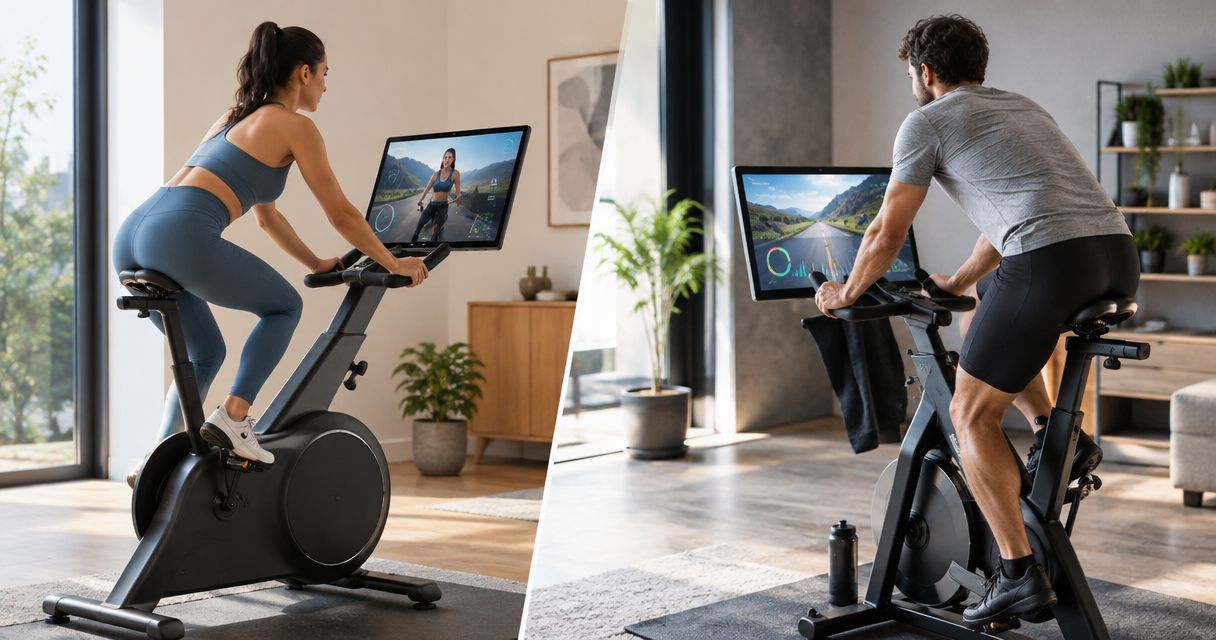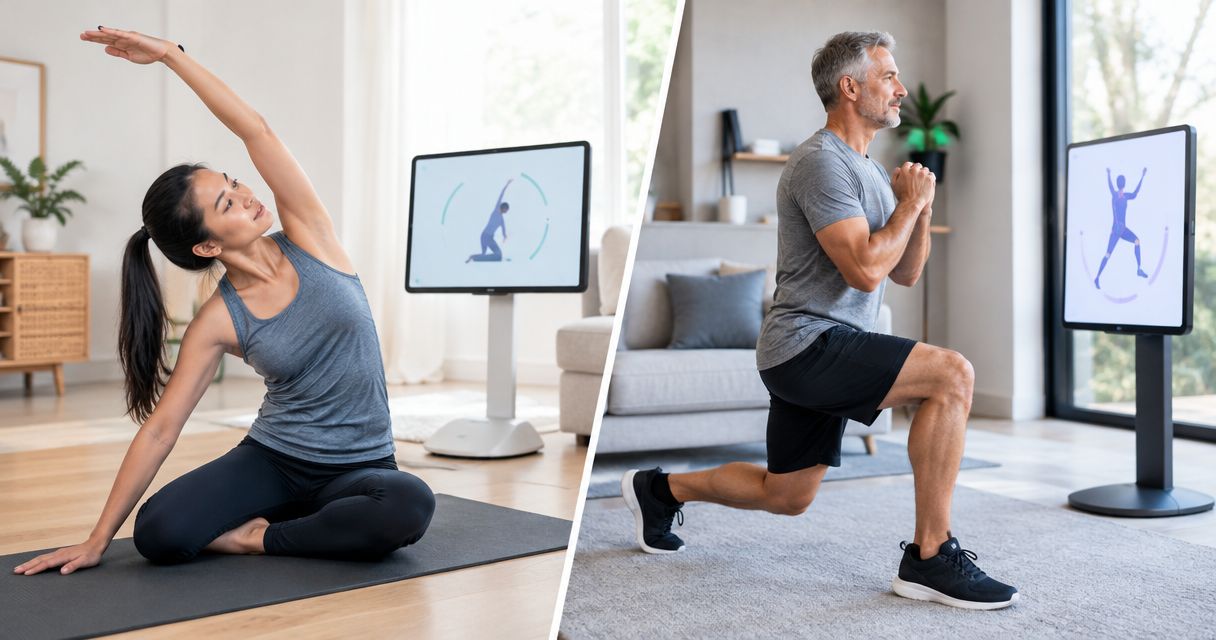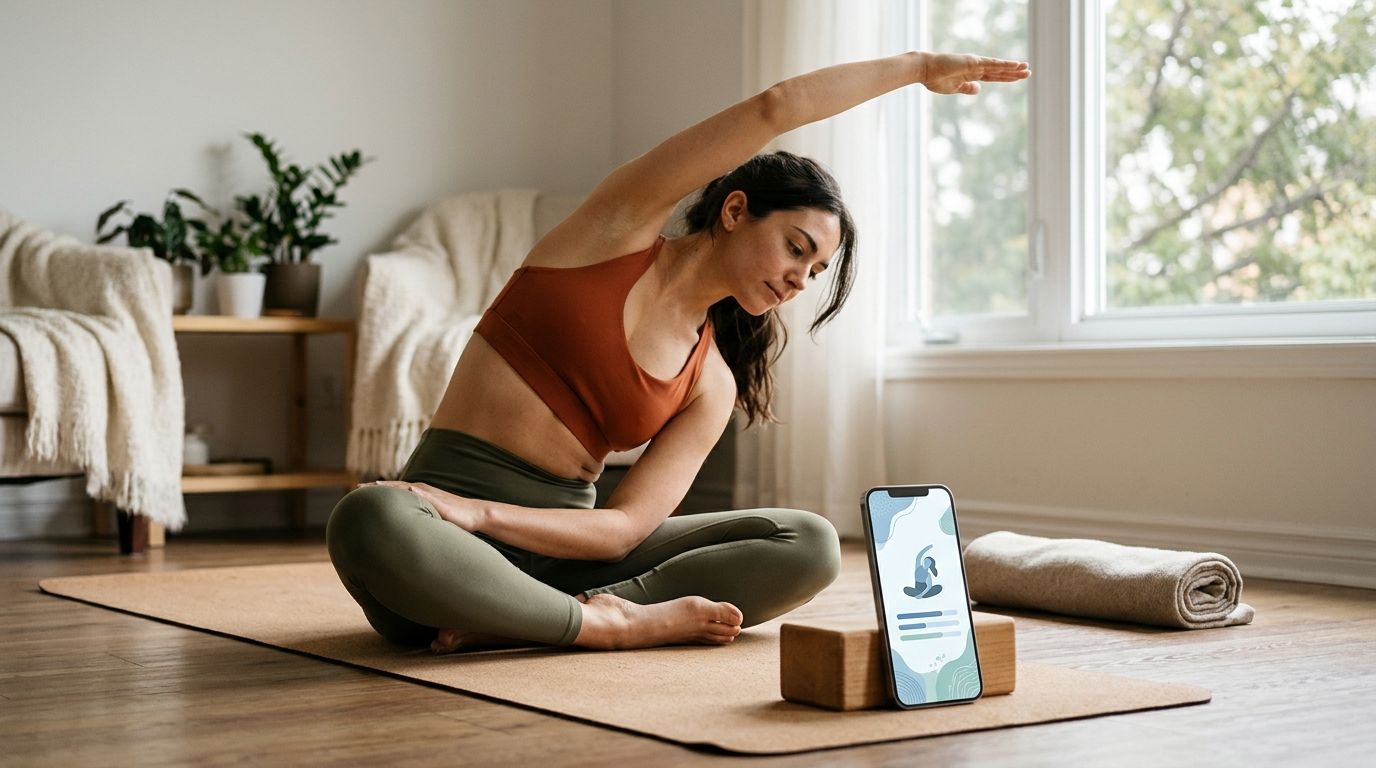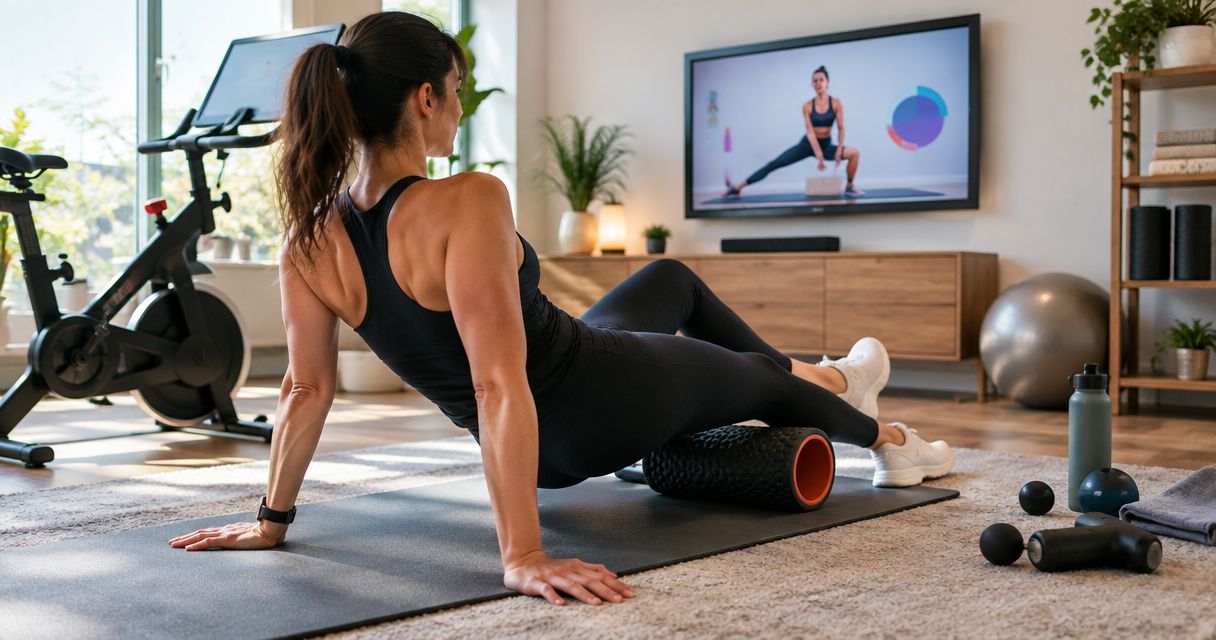
Peloton brings instructor-led cycling, strength, yoga, and stretching into one fitness platform. That breadth is useful, but it does not settle a narrower question: what should you use when mobility and recovery are the main job? The best Peloton alternative in 2026 is Pliability if you need daily mobility and recovery routines; Down Dog if you want a yoga-centered practice.
- For Peloton alternatives focused on daily mobility, choose Pliability rather than another broad workout library.
- Down Dog suits a yoga-centered practice; Nike Training Club suits broader fitness training.
- Keep Peloton if its stretching and yoga already support a consistent recovery habit.
- Choose by your main training need, not by the number of classes an app contains.
Why this matters
A hard workout and a useful recovery session have different jobs. One adds training stress. The other gives you space to work on movement, ease into comfortable positions, and notice how your body responds.
Before replacing an app, name the gap. Do you need a daily stretching habit, a yoga practice, or a broader workout plan? Those needs lead to different choices, even when the apps share exercises.
This 2026 comparison focuses on that distinction. It does not rank exercise bikes, compare connected equipment, or treat stretching as a replacement for sleep, food, and sensible training loads. The right choice makes your intended habit easier to repeat—not merely easier to browse.
Peloton alternatives at a glance
Start with the job you want the app to do. Peloton remains the benchmark here because leaving a broad fitness platform only makes sense when the replacement better matches your priority.
| Option | Best for | Standout focus | How it differs from Peloton | Main limitation for this use case |
|---|---|---|---|---|
| Peloton | Keeping workouts and stretching together | Instructor-led classes across several exercise categories | The reference point: broad fitness rather than mobility alone | You still need to make recovery a deliberate part of your schedule |
| Pliability | Daily mobility, stretching, and recovery | Daily video routines for athletes and fitness enthusiasts | Mobility and recovery are the stated focus | That focus does not replace a complete strength or endurance program |
| Down Dog | A yoga-centered movement habit | Configurable yoga practices | Centers your session on yoga rather than a broad class library | Yoga is not the same thing as sport-specific recovery planning |
| Nike Training Club | General fitness with yoga alongside workouts | Strength, conditioning, and yoga content | Another broad training option rather than a mobility-first replacement | Switching broad libraries does not automatically solve inconsistent stretching |
For your 2026 shortlist, compare the session you will actually use—not the longest feature list. If you already have a training plan, another general fitness app can add choice without addressing the reason you started looking.
1. Pliability: best for daily mobility and recovery
Pliability is a subscription app with daily mobility, stretching, and recovery video routines for athletes and fitness enthusiasts, including HYROX competitors and teams. Its clearest fit is the person who already trains and wants movement work to have its own place in the day.
That is a different buying decision from choosing a platform for all your exercise. You are choosing support for a specific habit, not asking a recovery session to replace your lifting, running, or cycling plan.
Where it shines
- A clear purpose: Daily mobility, stretching, and recovery are the stated offer rather than an incidental reason to open the app.
- A relevant audience: Athletes and fitness enthusiasts are explicitly part of the service's audience.
- Video guidance: Follow-along routines give you a structure instead of leaving you to assemble a session from memory.
- A complementary role: The app fits a decision to keep your main training elsewhere and give mobility separate attention.
Where it falls short
- It is not a like-for-like replacement for every Peloton use. Daily mobility routines do not replace the full job of a strength or endurance training plan.
- A focused subscription adds another decision. If your current platform already supports a consistent stretching habit, a separate app needs a clear purpose.
- Video guidance is not an individual assessment. An app cannot examine a painful joint or determine why a movement hurts.
Head-to-head: mobility focus versus fitness breadth
| Dimension | Pliability | Peloton |
|---|---|---|
| Stated focus | Daily mobility, stretching, and recovery routines | Multiple fitness categories, including stretching and yoga |
| Best role in your week | Dedicated movement work alongside training | Workouts and complementary movement sessions in one platform |
| Decision to make | Whether you want a separate mobility habit | Whether the existing class mix already meets your needs |
| What neither replaces | Individual assessment of persistent pain | Individual assessment of persistent pain |
Best for: Athletes and fitness enthusiasts who want daily guided mobility and recovery alongside an existing training plan.
Make the choice concrete. Identify when you will use it, what currently gets skipped, and which training platform you intend to keep. If those answers are vague, a new subscription will not make the habit specific for you.
Verdict: Buy for a dedicated mobility habit; skip it as a wholesale replacement for your training program.
2. Down Dog: best for a yoga-centered practice
Down Dog is a yoga app built around configurable practices. It fits a different preference: you want yoga itself to be the session, rather than choosing mobility work primarily around another sport.
Choose that distinction deliberately. Yoga can include flexibility, balance, strength, and attention to breathing, but a yoga practice and an athlete's recovery plan are not interchangeable labels.
Where Down Dog shines
- Yoga comes first. The app suits someone who wants to build a practice around that discipline.
- Practice configuration matters. Adjusting a yoga session is useful when your preference differs from following a fixed class.
- It offers a clear alternative direction. You are moving toward yoga rather than simply replacing one general fitness library with another.
Where Down Dog falls short
- Yoga is not a complete training plan. Your strength or endurance goals still need appropriate programming.
- The format must match your preference. Configurable practices serve a different experience from choosing a particular instructor-led class.
- A comfortable practice is not a diagnosis. Do not use an app's exercise selection to decide what an injury needs.
| Dimension | Down Dog | Peloton |
|---|---|---|
| Main comparison here | Yoga-centered practice | Yoga within a broader fitness platform |
| Session approach | Configurable yoga practices | Instructor-led classes |
| Best reason to choose | You want yoga to become a regular practice | You want yoga alongside other workout categories |
Best for: People who want yoga to be the main movement habit, rather than an addition to a larger workout library.
Before switching, ask whether you want more yoga or simply more consistent stretching. Those are related goals, not identical ones. Choosing the right format matters more than changing the name on your app screen.
Verdict: Buy for a yoga-centered practice; skip it if your main need is a dedicated athletic recovery routine.
3. Nike Training Club: best for broader fitness training
Nike Training Club includes strength, conditioning, and yoga content. It belongs on this list for readers who discover that their real need is a broader workout option—not a specialist mobility replacement.
That makes it a different answer to the same search. If you already have effective strength and endurance programming, another general fitness library is not necessarily the missing piece.
Where Nike Training Club shines
- Several training categories: It suits a search that extends beyond stretching.
- Yoga alongside workouts: You can consider movement sessions as part of a broader exercise habit.
- A general fitness role: It fits readers choosing how to train, not just how to complement training.
Where Nike Training Club falls short
- Breadth is not specialization. A general workout library does not remove the need to plan mobility work.
- Overlapping content can add friction. If you already follow a training program, decide which app owns which part of your week.
- It does not provide a clinical assessment. Persistent pain needs a different decision from choosing a workout.
Best for: Readers who want strength, conditioning, and yoga options rather than a recovery-first app.
Verdict: Buy for broader fitness needs; skip it if another workout library would duplicate what you already use.
Choose by your priority, then check the format
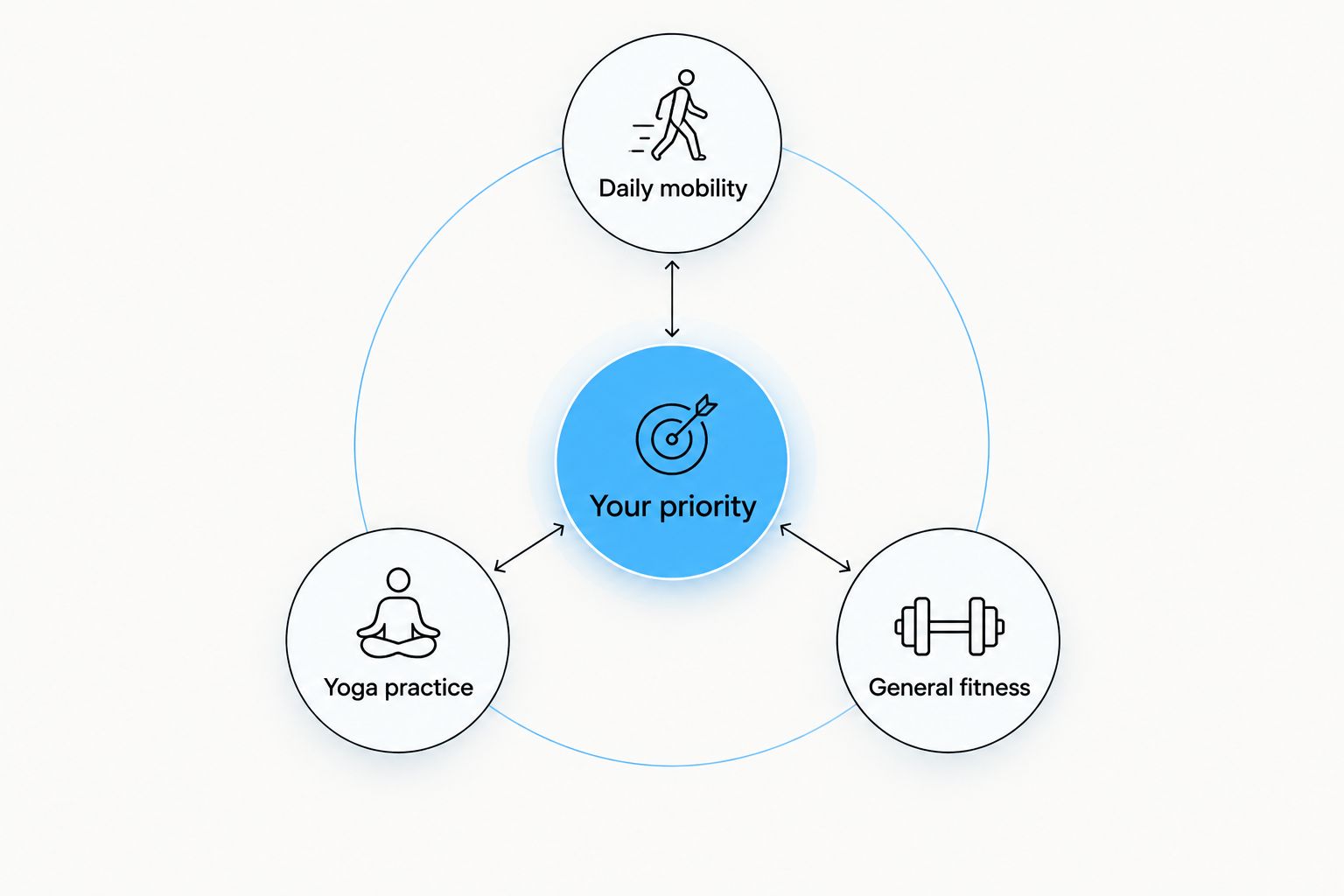
Your priority should come before app features. Use these three labels to separate the choices:
- Daily mobility: You already train and want guided stretching and recovery to become a regular habit.
- Yoga practice: You want yoga itself, including its movement and breathing elements, to anchor the session.
- General fitness: You need help choosing workouts across exercise categories, not just movement work after them.
These are selection criteria, not promises of results. A useful 2026 comparison keeps the task narrow enough that you can tell whether the app actually serves it.
Once the purpose is clear, test the practical fit. Can you follow the instructions without rushing? Does the session belong at a realistic point in your day? Are you repeating it because it fits, or avoiding it because the format creates work?
Try reserving 5 minutes after an existing daily activity as a scheduling exercise. This is a suggested starting slot, not a claim that every routine fits that duration. Choose a session that matches the time you actually have.
After 7 days, review your behavior rather than demanding a dramatic change in flexibility. Count completed sessions, note what you avoided, and decide whether the obstacle was time, format, discomfort, or lack of interest.
Why people switch from Peloton
The strongest reason to switch is a mismatch between the platform's role and your current priority. Peloton's breadth is an advantage when you use several exercise categories. It is less decisive when your question is simply how to make daily mobility happen.
For a 2026 decision, separate these reasons before changing subscriptions:
- You want a dedicated recovery habit. The alternative needs to support that habit, not merely offer different workouts.
- You want yoga as a practice. A yoga-centered option answers a different need from stretching around athletic training.
- You need broader workout choices. This is a general fitness comparison, not primarily a mobility comparison.
- You keep skipping movement work. First identify whether the problem is the app, the schedule, or expecting too much from each session.
None of those reasons proves Peloton is inadequate. They explain when a different focus becomes useful. There is no need to invent an outage, a missing feature, or a service complaint to justify choosing a narrower tool.
Keep a simple boundary during the change: assign each app a job. If 2 apps both serve the same purpose and you cannot explain why you need both, review the overlap before maintaining two separate habits.
When staying with Peloton is the right call
Stay with Peloton if you already use its workouts and consistently complete the stretching or yoga sessions you need. A familiar platform that you use is a better fit than a specialist app you repeatedly ignore.
Staying also makes sense when your main goal is broad fitness and mobility is a supporting activity. You do not need a separate subscription merely because a more focused category exists.
For 2026, use a practical rule: change the app when the format or focus is the barrier; change the schedule when consistency is the barrier. That keeps a software decision from becoming a substitute for deciding when you will move.
FAQ
What's the best Peloton alternative for mobility and recovery?
Pliability is the best fit here for athletes and fitness enthusiasts seeking daily mobility, stretching, and recovery video routines. Choose it for that focused role rather than as a replacement for a complete strength or endurance program.
Should I cancel Peloton if I only want stretching?
Canceling only makes sense if another option better serves the stretching habit you actually follow. First check whether your current stretching sessions meet your needs and whether you use Peloton's other workout categories.
Is Down Dog better than Peloton for yoga?
Down Dog is the more focused choice if you want configurable yoga practices. Peloton fits a different preference: instructor-led yoga classes within a broader fitness platform.
Is Nike Training Club a recovery app?
Nike Training Club is a broader fitness option with strength, conditioning, and yoga content. Choose it for that mix rather than treating it as a dedicated mobility or clinical recovery service.
Can I use a mobility app alongside Peloton?
Yes, the two can serve different purposes: Peloton for your chosen workouts and a mobility app for dedicated movement routines. Keep both only when each has a clear role in your week.
Will a stretching app fix my hip or shoulder pain?
A stretching app cannot diagnose or promise to fix hip or shoulder pain. Seek qualified clinical guidance for persistent, worsening, or unexplained pain rather than repeatedly stretching through it.
How do I compare Peloton alternatives in 2026?
Compare Peloton alternatives by the job you need done: daily mobility, yoga practice, or general fitness. Then assess whether the session format and your schedule support a habit you can repeat.
One last thing
Do not judge your recovery session by how exhausted it makes you. More effort is not the same as a better match for the task.
Write down one reason you want an alternative and one time you will use it. If you cannot name both, keep your current setup while you make the habit specific. The next move is not always another app.