Choose Pliability if you want daily mobility, stretching, and recovery routines around your training; choose Hinge Health if you need a digital musculoskeletal care program for pain and physical limitations. The difference in 2026 is the job you need done: a repeatable movement habit versus a clinical care pathway.
- Pliability vs Hinge Health is a choice between daily mobility training and digital musculoskeletal care.
- Choose the mobility subscription for stretching and recovery routines around sport and fitness.
- Choose Hinge Health for a clinical care pathway, subject to eligibility and program access.
- Persistent pain needs assessment, not a harder stretching session.
Why this matters
Tight hips after training and hip pain that changes how you walk are not interchangeable problems. Both involve movement, but they call for different decisions. An app comparison becomes useful only when it separates general exercise support from care for a specific problem.
Pliability is best for athletes and fitness enthusiasts who want a daily mobility habit. Hinge Health serves a different purpose: digital care for musculoskeletal conditions. Neither category automatically replaces the other.
For your 2026 decision, start with the outcome you need. Do you want guidance for regular stretching and recovery, or do you need help understanding and managing symptoms? That distinction matters more than a long feature list.
At a glance
| Dimension | Pliability | Hinge Health |
|---|---|---|
| Best for | Athletes and fitness enthusiasts building a mobility habit | People seeking digital care for musculoskeletal pain or limitations |
| Standout feature | Daily mobility, stretching, and recovery video routines | A clinically oriented musculoskeletal care program |
| Clinical needs | Exercise support; not a substitute for assessment | Better fit when assessment and care guidance are the priority |
| Sports context | Explicit focus includes HYROX competitors and teams | Better evaluated around the condition being managed |
| Independent practice | Better fit for self-directed, routine-based exercise | Better fit when exercise belongs within a care pathway |
| Habit building | Requires you to follow routines consistently | Requires you to participate consistently in the care plan |
| Results | Judge against your movement and training goals | Judge against symptoms, function, and care goals |
| Pricing model | Consumer app subscription | Commonly accessed through participating employers or health plans; eligibility matters |
Daily mobility wins for training; clinical care wins for symptoms
The best-for distinction is straightforward. A healthy runner who wants a stretching habit after training has a different brief from a desk worker whose back pain interrupts sleep. Choosing by that brief prevents a category mismatch.
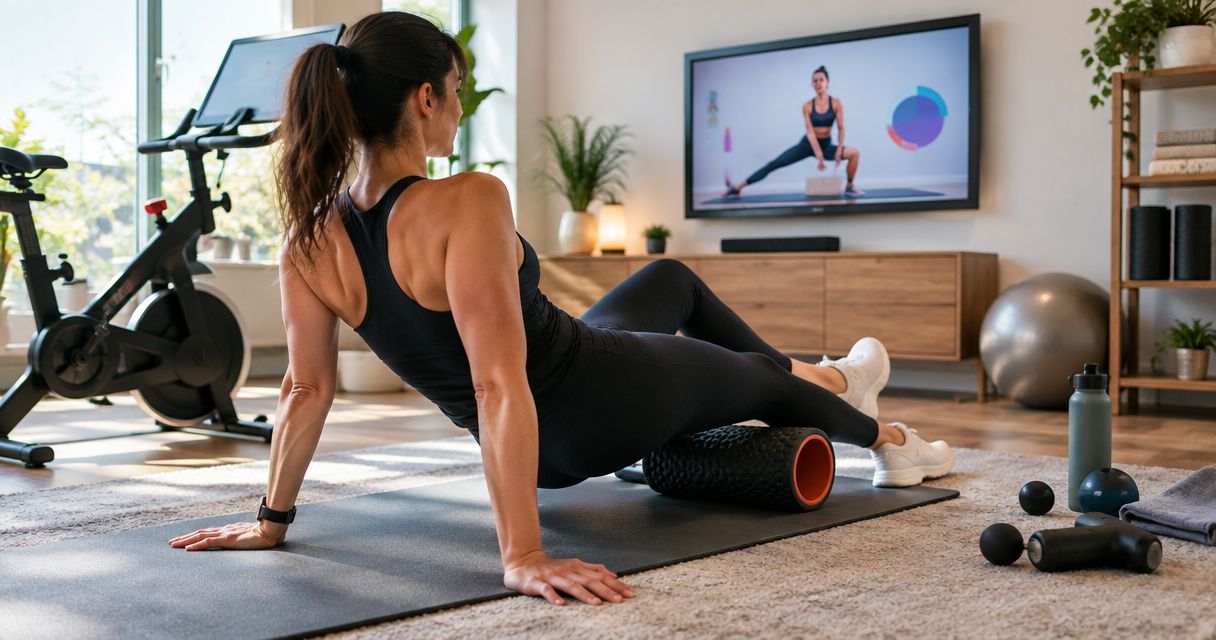
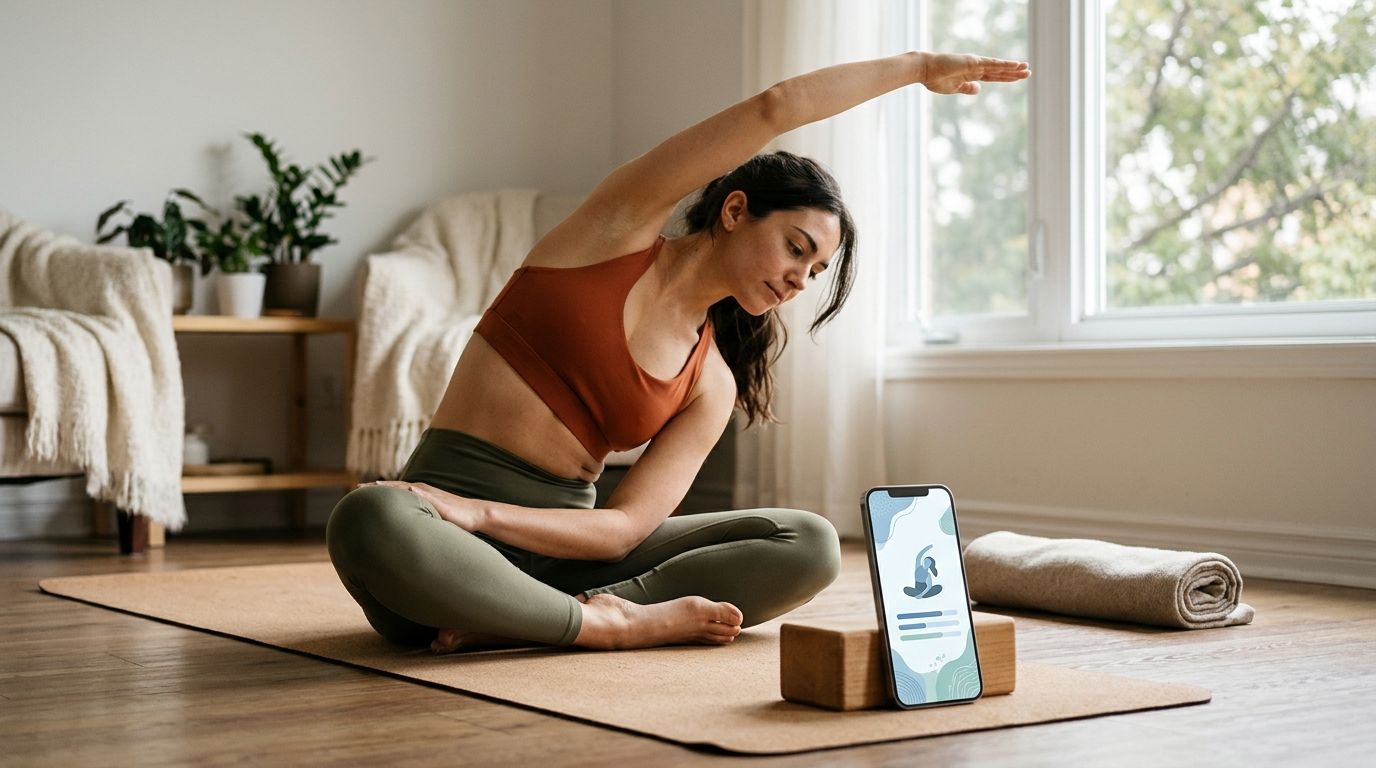
The mobility subscription fits a training-led routine. You want to move, follow a video, and make stretching part of your week. Its stated audience includes athletes and fitness enthusiasts, so that use case matches the product rather than stretching its purpose.
Hinge Health is the better fit when the central question is clinical: what is happening, what activity is appropriate, and how should care progress? Access and the services included depend on the program available to you.
Choose the category before comparing convenience. An easy-to-use exercise routine is not the same thing as care for an unresolved condition. Equally, a clinical program is not automatically the right purchase decision for someone who simply wants regular mobility practice.
Daily videos win for routine; a care program wins for direction
The standout feature on the mobility side is its daily video format. You get a defined activity rather than having to assemble a stretching session yourself. That structure suits someone whose obstacle is deciding what to do, not deciding whether a movement is appropriate for an injury.
Hinge Health's distinction is its clinical purpose. Exercise sits inside a musculoskeletal care program rather than functioning only as general fitness content. That matters when the next step needs to reflect your symptoms and functional limitations.
Neither format removes your responsibility to pay attention. A follow-along session should not become a contest to reach the deepest position. A care plan also requires feedback when an exercise feels wrong or your symptoms change.
For a 2026 comparison, ask a practical question: do you need a session to follow, or a care pathway to guide your decisions? The answers point toward different products for a reason.
Hinge Health is the better fit when clinical guidance comes first
Persistent pain changes the comparison. If discomfort keeps returning, affects normal tasks, or makes you alter your movement, choosing a larger exercise library does not answer the underlying question. You need appropriate assessment and advice.
Hinge Health belongs on that shortlist because musculoskeletal care is its purpose. Before enrolling, confirm eligibility, what professional support your program includes, and how you receive help when an exercise needs adjustment. Do not assume every access route includes identical services.
A general mobility subscription has a clear limitation here. Its routines are exercise content, not evidence that a particular movement is right for your symptoms. Feeling tight does not establish why you feel tight.
Neither app is the right first stop for an emergency. Seek urgent medical attention for serious symptoms such as new bladder or bowel dysfunction with back pain, or rapidly worsening weakness. A comparison page cannot assess those symptoms, and continuing a stretch is not an appropriate response.
Pliability has the clearer fit for sports recovery routines
For athletes, the product's stated focus matters. Daily mobility, stretching, and recovery videos match the goal of placing movement practice alongside lifting, running, and sport. HYROX competitors and teams are explicitly part of its audience.
That makes the mobility option the clearer fit when you already know you want an exercise habit around training. You are not asking an app to explain an injury. You are asking it to give your mobility work a repeatable place in the schedule.
There is an important limit: a recovery routine is not proof that you are ready for more training. Sleep, training load, nutrition, symptoms, and overall fatigue still matter. Completing a video does not cancel a difficult session or make painful movement safe.
Hinge Health remains relevant to athletes when pain or physical limitations become the main issue. Being competitive does not turn a clinical problem into a stretching problem. Choose around the problem, not around whether you identify as an athlete.
Self-directed practice wins for autonomy; care wins for oversight
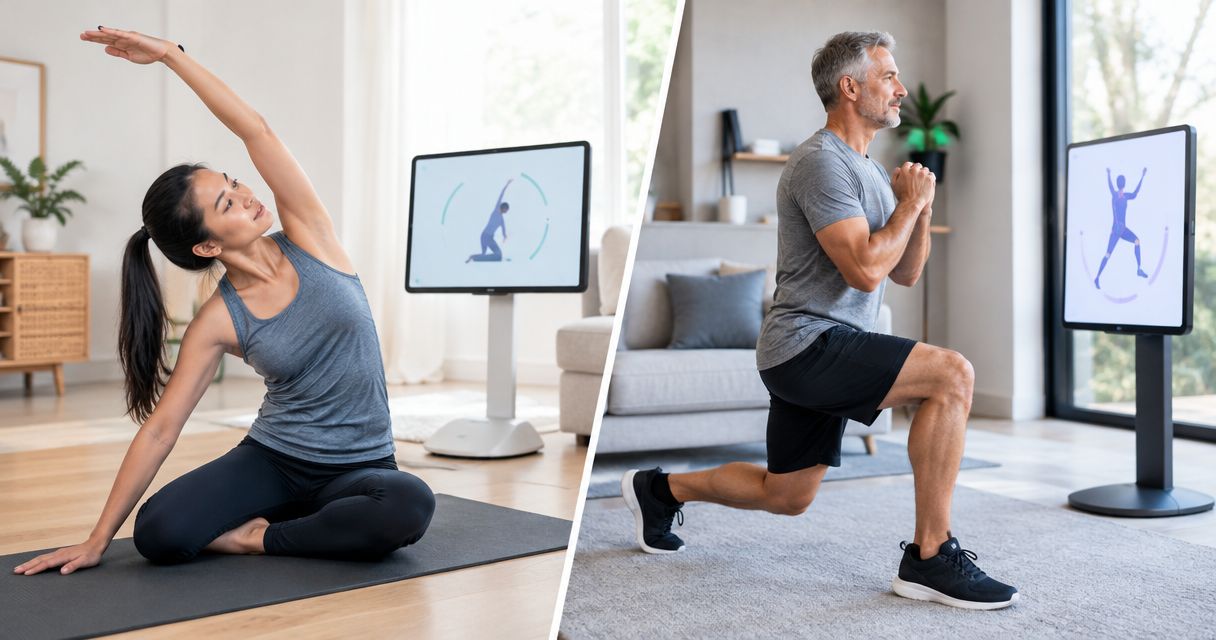
A self-directed routine gives you control over when to practice. That suits people who want exercise guidance without making a clinical program the center of their movement habits. The tradeoff is that you must recognize when the situation exceeds general exercise support.
A care pathway serves a different need. When your symptoms raise questions about exercise selection or progression, clinical guidance is more relevant than simply having another session available. The tradeoff is that eligibility and program structure become part of your decision.
Use this decision sequence before comparing app details:
- Training habit: You want regular mobility work and have no unresolved symptom concern driving the choice.
- Symptom assessment: Pain or a functional limitation is the reason you are looking for help.
- Access check: You need to confirm whether the clinical program is available through your benefits.
- Routine choice: Once the purpose is clear, choose a format you will actually follow.
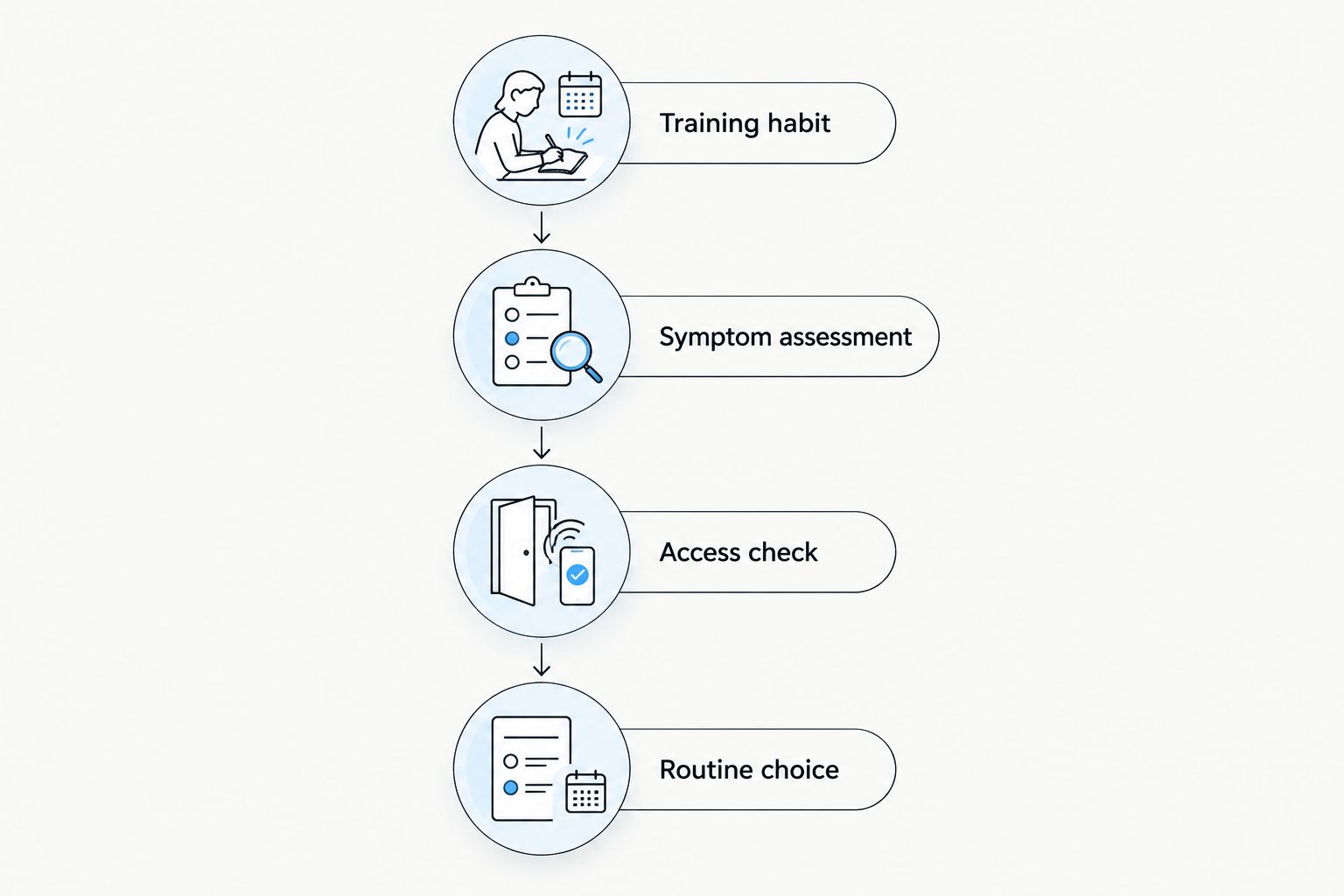
This sequence also helps workplace buyers. A general movement benefit and a clinical musculoskeletal program answer different employee needs. For that buying context, compare Hinge Health alternatives for workplace wellness rather than treating every exercise app as a direct replacement.
Both require participation to build a useful habit
This dimension is a tie. An app subscription does not create a stretching habit by itself, and enrollment in a care program does not complete the exercises for you. The useful format is the one you can follow appropriately and consistently.
For self-directed mobility, attach practice to something already established in your day. That might be the end of training or the transition away from your desk. Choose a realistic moment instead of relying on spare time appearing.
For a care program, follow the plan you receive and report problems rather than silently replacing uncomfortable exercises. Consistency should mean repeating suitable work, not pushing through symptoms to preserve a streak.
The 2026 decision is not which app can make you disciplined. It is which structure matches your needs closely enough that you can participate without confusion. Habit support and clinical appropriateness are separate checks; both matter.
Neither wins on results without a defined goal
There is no useful universal winner for results. A mobility routine and a musculoskeletal care program aim at different outcomes, so judging them by the same vague promise of feeling better hides the distinction.
For general mobility, choose a meaningful activity to observe. You might care about how comfortably you reach overhead, move into a squat, or settle into a position used in your sport. Track the activity without forcing range or treating a deeper stretch as automatic progress.
For clinical care, use the goals established with the care team. Daily function and symptom response matter more than how many exercise videos you complete. Report deterioration rather than interpreting every difficult session as necessary progress.
Neither option deserves a promised recovery timeline in this comparison. Your starting point, condition, training demands, and participation differ. Judge progress against your actual goal, not a competitor's marketing language.
Pricing: subscription access versus benefit eligibility
The pricing models are different. The mobility app is a subscription product; Hinge Health is commonly accessed through participating employers or health plans. For your 2026 decision, check current terms and eligibility directly before making a commitment.
A consumer subscription makes the purchase decision yours. Evaluate the billing arrangement, renewal terms, and cancellation process against how you intend to use it. Do not buy a routine-based product expecting it to include clinical services that have not been stated.
For Hinge Health, begin with access rather than a subscription comparison. Confirm whether your employer or health plan participates, whether you qualify, and what your specific program includes. Eligibility through someone else's benefits does not establish your eligibility.
The practical tradeoff is direct purchase versus benefit-dependent access. Neither model determines clinical suitability or guarantees that you will use the service. Decide what support you need first, then check the terms of the relevant option.
Final verdict: match the product to the problem
Choose Pliability if you want a training habit
Best for: athletes and fitness enthusiasts seeking daily mobility, stretching, and recovery videos. Choose it when your goal is repeatable exercise practice around training, not assessment of an unresolved problem.
The advantage is a format built around that habit. The limitation is equally clear: general routines do not replace individualized clinical assessment.
Choose Hinge Health if you need a care pathway
Best for: eligible people seeking digital musculoskeletal care for pain or functional limitations. Choose it when the main need is guidance within a clinical program, and confirm the services included through your access route.
The advantage is its care-oriented purpose. The limitation is that eligibility and program details must be checked; it is not simply an interchangeable consumer stretching subscription.
| Dimension | Winner |
|---|---|
| General mobility and training habit | Mobility subscription |
| Daily stretching and recovery videos | Mobility subscription |
| Clinical guidance for symptoms | Hinge Health |
| Sports-focused routine fit | Mobility subscription |
| Independent exercise practice | Mobility subscription |
| Exercise within a care pathway | Hinge Health |
| Habit building | Tie: participation matters |
| Results | No universal winner; define the goal |
| Pricing model | No universal winner; check terms and eligibility |
FAQ
What's the main difference between Pliability and Hinge Health?
Pliability offers daily mobility, stretching, and recovery video routines, while Hinge Health provides digital musculoskeletal care. Choose around whether you need a general movement habit or a clinical care pathway.
Is Hinge Health better for ongoing back pain?
Hinge Health is the more relevant category when ongoing back pain requires clinical guidance. Confirm eligibility and program services, and seek appropriate assessment rather than choosing stretching solely because an area feels tight.
Which option is better for HYROX recovery routines?
The mobility subscription is the clearer fit for general recovery routines around HYROX training because HYROX competitors are part of its stated audience. Pain or a suspected injury changes the decision toward appropriate clinical care.
Can a stretching app replace physical therapy?
A general stretching app is not a replacement for physical therapy when individualized assessment or treatment is needed. Exercise videos do not establish what is causing your symptoms or which movements suit your condition.
How do I check whether I can use Hinge Health?
Check with your employer, health plan, or Hinge Health to confirm eligibility. Ask which services your program includes rather than assuming all access routes provide the same support.
Can I use mobility routines alongside a clinical care plan?
Ask your treating clinician whether additional mobility routines fit your care plan. Share the movements you want to add so the advice reflects your symptoms and current exercise guidance.
Should I stretch harder if I still feel tight?
Do not treat persistent tightness as an instruction to stretch harder. Reduce or stop movements that provoke symptoms, and seek assessment when discomfort persists, worsens, or limits normal activity.
One last thing
Before choosing, finish this sentence: I need help with this specific activity. Name the activity, not just the body part.
Reaching a shelf, tolerating a workday, and completing training comfortably are clearer goals than fixing tight shoulders. A specific goal makes it easier to choose between a routine you follow and care that helps determine what to do.