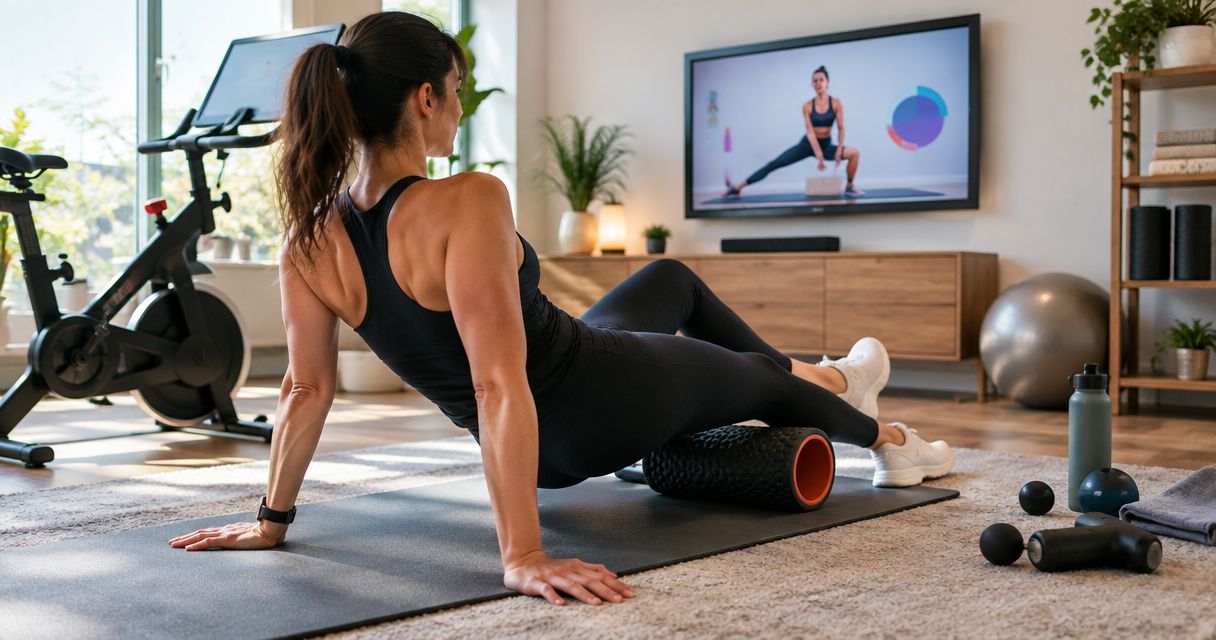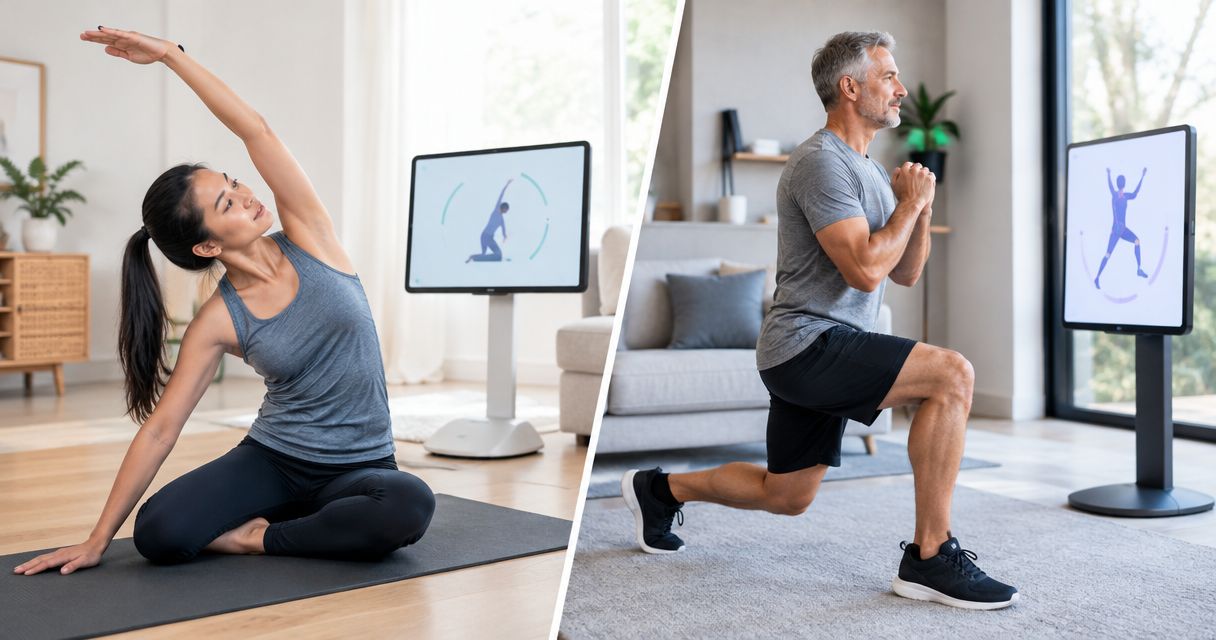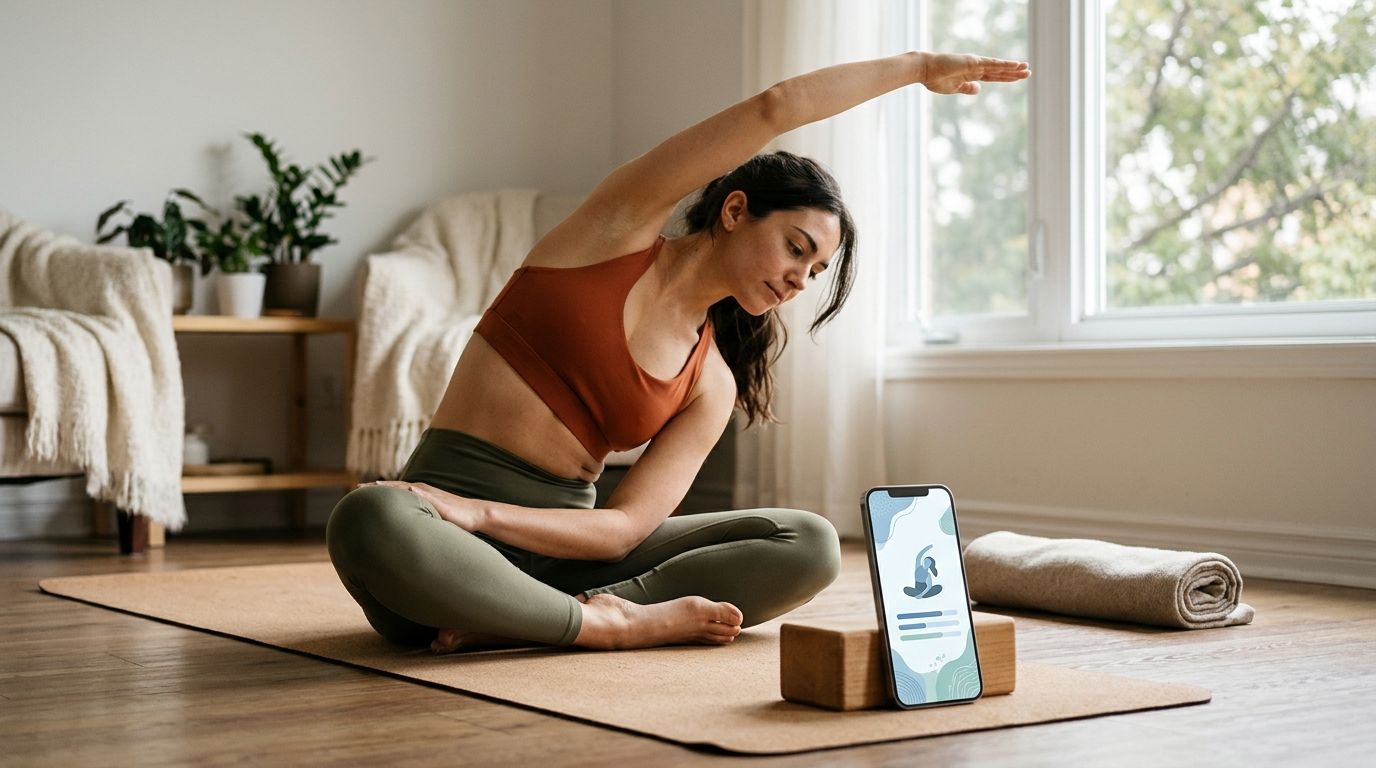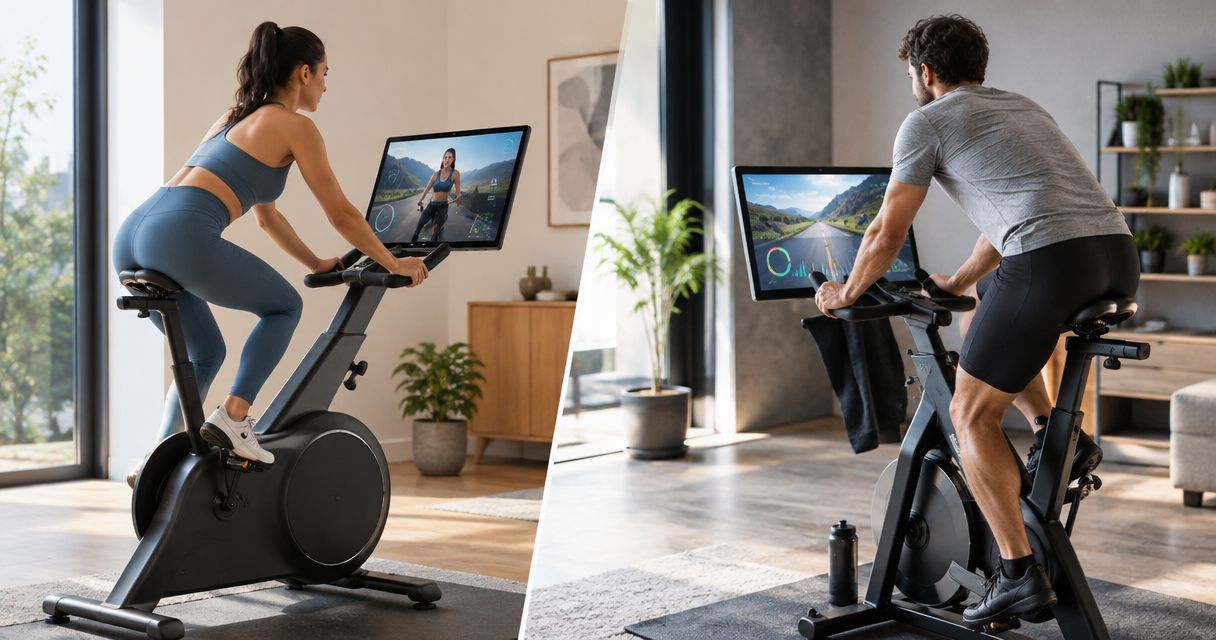
Choose Pliability if you already train and want dedicated mobility, stretching, and recovery routines; choose Peloton if you want guided workouts across several exercise categories. In 2026, the decision is specialization versus workout variety—not which app does everything better.
- Pliability vs Peloton comes down to dedicated mobility routines versus a broader library of guided workouts.
- Choose Pliability for daily stretching and recovery alongside an existing training program.
- Choose Peloton when you want strength, cardio, yoga, and stretching within a broader fitness subscription.
- Both provide guided sessions; neither replaces individualized assessment for persistent pain.
Why this matters
A workout app and a mobility app solve different scheduling problems. One helps you decide how to exercise. The other gives movement work a defined place alongside exercise you already do.
If your week already includes running, lifting, or HYROX preparation, another workout library is not automatically the missing piece. If you struggle to exercise consistently at all, a dedicated stretching subscription does not address the whole problem either.
For your 2026 plan, separate physical activity from mobility work. The World Health Organization recommends adults get at least 150 minutes of moderate-intensity aerobic activity, or 75 minutes of vigorous activity, each week, plus muscle-strengthening activity on 2 or more days. Stretching alone does not fulfill those recommendations.
That distinction sets the comparison: choose the app for the job your current routine leaves unfinished.
At a glance
Use this 2026 comparison to match each subscription to your actual training needs. The rows follow the decisions covered below.
| Dimension | Pliability | Peloton |
|---|---|---|
| Best for | Athletes and fitness enthusiasts seeking dedicated mobility work | People seeking guided workouts across exercise categories |
| Standout feature | Daily mobility, stretching, and recovery video routines | A broader mix of instructor-led fitness classes |
| Workout breadth | Focused on mobility and recovery | Includes cardio, strength, yoga, and stretching |
| Daily habit | A dedicated place for mobility sessions | An opportunity to combine workouts and stretching |
| Guided format | Video routines | Instructor-led classes |
| Existing training plan | Adds mobility work alongside established training | Can supply workouts as well as supplementary stretching |
| Equipment fit | Evaluate the requirements of the routine you select | Evaluate the class type and equipment it requires |
| Pricing model | Subscription app | Subscription access, with equipment-connected options |
Pliability wins for mobility-led training
Pliability is the better fit for athletes who want daily mobility work alongside an existing training program. Its stated purpose is direct: mobility, stretching, and recovery video routines for athletes and fitness enthusiasts.
That focus matters when you do not need help choosing your next run or strength session. You need a clear place for the movement work that keeps getting postponed. A dedicated category makes the subscription's role easier to define.
Consider a runner who already follows a training plan. A broad fitness library adds more possible workouts, but more choice is not the same as addressing a neglected habit. A mobility-focused subscription matches the narrower task.
The limitation is equally clear. Dedicated mobility programming is not a substitute for a complete strength or endurance program. Choose it to support the training you already have, not to replace every part of that training.
Peloton wins for workout variety
Peloton is the better choice when you want the app to provide workouts, not just supplementary movement sessions. Its class offering spans categories including cycling, running, strength, yoga, and stretching.
That breadth suits someone building a home exercise routine or looking for alternatives across the week. You can choose different types of activity rather than making mobility the subscription's main purpose.
The tradeoff is attention. A broader library gives stretching more competition inside your own schedule. That is not a flaw in the classes; it is a practical issue if you repeatedly choose another workout instead of doing the movement work you intended.
Choose breadth when you will use it. If your strength and endurance training already happen elsewhere, do not treat additional workout categories as an automatic advantage.
Both support a daily habit; your schedule decides the winner
Neither subscription can make consistency automatic. The useful question is where a session fits in your day without creating another decision you will avoid.
A dedicated mobility app gives that habit a distinct purpose. A broader fitness app lets you keep exercise and stretching within the same service. Both arrangements are workable.
Before choosing, write down the trigger for your session:
- Existing training: You finish a scheduled workout and then follow your planned movement session.
- Workout variety: You open the app because you need a guided exercise session that day.
- Mobility habit: You reserve a separate place in your day for stretching and movement work.
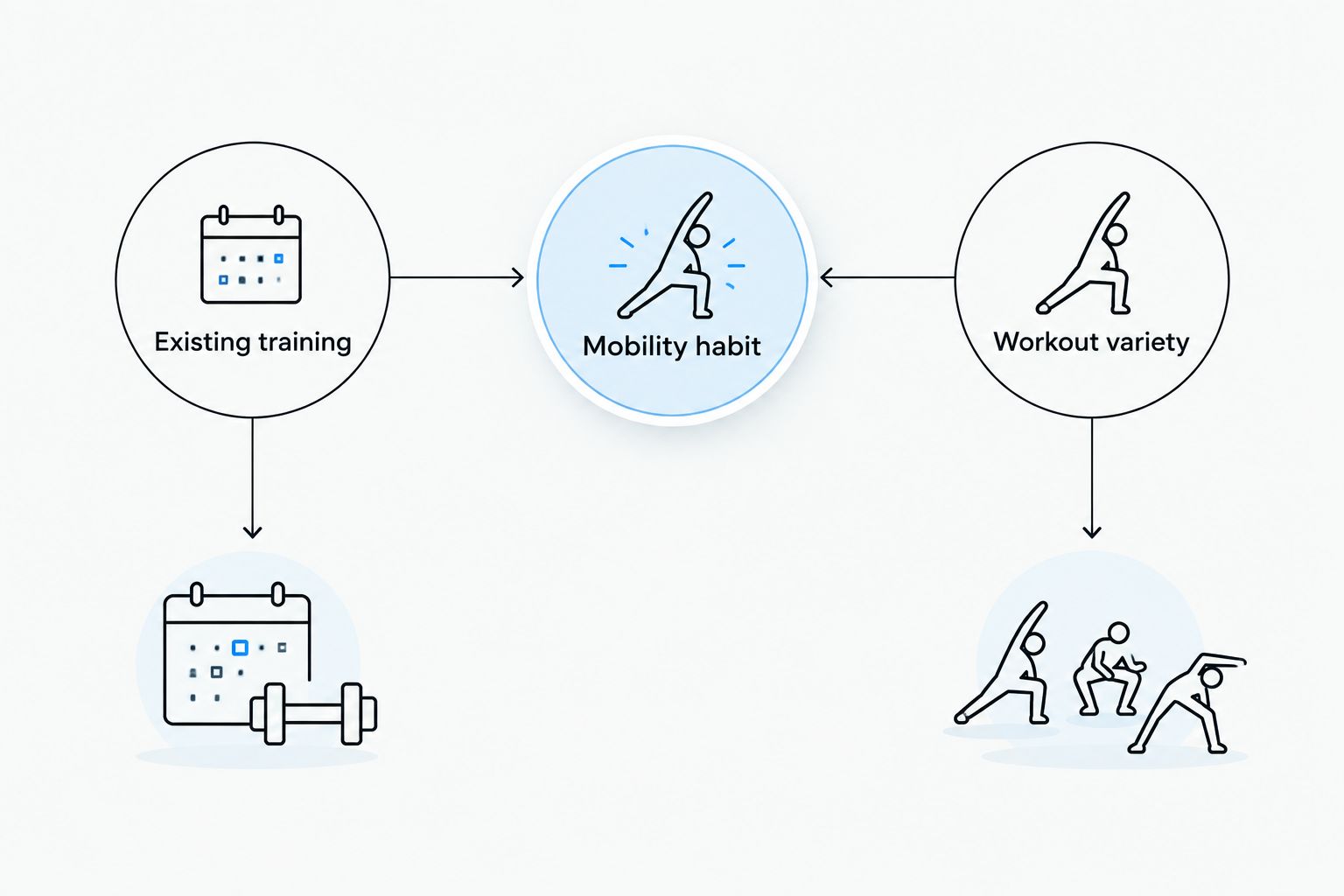
This dimension is a tie until you identify your scheduling problem. If switching services makes you skip sessions, keeping everything together has value. If stretching disappears beneath other workouts, a separate purpose has value instead.
Do not confuse browsing with participation. The useful library is the one that leads to completed sessions.
Both guide movement, but neither provides individual assessment
Both services use guided sessions. That gives you something to follow rather than requiring you to assemble every exercise yourself.
Video guidance has a boundary: the session does not physically examine you. Following a demonstration is different from having someone assess your symptoms, technique, or injury history in person.
For ordinary movement practice, choose guidance you can understand and follow without forcing positions. Leave room to reduce a movement or stop when it does not feel appropriate.
Neither app wins as a replacement for clinical care. Persistent pain, a recent injury, or symptoms that worsen with exercise call for advice from a qualified clinician. An app comparison should not become a diagnosis.
That boundary also keeps expectations useful. Evaluate whether you can follow the sessions consistently, not whether a subscription promises to fix every stiff or uncomfortable joint.
Dedicated recovery work fits an established training plan better
When your training plan is already set, the strongest reason to add an app is to fill a specific gap. Mobility and stretching are distinct from adding another demanding workout.
The client's stated audience includes HYROX competitors and teams, making that use case relevant here. The comparison is about programming purpose, not proof of faster race times or injury prevention.
Ask what you want the subscription to change:
- You keep skipping planned mobility sessions.
- You want guided stretching rather than improvising it.
- You want recovery-focused movement alongside training already assigned elsewhere.
The mobility specialist wins this scenario because its purpose matches the gap. Peloton remains useful if your gap is different—for example, you need guided strength or cardio sessions as well.
Recovery also extends beyond what happens on a screen. Do not judge either service as though completing a stretch session replaces sleep, appropriate training load, or adequate nutrition.
For a broader shortlist focused on this use case, compare the best recovery apps for athletes.
Equipment fit is a tie until you choose the session
Do not reduce this comparison to owning a connected bike. Peloton includes exercise categories beyond cycling, so the equipment question depends on what you intend to do.
A strength class, a cycling class, and a stretching session have different practical requirements. Check the requirements of your intended sessions before treating any subscription as a fit for your home.
The same discipline applies to mobility routines. Look at the space, positions, and any equipment a selected routine calls for rather than assuming every session will suit every setting.
Neither service wins equipment fit in the abstract. Your available space and chosen session decide that question. If you cannot comfortably get into a position or set up the required equipment, library size is irrelevant.
This is especially useful when comparing app access with equipment-connected membership options. Separate the content you want from hardware you do not intend to use.
Pricing: compare the subscription you will actually use
In 2026, compare current subscription terms directly before committing. Pliability uses an app subscription model; Peloton also uses subscription access, with options connected to its exercise equipment.
The meaningful tradeoff is focused access versus broader access. A focused subscription has a clear job. A broader subscription combines more exercise categories, but those categories only matter if you use them.
Make the comparison on equal terms:
- Compare the access needed for your intended sessions.
- Separate app-only use from equipment-connected use.
- Check billing frequency and cancellation terms before subscribing.
- Identify overlap with subscriptions you already maintain.
Do not assume broader access is better value. Equally, do not assume specialization justifies a second subscription when you already complete suitable stretching sessions elsewhere.
The better subscription is the one that fills an unmet need without duplicating a habit you already sustain. That decision is more useful than comparing library size alone.
Final verdict: choose the job before the app
Choose Pliability if you are an athlete adding mobility work
You already have a running, lifting, sport, or HYROX plan. You want daily mobility, stretching, and recovery video routines to sit alongside it, rather than another source of workouts.
Winner: Pliability for dedicated mobility support. The limitation is scope: keep your broader strength and endurance programming in place.
Choose Peloton if you are building a broader exercise routine
You want guided workouts across several categories and expect to use more than stretching. Keeping those sessions within a broader fitness service matters more to you than having a mobility-specific subscription.
Winner: Peloton for workout variety. The limitation is focus: you still need to make stretching a deliberate part of your schedule.
For your 2026 decision, ignore features that do not change what you will actually do. Choose the service that supplies your missing session.
| Dimension | Winner |
|---|---|
| Dedicated mobility focus | Pliability |
| Workout variety | Peloton |
| Daily habit | Tie; schedule determines fit |
| Guided movement | Tie; neither replaces individual assessment |
| Mobility alongside established training | Pliability |
| Equipment fit | Tie; session requirements determine fit |
| Subscription value | Depends on the access you will use |
FAQ
Is Pliability better than Peloton for stretching?
Pliability is the better fit when dedicated mobility, stretching, and recovery routines are your main reason for subscribing. Peloton fits better when stretching is one part of a broader guided workout routine.
Should I choose Peloton if I want strength and cardio too?
Choose Peloton if you want guided strength and cardio workouts alongside stretching. Its broader exercise offering matches that need better than a mobility-focused subscription.
Do I need a Peloton bike to consider Peloton?
No. Peloton includes classes beyond cycling, so owning a bike is not the deciding factor. Check the access and equipment requirements for the specific classes you intend to use.
Can a mobility app replace my workouts?
A mobility app does not replace a complete aerobic and strength-training routine. Use dedicated stretching and mobility work alongside the exercise appropriate to your goals and health.
Which option is better if I already follow a HYROX plan?
A dedicated mobility subscription fits better if your HYROX plan already supplies your workouts and your missing habit is mobility work. Choose a broader workout service only if you also need the exercise sessions it provides.
Can either app treat persistent hip or shoulder pain?
Neither app should replace an individualized assessment for persistent pain. Seek advice from a qualified clinician rather than forcing a guided position that worsens symptoms.
How should I compare subscription value?
Compare the access you will actually use, including whether equipment-connected access is relevant. Check current billing and cancellation terms, then remove features that duplicate services or routines you already use.
One last thing
Before subscribing, put your next mobility session on your calendar. Give it a real place beside work, training, and everything else you already do.
If you cannot identify that place, more content is not the immediate solution. Decide when the session happens first; choose the app second.