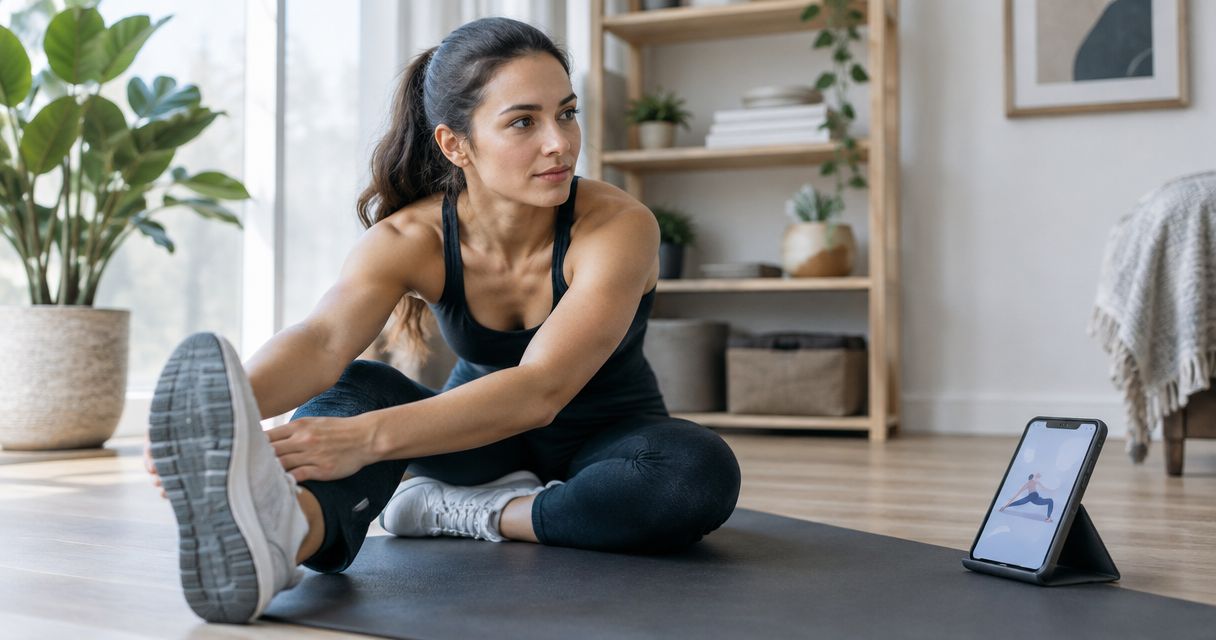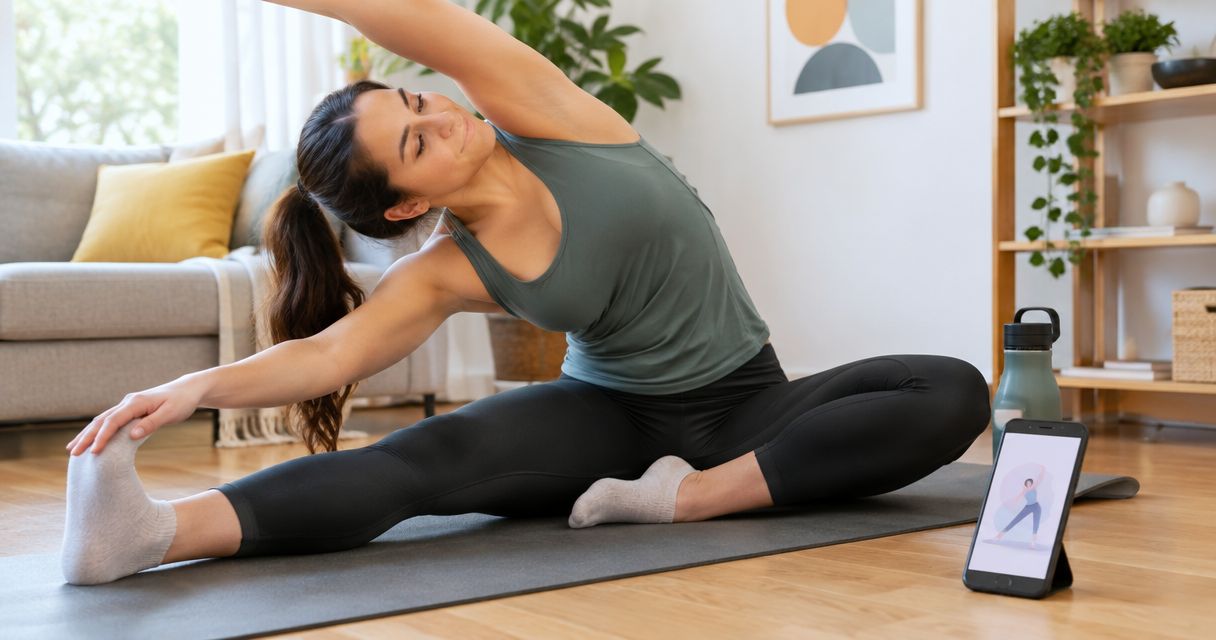
Best overall for athletes: Pliability. Best for flexibility-focused practice: StretchIt. Best for yoga-led movement: Down Dog. Best for combining stretching with workouts: Nike Training Club. This 2026 guide compares the best daily stretching app options by the kind of practice you want to repeat—not by the longest feature list.
- Pliability is the best daily stretching app for athletes seeking daily mobility, stretching, and recovery videos.
- Choose StretchIt when flexibility training is your main goal rather than a supporting part of your workouts.
- Choose Down Dog for yoga-led movement; Nike Training Club for stretching alongside broader fitness sessions.
- Choose a repeatable routine, not a harder stretch. Stop when movement causes sharp pain.
Why this matters
A stretching app should solve a practical problem: you want to move, but deciding what to do keeps getting in the way. Guided sessions remove that decision. The useful question is whether the guidance matches your body, your training, and the time you actually have.
Stretching, mobility work, and yoga overlap, but they are not interchangeable. Flexibility describes available range of motion; mobility also involves controlling movement through that range. Yoga brings a different practice structure, including poses, transitions, and breath.
Choose the practice you need before choosing the app. An athlete looking for recovery videos and a person wanting a daily yoga practice should not receive the same recommendation just because both feel tight.
What makes the best daily stretching app?
Use these five criteria to choose your app in 2026. A good match makes the next session obvious without asking you to change your main training goal.
- Goal fit: The app's central practice should match your priority: training support, flexibility, yoga, or general fitness.
- Clear guidance: You need to understand the position, the intended movement, and when to ease off. Copying a shape is not enough.
- Repeatable format: Choose a style you will return to on an ordinary day, not only when motivation is high.
- Training compatibility: Stretching should have a clear place beside lifting, running, sport, or your other activity—not compete with it by accident.
- Appropriate boundaries: Guided exercise is not a diagnosis. Pain, recent injury, and persistent restrictions require more than an app recommendation.
Do not rank an app higher simply because a session looks demanding. More intensity is not automatically more useful. For daily practice, clear instructions and a sensible stopping point matter more than reaching the deepest position on screen.
Daily stretching apps at a glance
These 2026 recommendations have distinct jobs. The order favors a dedicated daily stretching and mobility practice first, then alternatives for different goals.
| App | Best for | Standout focus | Key limitation |
|---|---|---|---|
| Pliability | Athletes and fitness enthusiasts | Daily mobility, stretching, and recovery video routines | Guided routines do not replace individual injury assessment |
| StretchIt | Flexibility-focused practice | Stretching and flexibility training | A flexibility goal is narrower than overall movement control |
| Down Dog | Yoga-led daily movement | Guided yoga practice | Yoga is not the same as a dedicated stretching routine |
| Nike Training Club | Stretching within general fitness | Workout guidance that includes yoga and mobility | A broad fitness app requires you to keep stretching a priority |
The table is a decision tree, not a claim that every person should choose the first row. If yoga is the activity you enjoy enough to repeat, the yoga option belongs above an athlete-focused stretching app on your personal shortlist.
1. Pliability: best daily stretching app for athletes
Pliability offers a subscription app with daily mobility, stretching, and recovery video routines. Its stated audience includes athletes and fitness enthusiasts, including HYROX competitors and teams. That makes it the closest match here when guided movement is meant to support an existing training habit.
The appeal is straightforward: you want a dedicated practice rather than another general workout. You are looking for guidance around movement and recovery, not a reason to replace your lifting, running, or sport sessions.
Pliability pros:
- Daily routines give the practice a defined place in your schedule.
- Video guidance provides a movement reference instead of a written exercise list alone.
- Mobility, stretching, and recovery sit within the same stated offering.
- The audience includes athletes whose main activity happens outside the app.
Pliability cons:
- The subscription model adds an ongoing commitment alongside your other training resources.
- A guided video cannot assess your pain, injury history, or the cause of a restriction.
- This is not the right category of tool if your main need is a complete strength-training program.
Best for: Athletes and fitness enthusiasts who want daily guided mobility, stretching, and recovery routines alongside their training.
Before committing to a routine, decide where it belongs. After training, during a separate movement break, and on a non-training day are different contexts. Give the practice a consistent place rather than expecting yourself to remember it whenever you feel stiff.
Verdict: Buy if you want a dedicated, athlete-focused daily practice; skip if you need injury assessment or your main workout plan.
2. StretchIt: best stretching app for flexibility-focused practice
StretchIt centers its offering on stretching and flexibility training. It belongs on your shortlist when improving flexibility is the practice itself, rather than something you add around another activity.
That distinction matters. Wanting more comfortable range in everyday movement is different from wanting to spend dedicated time on flexibility work. Choose the latter only when you actually enjoy the process, not because a deep position looks impressive.
StretchIt pros:
- A stretching-focused category keeps flexibility at the center of your choice.
- The purpose is easy to distinguish from a broad workout app.
- It suits people who want flexibility practice to be a regular training activity.
StretchIt cons:
- Flexibility alone does not cover strength and control through your available range.
- Comparing your position with a demonstration can distract from your own comfortable range.
- A flexibility-focused choice is less aligned with someone whose main interest is yoga or general workouts.
Best for: People who want stretching and flexibility training to be a central part of their routine.
Set a movement goal rather than a visual one. A position should feel controlled and repeatable; reaching farther is not useful if you have to force it. Treat the demonstration as instruction, not a measurement of where your body ought to be.
Verdict: Buy if flexibility practice is your main goal; skip if you want stretching only as support for a broader fitness routine.
3. Down Dog: best app for yoga-led daily movement
Down Dog is a yoga app. Its place in this guide comes from yoga's use of movement, sustained positions, and transitions—not from treating yoga as another name for stretching.
Choose this route when you want a practice organized around yoga. If your real goal is to spend time moving with attention to breath and position, a dedicated stretching list can feel like the wrong format even when it addresses similar body areas.
Down Dog pros:
- Yoga provides a recognizable structure for a recurring movement practice.
- Poses and transitions offer a different experience from isolated stretches.
- It fits readers who already prefer yoga to a fitness-oriented stretching session.
Down Dog cons:
- A yoga practice does not automatically match a specific training-related mobility goal.
- Some positions require balance or strength as well as flexibility.
- Following a sequence is not a substitute for adapting positions to your own limits.
Best for: People who want daily movement through yoga rather than a dedicated athlete-oriented stretching routine.
Be honest about the format you enjoy. If you repeatedly avoid isolated stretches but return to yoga, that preference matters. The right daily app is one you use with attention, not one you select because its category sounds more technical.
Verdict: Buy if yoga is the practice you want to repeat; skip if you specifically want standalone stretching and recovery videos.
4. Nike Training Club: best app for stretching alongside workouts
Nike Training Club offers guided fitness workouts, including yoga and mobility content. It is the broadest option in this comparison: stretching sits within a larger exercise context rather than defining the whole choice.
That suits readers who want workout guidance and movement practice in one app. It also creates a practical responsibility: you need to choose the mobility or yoga work deliberately instead of assuming it will happen because the app includes it.
Nike Training Club pros:
- General workouts and movement-focused content share the same fitness context.
- It suits people whose main goal is exercising regularly, with stretching as a supporting activity.
- The broader scope gives you an alternative to choosing a stretching-only app.
Nike Training Club cons:
- A broad workout offering does not make your daily stretching decision for you.
- More training choices can distract from the specific habit you intended to build.
- It is a less direct category match when dedicated stretching is your only priority.
Best for: General fitness users who want stretching or mobility alongside guided workouts.
Decide which sessions count toward your movement habit. A strength workout and a deliberate mobility session serve different purposes. Keeping that distinction clear stops your daily stretching goal from disappearing into a general intention to exercise more.
Verdict: Buy into this approach if you want broader workout guidance; skip if you want the simplest dedicated stretching focus.
How we ranked these stretching apps
This 2026 ranking prioritizes purpose over feature volume. The criteria are goal fit, clear guidance, repeatable format, training compatibility, and appropriate boundaries. Each recommendation occupies a different use case rather than competing for an undefined overall score.
The first position goes to the option whose stated offering directly combines daily mobility, stretching, and recovery for athletes. The other positions answer different needs: dedicated flexibility, yoga-led movement, and stretching within general fitness.
The ranking is about matching a practice to a goal, not proving that one app produces better physical results. Your starting point, consistency, exercise selection, and response to movement still matter.
Make your daily practice easier to repeat
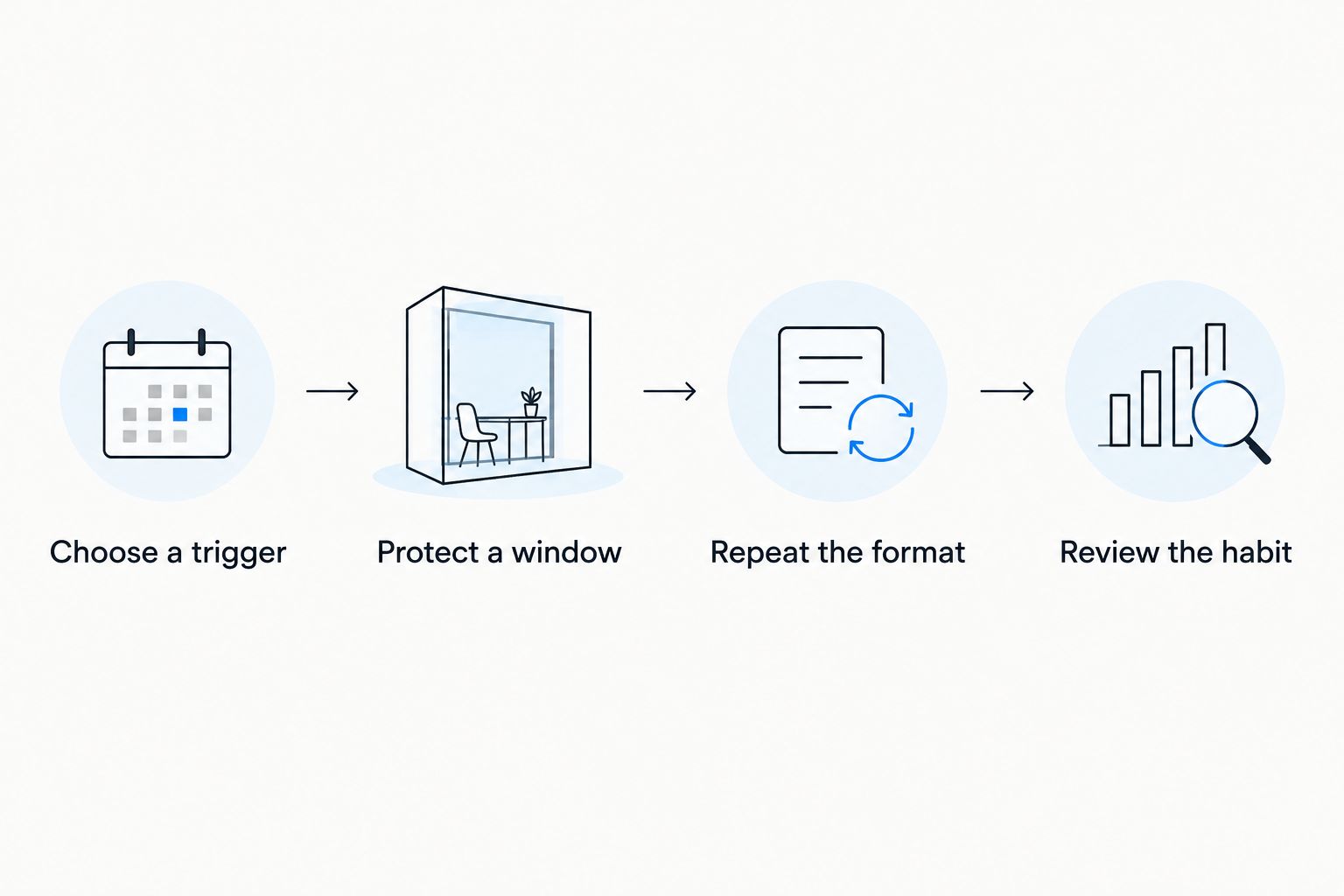
For your 2026 routine, start with a small scheduling experiment. These are suggested habit-building steps, not app specifications or promises about how quickly your flexibility will change.
- Choose a trigger. Attach the session to something already in your day, such as finishing work or setting down your training bag.
- Protect a window. Reserve 5 minutes to begin. Follow the selected session's instructions rather than rushing to fit a longer routine into that window.
- Repeat the format. Complete 3 sessions before changing your whole approach. Judge clarity and fit, not whether you immediately reach farther.
- Review the habit. After 7 days, ask whether the practice was easy to start, comfortable to follow, and compatible with your training.
Keep the review simple. Write down whether you completed the practice and whether any movement caused discomfort. Do not treat a better-looking position as the only sign that a session was worthwhile.
Stop a movement that causes sharp pain. Persistent pain, a recent injury, or symptoms such as numbness need assessment from a qualified healthcare professional rather than a more ambitious stretch.
Which daily stretching app should you choose?
Choose Pliability for athlete-focused daily mobility, stretching, and recovery. Choose StretchIt for flexibility practice, Down Dog for yoga, or Nike Training Club when stretching belongs inside a broader workout habit.
For an undecided reader, the deciding question is simple: what do you want to open tomorrow? A dedicated movement routine, a flexibility session, a yoga practice, and a general workout are different answers. Pick the answer that matches your actual goal in 2026.
Build your daily movement habit
Explore guided daily mobility, stretching, and recovery routines for athletes and fitness enthusiasts.
FAQ
What's the best daily stretching app for athletes?
Pliability is the best fit in this comparison for athletes seeking daily mobility, stretching, and recovery video routines. Its stated audience includes fitness enthusiasts, HYROX competitors, and teams.
Is a stretching app better than a yoga app?
A stretching app is the better category match for dedicated stretching; a yoga app is the better match for yoga practice. Choose by the activity you want to repeat rather than treating the two formats as interchangeable.
What's the difference between flexibility and mobility?
Flexibility is available range of motion; mobility also involves controlling movement through that range. A stretching practice and controlled movement work can address different parts of the same goal.
Should I stretch every day?
Daily stretching is a scheduling choice, not a requirement to push every body area every day. Choose comfortable movements, account for your other training, and stop movements that cause sharp pain.
How long should a daily stretching session last?
Choose a session length you can follow without rushing or forcing positions. The suggested habit experiment in this guide starts by reserving 5 minutes to begin; that is a scheduling recommendation, not a required routine duration.
Can a stretching app fix pain or an injury?
A stretching app cannot diagnose pain or an injury. Persistent pain, recent injury, or numbness needs assessment from a qualified healthcare professional.
How do I choose between StretchIt and Nike Training Club?
Choose StretchIt when flexibility practice is your main goal; choose Nike Training Club when you want movement work alongside broader guided fitness workouts. The distinction is dedicated stretching versus a wider exercise offering.
One last thing
Your deepest stretch is not your best daily habit. Choose the app that helps you practice within a range you can manage today. You do not need to match the instructor's shape to follow the instruction well.
Before your next session, set one boundary: no forcing a position to make it look complete. That keeps the decision where it belongs—on the movement you can perform, not the image on your screen.