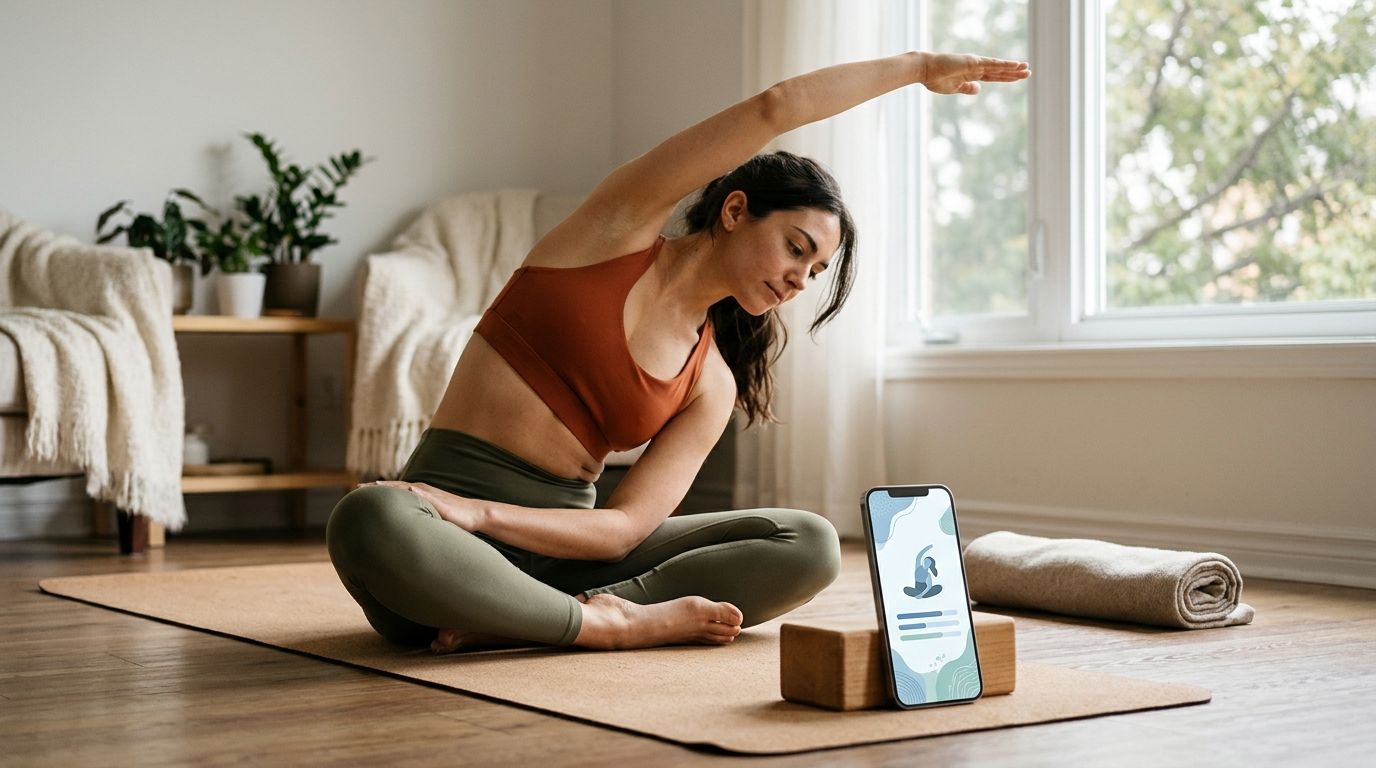
Hinge Health delivers digital musculoskeletal care, including virtual physical therapy. That clinical focus serves a different need from everyday stretching and recovery. The best Hinge Health alternative in 2026 is the Pliability mobility app for daily movement routines; Sword Health belongs on your shortlist when you need another clinical musculoskeletal care provider.
- For hinge health alternatives focused on daily mobility and recovery, choose Pliability rather than treating stretching as clinical care.
- Compare Sword Health with Hinge Health when your priority is clinical musculoskeletal care.
- Consider in-person physical therapy when employees want assessment and treatment in a clinic.
- Separate workplace wellness from treatment before comparing providers or planning an employee rollout.
Why this matters
Workplace wellness and musculoskeletal treatment overlap, but they are not interchangeable. An employee seeking a daily mobility habit needs a different service from someone seeking assessment for persistent back pain.
Start with the job you need done. Are you offering optional movement routines, arranging access to clinical care, or trying to cover both? A single shortlist becomes misleading when it mixes these needs without explaining the difference.
For a 2026 workplace wellness decision, separate 2 pathways: everyday movement and clinical care. Compare options within each pathway first. Then decide whether your workforce needs one service or complementary services with clear boundaries.
Hinge Health alternatives at a glance
This comparison separates each option by purpose. It does not treat a stretching subscription as equivalent to physical therapy.
| Option | Best for | Standout feature | How it differs from Hinge Health |
|---|---|---|---|
| Hinge Health | Digital musculoskeletal care | Virtual physical therapy | The clinical benchmark for this comparison |
| Pliability mobility app | Daily mobility, stretching, and recovery | Daily video routines for athletes and fitness enthusiasts | A movement-routine subscription, not a replacement for clinical care |
| Sword Health | Evaluating another digital musculoskeletal provider | Digital physical therapy | Another clinical provider to assess against your care requirements |
| In-person physical therapy | Employees who prefer clinic-based assessment and treatment | Face-to-face clinician visits | Changes the care setting rather than replacing treatment with wellness content |
Choose by purpose before comparing features. A long feature list does not resolve a mismatch between wellness content and clinical treatment.
1. Pliability: best for daily mobility and recovery
This subscription app offers daily mobility, stretching, and recovery video routines for athletes and fitness enthusiasts, including HYROX competitors and teams. Its role on a workplace shortlist is straightforward: guided movement practice, not clinical assessment.
Choose this category when employees want routines they can follow as part of their own movement habits. Do not position the app as a treatment pathway for an injury or an unexplained symptom.
Where it shines
- Clear purpose: mobility, stretching, and recovery sit at the center of the offering.
- Video guidance: employees looking for follow-along routines have a defined content format.
- Relevant audience: the stated focus includes athletes, fitness enthusiasts, and teams.
Where it falls short
- A mobility subscription is not a substitute for individualized clinical assessment or prescribed rehabilitation.
- An athlete-focused offering is not automatically the right fit for every employee's needs or preferences.
- A consumer subscription does not, by itself, establish employer administration, benefits integration, or workplace reporting capabilities. Confirm those requirements directly before planning a rollout.
Head-to-head with Hinge Health
| Dimension | This mobility subscription | Hinge Health |
|---|---|---|
| Primary purpose | Daily mobility, stretching, and recovery | Musculoskeletal care |
| Core format | Video routines | Digital care, including virtual physical therapy |
| Decision to make | Does this support an everyday movement habit? | Does this meet the employee's clinical care needs? |
Best for: a workplace wellness shortlist centered on optional daily movement, especially for employees already interested in fitness.
Verdict: Buy for the movement-routine use case; skip as a replacement for clinical care. Confirm workplace purchasing and administration requirements before committing.
2. Sword Health: best for another clinical care shortlist
Sword Health is a digital musculoskeletal care provider. It belongs beside Hinge Health when your main question is how employees will access clinical support, rather than which stretching videos they will use.
Treat this as a provider comparison. Evaluate the care pathway, employee eligibility, clinician involvement, and contractual requirements directly instead of assuming two services work identically because they share a category.
Where Sword Health shines
- Relevant category: digital musculoskeletal care makes it a closer comparison with Hinge Health than a general stretching app.
- Clinical purpose: it keeps the purchasing discussion focused on care rather than exercise content alone.
Where Sword Health falls short
- A clinical service is a different purchase from a daily mobility subscription; do not assume it meets the same brief.
- A shared category does not establish equivalent coverage, access, or service terms. Those details need a direct comparison.
Head-to-head with Hinge Health
| Dimension | Sword Health | Hinge Health |
|---|---|---|
| Service category | Digital musculoskeletal care | Digital musculoskeletal care |
| Relevant use case | Clinical support | Clinical support |
| Evaluation priority | Verify the proposed care pathway and access terms | Verify the current care pathway and access terms |
Best for: employers evaluating another clinical musculoskeletal provider, not simply adding stretching content.
Verdict: Hold for a direct provider review. Choose only after the proposed service meets your specific care and access requirements.
3. In-person physical therapy: best for clinic-based care
In-person physical therapy is a care pathway, not a single competing app. Include it when employees prefer face-to-face assessment or when a treating clinician recommends clinic-based care.
The relevant comparison is practical: how an employee reaches an appropriate clinician, attends appointments, and follows the treatment plan. A different delivery setting is not automatically better or worse.
Where in-person physical therapy shines
- Face-to-face contact: assessment and treatment take place with a clinician in the room.
- Clear clinical role: the service addresses assessment and rehabilitation rather than general wellness content.
Where in-person physical therapy falls short
- Clinic visits require travel and appointment scheduling.
- Access depends on the provider, location, and applicable coverage arrangements.
- Clinical appointments do not automatically provide a separate daily wellness offering for the wider workforce.
Head-to-head with Hinge Health
| Dimension | In-person physical therapy | Hinge Health |
|---|---|---|
| Setting | Physical clinic | Digital care |
| Employee logistics | Travel and scheduled clinic attendance | Remote participation requirements |
| Purchasing task | Check local providers and applicable benefits | Check service eligibility and access arrangements |
Best for: employees seeking face-to-face clinical assessment and treatment.
Verdict: Hold for individual care needs. Keep clinic-based care available as a distinct pathway rather than presenting it as a universal wellness replacement.
Why people switch from Hinge Health
There is no single reason every employer should switch. The defensible reasons for a 2026 review are changes in what you need the service to do—not assumptions about outages, service quality, or contract changes.
The brief is everyday movement
If your objective is daily stretching and recovery content, compare movement subscriptions. A clinical provider comparison answers a different question.
That distinction matters in employee communications. Describe a routine as a routine, not as treatment or an assurance against future injury.
You need to compare clinical providers
If the objective remains musculoskeletal care, another clinical provider belongs on the shortlist. Compare the actual proposed service against your current requirements.
Ask about eligibility, clinician access, escalation, privacy, and implementation. Do not substitute a wellness app merely because both offerings involve movement.
Employees want another care setting
Some employees prefer face-to-face appointments. Include clinic-based options in the care discussion rather than assuming a different app resolves that preference.
Switch when the alternative matches the need more closely. A category change is not proof of a service improvement.
How to choose without mixing wellness and treatment
Use 4 criteria for your 2026 shortlist: purpose, participation, boundaries, and evaluation. Apply the same questions to every option, but expect different answers from wellness subscriptions and clinical providers.
Purpose
Write one sentence describing the service you need. For example: optional daily movement content for interested employees, or access to musculoskeletal assessment and care.
If the sentence includes both, create separate requirements. Do not let one vendor's feature list define the entire brief.
Participation
Ask how employees begin and what ongoing participation involves. Confirm the practical requirements rather than assuming every service works with the same devices, schedules, or enrollment arrangements.
For a team-oriented buying discussion, review the mobility apps for teams and coaches guide. Team relevance and employer benefits administration remain separate questions.
Boundaries
Make it clear what the offering does not do. Employees should understand whether they are accessing general routines or a clinical service.
Ask clinical providers how assessment and escalation work. For wellness content, keep treatment claims out of the launch message and direct health questions to an appropriate healthcare professional.
Evaluation
Set success criteria that match the purchase. For a wellness offering, assess whether employees find the routines useful and practical; for a clinical service, discuss appropriate care measures with the provider.
Do not use app engagement alone as evidence of improved health. Participation and clinical outcomes answer different questions.
Before signing, ask 3 questions: Who is this for? What does it provide? Where does its responsibility end? An unclear answer is a reason to pause, not a reason to fill the gap with assumptions.
When staying with Hinge Health is the right call
Stay with Hinge Health when your requirement is clinical musculoskeletal care and the current service meets your employees' needs and your purchasing requirements. A daily stretching app is not a like-for-like replacement.
You can also separate the decisions. Evaluate clinical care on clinical grounds, then assess whether optional movement content serves a different employee need. Adding a wellness resource does not require removing a care pathway.
For your 2026 review, start with a documented gap. If you cannot identify one, switching providers is not the first task; clarifying the objective is.
FAQ
What's the best Hinge Health alternative for workplace wellness in 2026?
Pliability is the best fit on this shortlist for daily mobility, stretching, and recovery routines. If your workplace needs clinical musculoskeletal care instead, compare clinical providers rather than treating a wellness subscription as a replacement.
Is Pliability the same as virtual physical therapy?
No. Pliability provides a subscription app with daily mobility, stretching, and recovery video routines for athletes and fitness enthusiasts; that offering is different from individualized clinical assessment and treatment.
Is Sword Health a closer alternative to Hinge Health than a stretching app?
Yes, for a clinical musculoskeletal care comparison. Sword Health and Hinge Health belong in that provider discussion, while a stretching app addresses a different movement-content need.
Should an employer replace physical therapy with a mobility app?
No, a mobility app should not replace clinically indicated physical therapy. Keep general movement routines separate from individual assessment, treatment, and rehabilitation decisions.
What should employees with persistent pain do?
Employees with persistent pain should seek assessment from an appropriate healthcare professional. A general stretching routine does not establish the cause of pain or determine the right treatment.
What should we compare before choosing a workplace wellness app?
Compare purpose, participation requirements, service boundaries, and evaluation criteria. Confirm employer purchasing, administration, and privacy requirements directly rather than assuming a consumer subscription includes them.
When should we keep Hinge Health instead of switching?
Keep Hinge Health when clinical musculoskeletal care remains the requirement and the service meets your needs. Evaluate optional daily movement content separately if that is an additional goal.
One last thing
The strongest alternative is not always a replacement. Your clinical care service and your everyday movement resource can do different jobs.
For a daily mobility habit, Pliability belongs on the shortlist. For assessment and treatment, keep a clinical pathway. Make that distinction clear before employees open an app—not after someone asks whether a stretching routine counts as care.