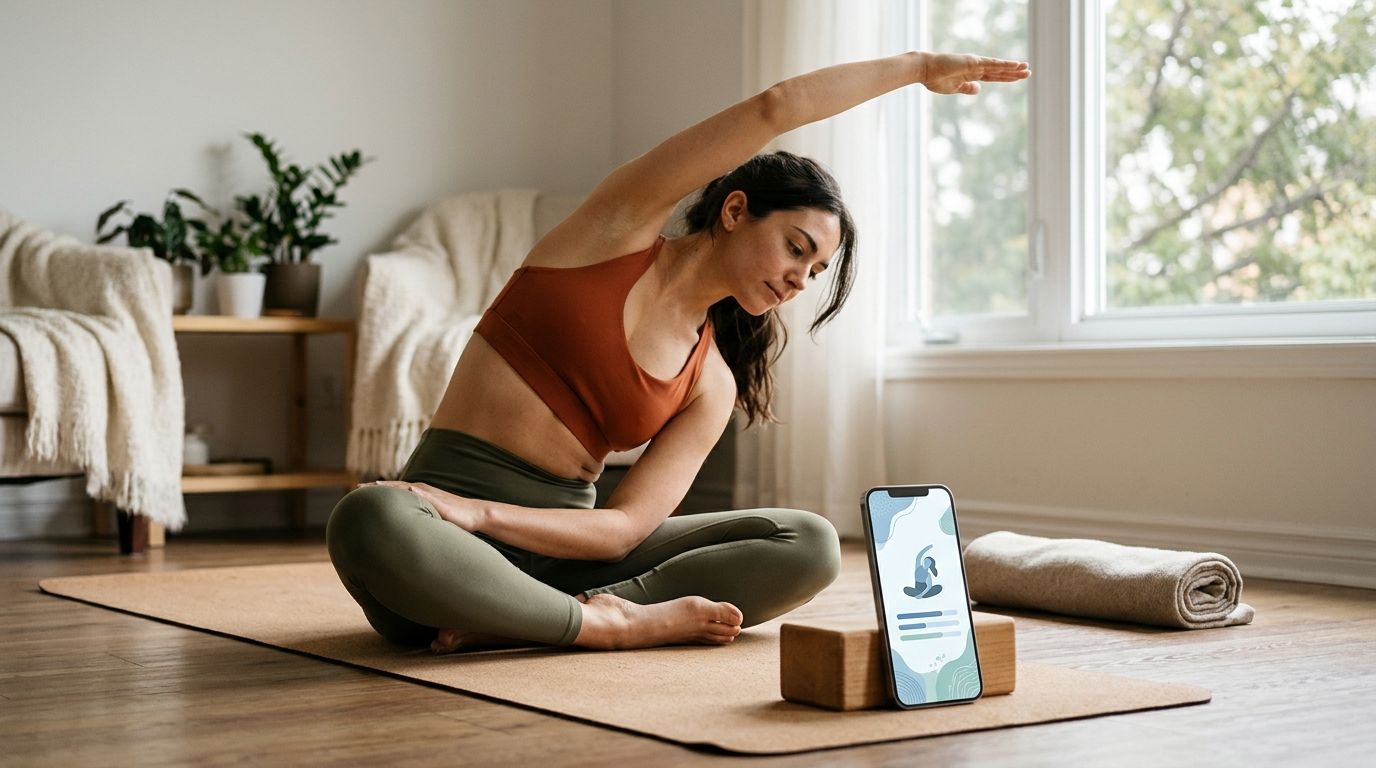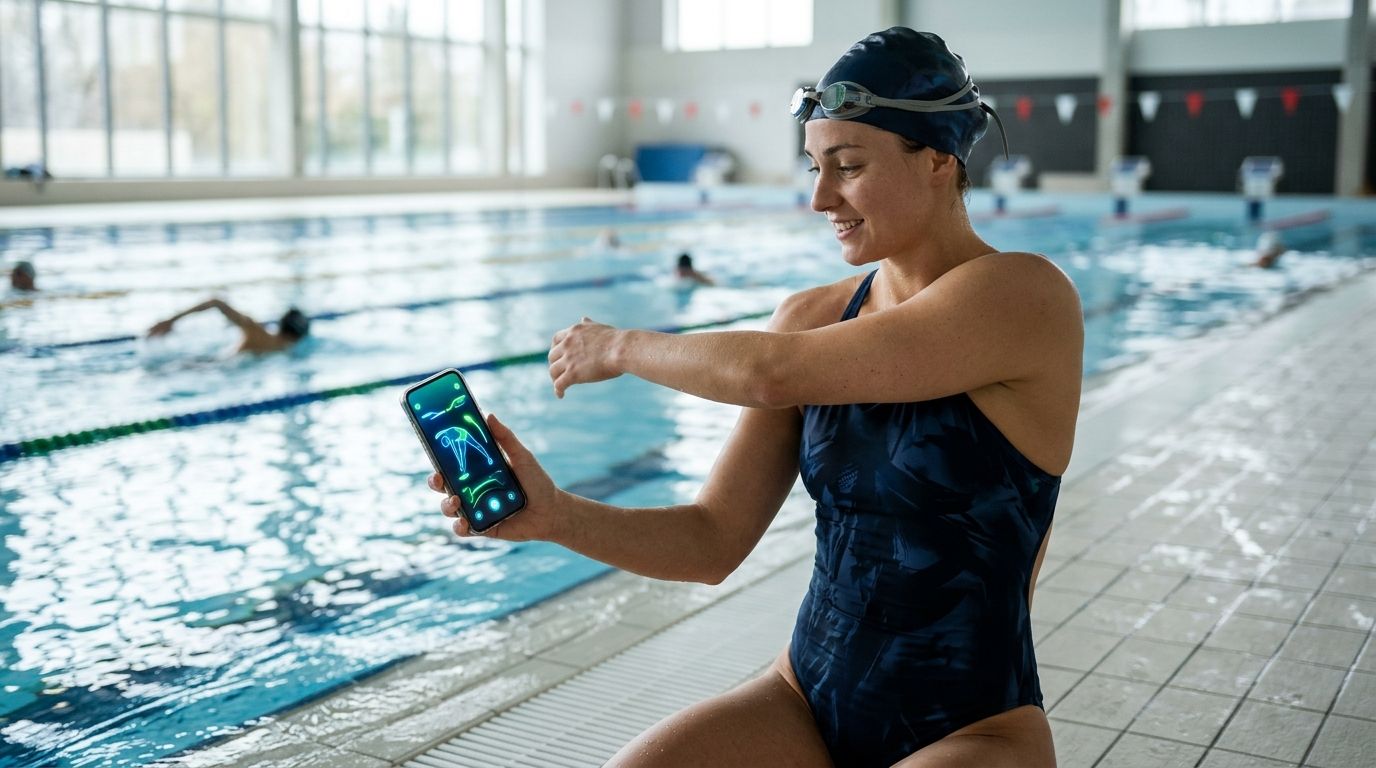
Best overall for guided athlete recovery: Pliability. Best for flexibility-focused practice: STRETCHIT. Best for yoga-led movement: Down Dog. Best for combining mobility with strength: Nike Training Club. This 2026 guide compares the best stretching app for swimmers by how each fits your training, not by how far it asks you to stretch.
- The best stretching app for swimmers fits your recovery routine without replacing strength work or stroke coaching.
- STRETCHIT is best for swimmers who want flexibility-focused practice outside the pool.
- Down Dog suits swimmers who prefer yoga; Nike Training Club suits those combining mobility and strength.
- Choose comfortable, controlled shoulder mobility over forcing a deeper overhead stretch.
Why this matters
Swimming asks you to repeat overhead movements while coordinating your trunk, hips, and legs. Stretching addresses only part of that task. You also need strength and control through the range you use.
A stretching app gives you structure between pool sessions. It cannot assess your stroke, diagnose shoulder pain, or decide whether a restricted movement needs stretching rather than strengthening.
Your 2026 shortlist should start with the habit you need: guided recovery, dedicated flexibility work, yoga, or broader dryland training. Choose that first. Then compare the apps that support it.
What makes the best stretching app for swimmers?
Use these criteria before choosing a subscription or building another routine into your week:
- Clear instruction: You need to understand the starting position, movement, and adjustment without guessing where your shoulder belongs.
- Whole-body relevance: Look beyond overhead stretches. Your trunk, hips, and ankles also contribute to how you move in the water.
- Control over intensity: A useful session lets you reduce depth or stop a movement. A deeper position is not automatically a better one.
- Repeatable structure: Choose a format you can return to after training, rather than a collection you keep browsing without using.
- Training fit: Recovery work should support your pool and strength sessions, not become another exhausting workout.
- A clear purpose: Flexibility practice, yoga, and strength training overlap, but they are not interchangeable. Know which one you are selecting.
Best stretching apps for swimmers at a glance
These 2026 picks serve different jobs. The ranking favors a clear fit for a swimmer's routine rather than treating every fitness app as a direct substitute.
| App | Best for | Standout feature or format | Key limitation |
|---|---|---|---|
| Pliability | Guided athlete recovery | Daily mobility, stretching, and recovery video routines | A video cannot assess your stroke or diagnose discomfort |
| STRETCHIT | Flexibility-focused practice | Stretching and flexibility training | More range does not automatically produce better swimming control |
| Down Dog | Yoga-led movement | Guided yoga practice | Yoga is not a swimming-specific dryland plan |
| Nike Training Club | Mobility alongside strength | A broader workout library that includes strength and yoga | Requires you to distinguish recovery from additional training load |
Do not pick solely by the longest feature list. If you want a stretching habit, a broad workout library can create more decisions than you need. If you also need strength training, that same breadth becomes useful.
1. Pliability: best stretching app for guided athlete recovery
Pliability offers a subscription app with daily mobility, stretching, and recovery video routines for athletes and fitness enthusiasts. That makes it the strongest fit here for swimmers who want guided movement outside the pool without making yoga or flexibility milestones the central goal.
The practical appeal is the daily structure. You have a defined place for mobility work instead of relying on whichever stretches you remember after practice.
Best for: Swimmers who want an athlete-oriented mobility and recovery habit alongside pool training.
Pliability pros
- Daily routines give your mobility practice a recurring place in the week.
- Video instruction supports follow-along practice rather than a self-written exercise list.
- Mobility, stretching, and recovery match the purpose of a separate between-swims session.
Pliability cons
- Follow-along video cannot assess your individual shoulder mechanics or stroke.
- A recovery routine does not replace progressive strength work or coaching.
Choose this option when consistency is your main problem: you know you want to move after training, but you keep skipping the planning. Keep the purpose clear. Completing a routine is not evidence that an irritated shoulder is ready for more swimming.
Verdict: Buy for guided daily recovery, not injury assessment.
2. STRETCHIT: best stretching app for flexibility-focused practice
STRETCHIT centers on stretching and flexibility training. It suits swimmers who specifically want to develop flexibility rather than combine several kinds of fitness training in one session.
That distinction matters. Improving your available range is a different goal from winding down after a hard swim, even when some movements look similar.
Best for: Swimmers who want dedicated flexibility practice as a separate training goal.
STRETCHIT pros
- A flexibility-focused format keeps stretching central to your practice.
- It offers a clear alternative to choosing unrelated workouts from a general fitness library.
- Dedicated practice gives you a consistent context for noticing how positions feel over time.
STRETCHIT cons
- Increased flexibility does not automatically improve control during a stroke.
- Pursuing deeper positions can distract from the range your swimming actually requires.
Choose STRETCHIT when you can name the movement you want to improve and keep the work comfortable. Avoid making a dramatic stretch position your benchmark for a successful swimming program.
If your shoulder already moves freely but feels unstable or painful, chasing additional range is not the next step. Get that movement assessed rather than turning flexibility into the default answer.
Verdict: Buy for deliberate flexibility work; skip if extra range is not your goal.
3. Down Dog: best stretching app for yoga-led movement
Down Dog provides guided yoga practice. It belongs on this list for swimmers who prefer moving through yoga positions to following a dedicated stretching session.
Yoga combines positions, transitions, and breathing. That makes the format distinct from holding individual stretches, but it also means a session can involve meaningful muscular effort.
Best for: Swimmers who enjoy yoga and want it to become their regular movement practice.
Down Dog pros
- Guided yoga gives you a defined practice rather than an improvised sequence.
- Transitions add movement between positions instead of treating every stretch in isolation.
- A whole-body format suits readers who do not want to focus exclusively on shoulders.
Down Dog cons
- Yoga instruction is not a substitute for swimming-specific technique or strength coaching.
- Weight-bearing poses can add shoulder work when your upper body is already tired.
Choose Down Dog because you like yoga, not because every yoga session counts as recovery. A practice with repeated arm support has a different demand from a gentle session on the floor.
After a demanding pool workout, judge the session by what your body is doing. If you are straining to hold positions, you are adding effort rather than simply easing into movement.
Verdict: Buy for a yoga habit; skip as a substitute for swim-specific programming.
4. Nike Training Club: best for mobility alongside strength
Nike Training Club is a general fitness app with strength and yoga workouts. It is the broadest option here, so it makes sense when stretching is only one part of the dryland routine you want to organize.
This is a companion choice rather than a stretching-only recommendation. Its value is the ability to include different types of training in your week.
Best for: Swimmers who want mobility and strength work within a broader fitness routine.
Nike Training Club pros
- Strength and yoga offer different tools for your out-of-pool training.
- A broader workout selection suits swimmers with goals beyond flexibility.
- You can separate a strength-training day from a gentler movement day.
Nike Training Club cons
- A general fitness library requires more selection than a dedicated stretching format.
- Another workout is not automatically the right choice after a hard swim.
Choose Nike Training Club when you already understand the purpose of each session. Decide whether you are training strength, practicing movement, or recovering before opening the app.
If you only want someone to guide your stretching, the broader scope is less useful. More options do not solve an unclear training goal.
Verdict: Buy for broader dryland training; skip if you only want stretching.
How these apps are ranked
The 2026 ranking prioritizes the criteria above: clear guidance, a repeatable format, whole-body relevance, and an identifiable place in a swimmer's week. The order reflects fit for the stated use case, not measured improvements in race times or injury outcomes.
Guided athlete recovery takes the default position because it directly matches the between-swims job this guide addresses. Dedicated flexibility, yoga, and general fitness follow as distinct alternatives—not weaker versions of the same product.
No app earns a recommendation here for making you faster in the pool. That would require evidence beyond a feature comparison.
Put your choice into a useful swimming routine
Start your 2026 routine by naming the job of the session. Then choose the movement, keep it comfortable, and notice how you feel afterward. That sequence is more useful than collecting stretches without a purpose.
- Name the goal: Decide whether you need a warm-up, flexibility practice, or a gentle post-swim session.
- Check comfort: Notice pain, unusual weakness, or a movement that feels unstable before adding intensity.
- Choose movement: Match the routine to the goal rather than selecting the hardest session.
- Recheck comfort: Stop or modify movements that leave you feeling worse.
For an easy starting habit, set aside 5 minutes after a swim. Pick 2 comfortable movements, and begin with 3 slow breaths in each position rather than forcing depth. These are starting instructions, not a required dose or a promise of results.
Before swimming, use active movement to prepare for the task ahead. Save prolonged, relaxed stretching for a separate session when it does not interrupt your warm-up. Follow your coach's plan when you have one.
For shoulders, avoid using another arm or a fixed object to force an uncomfortable overhead position. For ankles, avoid pushing through a pinch simply because you want a more pointed foot. Stretching should not become a contest against a joint.
Which stretching app should you choose?
Pliability is the best stretching app for swimmers who want daily guided mobility and recovery routines. Choose STRETCHIT when flexibility itself is the goal, Down Dog when yoga is the practice you enjoy, and Nike Training Club when you also want strength training.
For your 2026 decision, ask one practical question: which format will you return to without turning every session into another workout? Pick that format, give it a consistent place in your week, and judge it by comfort and usefulness—not stretch depth.
FAQ
What's the best stretching app for swimmers in 2026?
Pliability is the best fit for swimmers who want daily guided mobility, stretching, and recovery videos. STRETCHIT suits dedicated flexibility practice, Down Dog suits yoga, and Nike Training Club suits broader dryland training.
Should swimmers stretch before or after swimming?
Use active movement before swimming to prepare for your session, and place prolonged relaxed stretching after training or in a separate session. Follow your coach's warm-up rather than replacing it with a stretching video.
Is yoga better than stretching for swimmers?
Yoga is not automatically better than dedicated stretching for swimmers. Choose yoga if you enjoy its movement format, and remember that weight-bearing poses add work rather than always serving as recovery.
Can a stretching app fix swimmer's shoulder?
A stretching app cannot diagnose or treat the cause of shoulder pain. Persistent pain, weakness, or instability needs assessment by a qualified healthcare professional rather than more forceful stretching.
How long should a swimmer's stretching session be?
Start with a manageable session, such as 5 minutes, rather than making duration the goal. Adjust the routine to your training plan and comfort; a longer session is not automatically more useful.
Do swimmers need mobility or flexibility?
Swimmers need usable range of motion, which involves both available movement and control. Stretching addresses flexibility, while strength and movement practice help you control the range you use.
Should swimmers stretch their shoulders every day?
Daily shoulder stretching is not a requirement for every swimmer. Choose work that matches your movement needs, and do not repeatedly stretch a painful or unstable shoulder.
One last thing
The joint that feels tight is not automatically the joint that needs a deeper stretch. A shoulder can feel uncomfortable without needing more range.
Before saving another overhead routine, ask what you are trying to change: restricted movement, fatigue, pain, or poor control. Those are different problems. Name the problem before choosing the stretch.