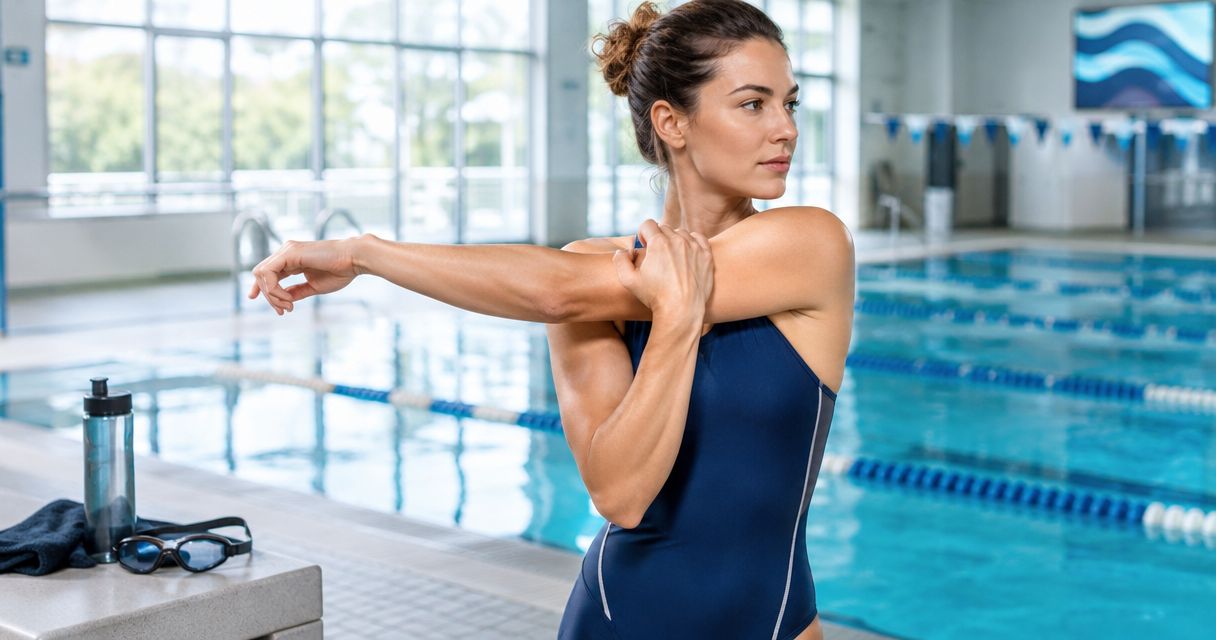
Swimmers’ mobility training is controlled joint movement and stretching aimed at improving the positions you use in the water. This 2026 guide explains how to work on overhead reach, trunk rotation, hips, and ankles without forcing range or turning recovery into another hard session.
- Mobility training for swimmers should connect shoulder mobility, trunk rotation, and ankle control to your stroke.
- Pliability suits swimmers who want daily guided mobility videos instead of writing their own routines.
- Use controlled movement before swimming; keep longer, relaxed stretching separate from your pool warm-up.
- Treat pain as a reason to change the plan, not a signal to stretch harder.
Why mobility training matters for swimmers
Swimming asks you to reach overhead repeatedly while coordinating your trunk and legs. A movement restriction matters when it changes how you achieve those positions, not simply because you cannot match somebody else’s stretch.
Freestyle and backstroke involve body rotation. Butterfly uses coordinated movement through the shoulders, trunk, and hips. Breaststroke adds different hip and knee demands. Build mobility around your stroke, not a generic flexibility score.
For your 2026 training plan, separate flexibility from control. Flexibility describes available range; mobility includes your ability to move through that range actively. Neither replaces stroke coaching or strength training.
If you need help choosing guided stretching rather than building sessions yourself, compare the best stretching apps for swimmers. First, understand which movements deserve your attention.
Build your swimming mobility routine
1. Check the positions your stroke needs
Start with simple movements on dry land. Raise your arms overhead, rotate your upper trunk while seated, and gently point and flex your ankles. Notice where the movement stops and whether you compensate elsewhere.
These are observations, not diagnostic tests. An overhead reach does not tell you which tissue is responsible for a restriction. It does help you notice whether you arch your lower back, lift your ribs, or bend your elbows to reach farther.
Choose one or two priorities instead of collecting stretches for every joint. A useful starting point is a position that feels restricted and also matters to your swimming. Ask your coach whether that restriction appears in your stroke.
- Compare both sides without forcing them to match.
- Note rib flare during overhead reach.
- Watch whether your pelvis follows seated rotation.
- Observe comfortable ankle pointing without cramping.
- Record discomfort separately from ordinary stretch tension.
2. Prepare for the pool with active movement
Use your pre-swim mobility work to rehearse movement, not test your deepest stretch. Start with easy whole-body activity, then move your shoulders, trunk, hips, and ankles through comfortable ranges.
A suggested starting format is 5 minutes of controlled movement, followed by your planned in-water warm-up. This is a practical session outline, not a proven minimum or a replacement for your coach’s instructions. Adjust it to the session and how you feel.
Keep movements smooth. Fast arm swings and forced end-range positions make it harder to notice what you control. You should finish ready to swim, rather than tired from a dry-land workout.
- Walk or march before focused joint movements.
- Use small arm circles before larger comfortable circles.
- Add standing trunk turns without wrenching your lower back.
- Move through gentle hip rotations with support.
- Finish with easy swimming before harder efforts.
3. Train overhead reach without borrowing from your back
An overhead position involves more than your shoulder joint. Your shoulder blades and upper trunk also contribute. Reaching higher by arching your lower back does not demonstrate better shoulder control.
Try a comfortable wall slide or a supported overhead reach. Move slowly enough to notice your ribs and breathing. Stop before pinching, pain, or a large change in back position. Do not pin your shoulder blades down while trying to lift your arms.
You can write these movements in a notebook and follow them yourself. If choosing and sequencing exercises is the barrier, Pliability offers daily mobility, stretching, and recovery video routines. Pliability is best for swimmers who want daily guided mobility videos rather than a self-written routine. The limitation is clear: guided video does not assess shoulder pain or correct your stroke in person.
- Start with a comfortable overhead reach as your reference.
- Keep your ribs from lifting to manufacture extra height.
- Allow your shoulder blades to move naturally.
- Reduce range if you feel pinching or lose control.
- Recheck the original reach after the session.
4. Develop rotation without twisting harder
Trunk rotation belongs in a swimmer’s mobility plan, but more rotation is not automatically better. You need movement you can coordinate with your stroke. Dry-land twisting cannot tell you whether your timing in the water is effective.
Try a seated rotation with your feet supported, or a comfortable side-lying rotation. Keep the movement slow and let your breathing remain easy. Avoid pulling yourself deeper with your arms.
For a starter practice, try 6 controlled repetitions per side and stop sooner if your movement quality changes. That is an example dose, not a target to beat. Keep the same setup when comparing sides or reviewing your 2026 progress notes.
- Choose one rotation exercise you can repeat consistently.
- Keep your pelvis relatively still during seated practice.
- Exhale comfortably rather than holding your breath.
- Stop before twisting becomes lower-back discomfort.
- Ask your coach to assess rotation during swimming.
5. Match hip and ankle work to your kick
Do not treat every swimming kick as the same mobility task. Freestyle, backstroke, and butterfly use different leg actions from breaststroke. Copying a breaststroker’s hip position does not make it appropriate for your own training.
Practice gentle ankle pointing and returning to neutral while seated. Keep the movement active rather than pushing hard on your foot. For hips, use a supported position that lets you explore comfortable rotation without dragging your knee into range.
Breaststroke deserves particular care. Do not force turnout through the knees or use knee discomfort as evidence that you need a deeper stretch. Technique feedback and an appropriate clinical assessment take priority when kicking hurts.
- Practice ankle movement without curling your toes hard.
- Use support so balance does not limit hip practice.
- Keep hip rotation within a comfortable range.
- Avoid forcing your feet outward through your knees.
- Match exercise choices to your main stroke.
6. Separate relaxed stretching from hard training
Use a separate, easy session when you want to spend longer in comfortable stretches. The aim is to explore tolerable positions, not win a range-of-motion contest after a demanding swim.
For example, start with a 20-second comfortable hold in a supported position, then release and reassess. This is a conservative practice suggestion, not a requirement or a promise of improved performance. Reduce the duration or skip the movement if symptoms appear.
Pliability mobility routines offer a guided format for athletes who prefer video instructions. They do not replace sleep, appropriate training load, or professional care. A routine that makes you more sore or changes your next swim for the worse needs adjusting.
- Choose positions where you can breathe normally.
- Keep stretch tension below pain.
- Avoid partner-assisted pressure into deeper range.
- Reduce intensity after an unusually demanding session.
- Stop movements that cause tingling, numbness, or joint pain.
7. Measure useful movement, not just deeper stretches
Keep your 2026 mobility log short. Record the movement, how it felt, and whether the next swim felt normal. Use the same starting position when you recheck a reach or rotation.
A larger movement is not automatically a better result. Look for less compensation, comfortable control, and relevance to your stroke. If dry-land range improves but the same swimming problem remains, ask for technique feedback rather than adding more stretching.
Review the routine when your training changes. A swimmer returning after a break needs a different workload discussion from someone maintaining an established schedule. Do not increase stretching intensity simply because pool volume has increased.
- Repeat the same comfortable reference movements.
- Note pain separately from stiffness.
- Record whether exercises affect your next swim.
- Change one part of the routine at a time.
- Remove exercises that repeatedly aggravate symptoms.
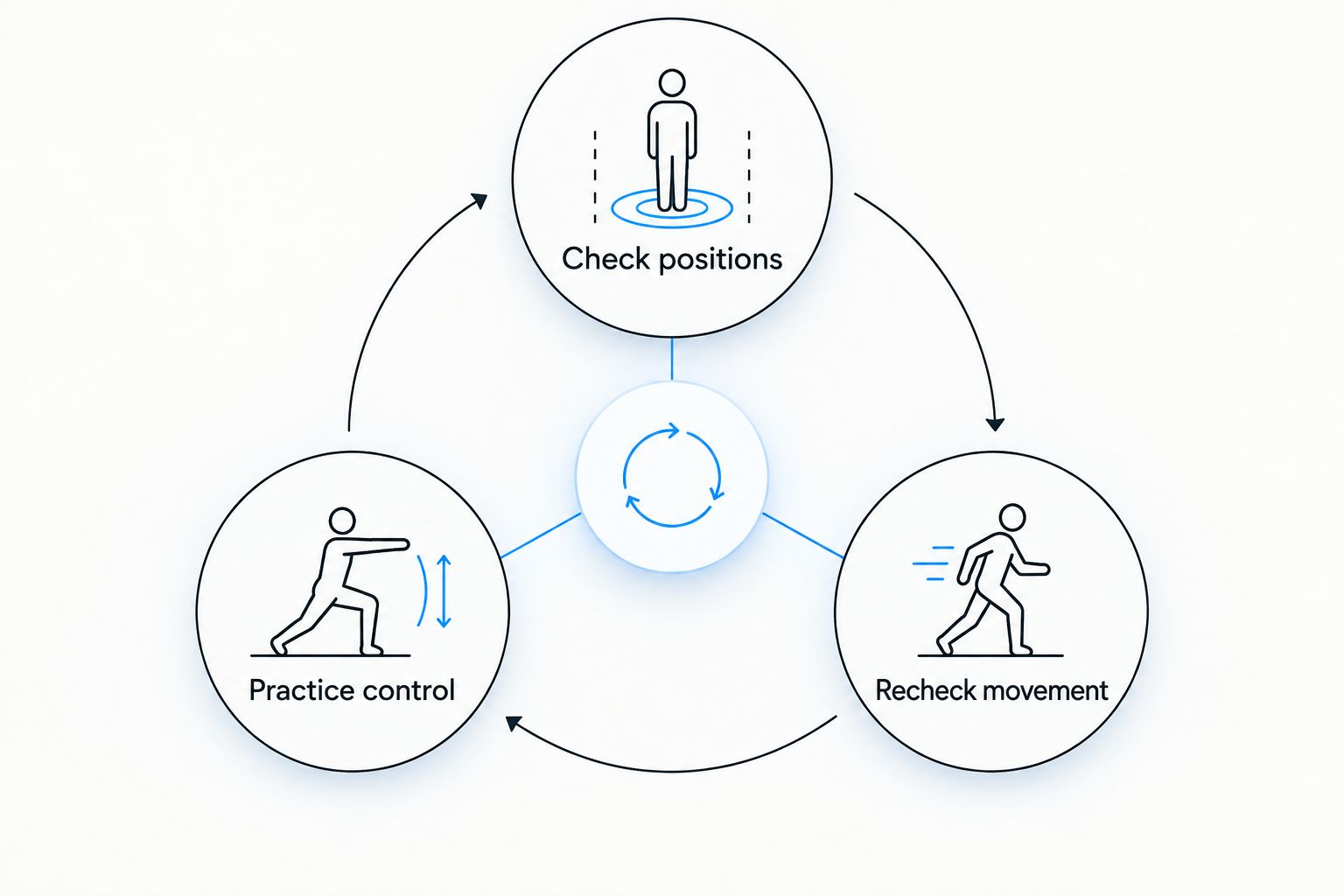
The process is simple: identify a useful position, practice it without forcing, then check whether the work remains comfortable and relevant. Keep that loop intact rather than adding exercises indefinitely.
Compare mobility options for swimmers
Choose your 2026 approach by the problem you need to solve. Guidance, technique feedback, and pain assessment serve different purposes. No single option replaces all the others.
| Option | Best for | Main advantage | Key limitation |
|---|---|---|---|
| Self-directed mobility | Swimmers comfortable choosing and recording exercises | You control the sequence and adjust it around training | You must select movements and notice compensation yourself |
| Pliability mobility videos | Swimmers who prefer daily guided mobility, stretching, and recovery sessions | A video-led format removes the need to write every session | Videos do not provide an individual pain assessment or live stroke correction |
| Swim coaching | Swimmers whose movement concern appears during their stroke | A coach can connect feedback to what happens in the water | Stroke feedback is not a medical diagnosis |
| Physical therapy assessment | Swimmers with pain, recurrent symptoms, or a return-from-injury question | An individual assessment can address symptoms and movement needs | Clinical care and everyday guided practice serve different roles |
Choose the format that addresses your actual barrier. If you already know what to do but rarely do it, simplify the habit. If you do not understand the movement problem, seek feedback before making the routine longer.
Common mistakes swimmers make
Chasing shoulder range while ignoring control
A deeper overhead stretch is not the same as a controlled overhead reach. If your ribs lift and your back arches, reduce the range and rebuild the movement. Swimmers who already have substantial shoulder range should not assume more stretching is the answer.
Using painful breaststroke turnout as a stretch target
Knee pain during turnout is not a flexibility challenge to push through. Stop the painful drill and review the kick with appropriate coaching or clinical support. Do not let a partner press your knees or feet into position.
Treating every stiff feeling as shortened tissue
A stiff feeling does not identify its cause. Fatigue, recent training, and irritation can change how movement feels. Check your workload and symptoms before deciding that harder stretching is the solution.
Expecting mobility work to fix stroke timing
Dry-land practice does not teach breathing timing, catch mechanics, or kick coordination by itself. Keep technical work in the pool. Use mobility to practice comfortable movement, not as an explanation for every performance problem.
Turning recovery into another demanding session
Aggressive stretching after hard swimming adds another physical demand. If the routine leaves you sore, tense, or reluctant to move, scale it back. Recovery work should not become a second competition.
FAQ
What is the best mobility training for swimmers?
The best mobility training for swimmers targets comfortable overhead reach, trunk rotation, and stroke-specific hip and ankle movement. Choose exercises around your observed restrictions and keep technique coaching separate from dry-land mobility practice.
Should I do mobility before or after swimming?
Use controlled active movement before swimming and place longer, relaxed stretching in a separate easy session when practical. Keep your in-water warm-up and adjust the routine if it leaves you tired or sore.
Is Pliability suitable for swimmers?
Pliability suits swimmers who want guided daily mobility, stretching, and recovery videos. It does not replace individual assessment for pain or live feedback on swimming technique.
How long should a swimmer's mobility warm-up take?
A suggested starting point is 5 minutes of comfortable active movement before your planned pool warm-up. Treat that as a practical example, not a universal minimum, and follow your coach's session requirements.
Does more shoulder flexibility make you a faster swimmer?
More shoulder flexibility alone does not establish that you will swim faster. Useful range must work with strength, control, and stroke technique; forcing extra range is not a performance plan.
What ankle mobility should swimmers practice?
Swimmers can practice gentle active ankle pointing and returning to neutral without forcing the foot. Match the work to the kick you use and stop if it causes pain or persistent cramping.
Should I stretch a painful swimming shoulder?
Do not force a painful swimming shoulder into a stretch. Stop the provoking movement and seek assessment if pain persists, recurs, affects sleep, or comes with weakness or reduced function.
One last thing
Test the movement before you stretch it again. For your next 2026 session, choose one comfortable reference movement and repeat it after your routine using the same setup. If you reach farther only by arching, twisting, or bracing harder, you have changed the compensation—not demonstrated better control.