Instead of forcing a stretch whenever your legs feel tight, build your marathon recovery mobility routine around a daily symptom check, comfortable movement, and a clear stopping rule. Use Pliability for guided mobility videos when movement feels appropriate—not as a test of how much soreness you can tolerate.
- Build your marathon recovery mobility routine around comfortable movement, not a fixed return-to-running deadline.
- Pliability suits runners who want guided daily mobility and stretching videos.
- Check walking comfort before stretching; stop for sharp pain, worsening symptoms, or a changing gait.
- Use gentle movement after racing, then rebuild your daily mobility habit as symptoms settle.
Why this matters
A marathon recovery mobility routine gives you a repeatable way to check how you feel and choose appropriate movement. It does not diagnose an injury, clear you to run, or replace sleep, food, and fluids.
Feeling tight does not mean you need a deeper stretch. After a marathon, the useful question is whether a movement feels comfortable during the session and leaves you no worse afterward. Chasing your usual range can turn a recovery habit into another demanding workout.
Pliability is best for runners who want guided daily mobility videos, not an injury diagnosis. The benefit is instruction you can follow; the limit is that a video cannot examine a painful calf, swollen ankle, or altered walking pattern.
For your 2026 recovery plan, separate movement practice from training progression. Completing a mobility session is not evidence that your legs are ready for another run.
Before you start
- Prepare your access and space. Have access to the subscription app if you plan to use Pliability videos, a device you can view without twisting your neck, and a clear floor area. Keep a stable chair nearby if getting down to the floor is uncomfortable.
- Check whether self-directed movement is appropriate. Do not start a routine to work through sharp or localized pain, new swelling, or difficulty bearing weight. Seek urgent medical assessment for severe muscle pain or weakness with dark urine after exertion; chest pain, fainting, or severe breathlessness also need urgent care.
- Know the setup trap. A routine you managed before the race can feel too demanding afterward. Preview the starting positions and transitions before following a video. You do not have to complete it, match the instructor's range, or hold a position that feels wrong.
This guide is general exercise education. Follow your clinician's instructions when you have an injury, medical condition, or race-related complication.
Your starting-point check
The first configuration unit is your decision rule, not an app setting. Keep a simple note on paper or your phone so yesterday's enthusiasm does not decide today's workload.
Establish your baseline
- Check your walking. Walk around your room at an easy pace. Notice whether you can move without limping, bracing, or avoiding one side. Do not use repeated walking tests to push through pain.
- Describe the sensation. Write a plain description: general thigh soreness, stiff ankles, or a specific painful spot. General soreness and a focal painful area call for different decisions; do not label every symptom as tightness.
- Check the starting position. Sit in a supported chair or lie comfortably. If getting into position aggravates symptoms, choose a different position or skip the session.
- Choose the next action. Use comfortable movement when you can move normally without aggravation. Pause self-directed exercise and seek advice when pain changes your gait, becomes more localized, or worsens.
Expected result: you have a clear starting description and a decision to move gently, modify, or stop. You are not trying to earn permission to stretch harder.
For a 2026 training diary, record sensations rather than a recovery score you cannot interpret. A short note such as comfortable walking, sore stairs, or ankle pain is more useful than an unexplained rating.
Your movement selection
Choose movements you can control without straining. The options below are ways to organize a session, not competing treatments or a promise of faster recovery.
| Approach | Best for | Practical benefit | Limit |
|---|---|---|---|
| Gentle active movement | Checking comfortable motion | You control the range and can stop immediately | It does not establish whether an injury is present |
| Supported stretching | Comfortable, familiar positions after symptoms settle | Support makes the position easier to adjust | A longer or deeper hold is not automatically better |
| Guided mobility video | Runners who prefer spoken instruction | It supplies a sequence to follow | The sequence does not assess your individual symptoms |
Build a small movement menu
- Start with ankle motion. While seated, gently point and flex your feet through a comfortable range. Keep the motion relaxed rather than pulling hard at the end position.
- Add a supported leg movement. If comfortable, lie on your back and slide one heel toward you, then away. Keep the movement small enough that you do not brace or hold your breath.
- Check an upright position. Stand near a stable support and gently shift your weight between your feet. Skip this if standing changes your gait or increases symptoms.
- Keep only comfortable choices. You do not need to include every movement. Remove anything that produces pain, cramping, tingling, or a stronger sense of guarding.
As a deliberately small starting example, try 3 slow repetitions per movement and reassess. This is a sample session dose, not a clinically validated marathon recovery prescription. Stop earlier whenever the movement stops feeling comfortable.
Expected result: you have a short menu of movements you can perform without forcing range. An omitted exercise is a useful adjustment, not a failed session.
Your session and feedback loop
A useful recovery workflow checks the response after movement, not just whether you finished. Keep the same basic sequence so you can spot changes.
Run the session
- Check in. Repeat the comfortable walking check and read your previous note. If symptoms have worsened, do not automatically repeat yesterday's routine.
- Move gently. Use your comfortable movement menu. For a cautious first trial, set aside 2 minutes rather than committing to a full workout. The timer is a ceiling for this example, not a target to complete despite symptoms.
- Check again. Stand or walk comfortably afterward. Ask whether movement feels unchanged, easier, or worse. Do not interpret a temporary feeling of looseness as clearance for running.
- Record the response. Note the movements used and any change during the session or later that day. If symptoms increase afterward, reduce or stop that movement rather than repeating it to loosen up.
Expected result: you know whether the session was tolerated. Finishing a video or reaching a deeper position is not the success measure.
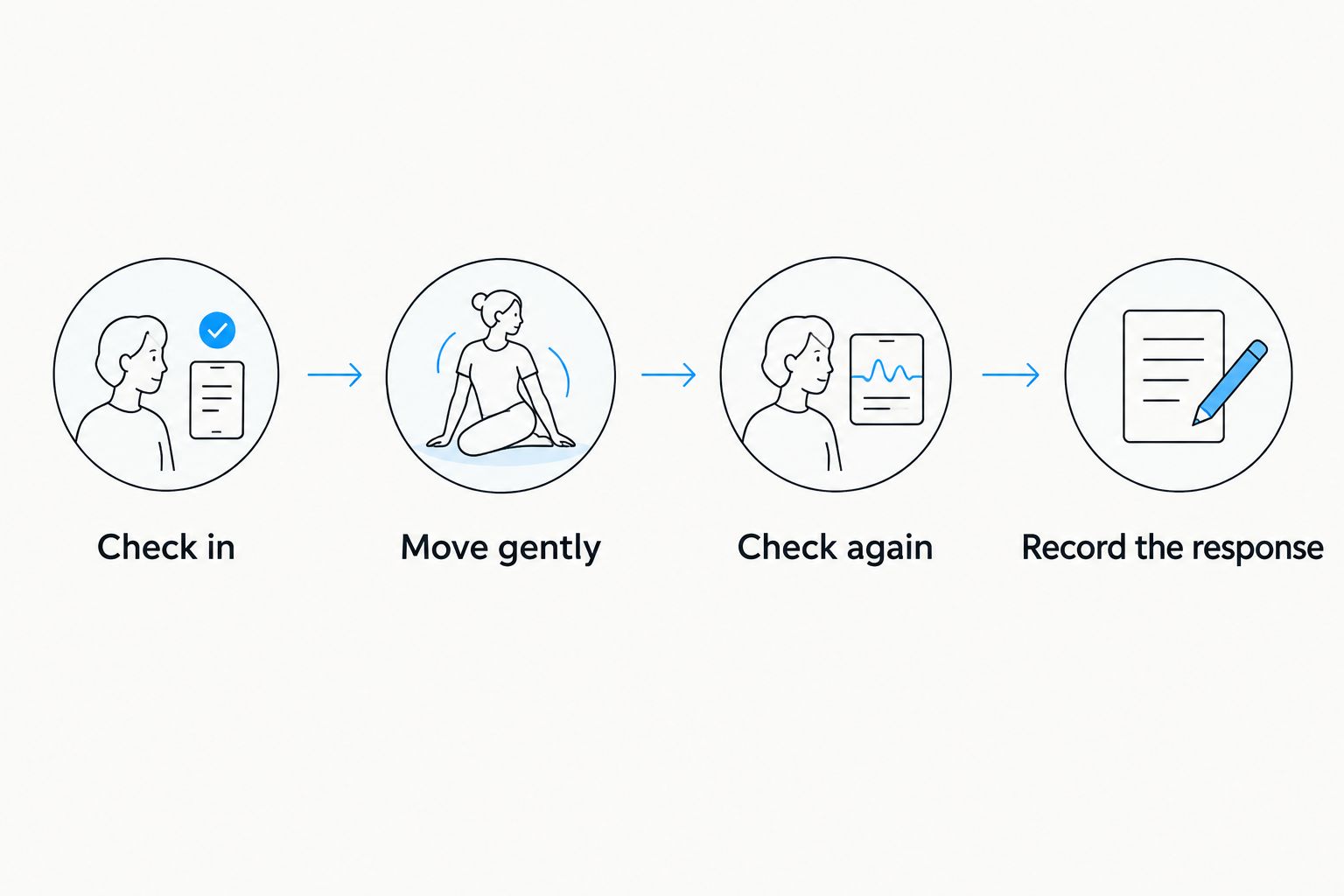
Use this same feedback loop throughout your 2026 race calendar. The sequence stays consistent even when the movements change.
Your guided routine setup
A guided video works best after you have established which positions you tolerate. Do not make the app responsible for deciding whether a painful movement is safe.
Add instruction without adding pressure
- Preview the routine. In Pliability, review the video before following along. Check whether its positions and transitions match what you can currently do comfortably.
- Prepare your modifications. Keep support within reach and decide which positions you will skip. If a routine requires movements you cannot comfortably perform, choose another routine rather than improvising under pressure.
- Keep control of the pace. Pause the video when you need time to change position. Shorten a hold or leave a position instead of trying to match the demonstration.
- Repeat the response check. Compare your walking and symptoms with the starting note. Apply the same stopping rule to guided sessions that you apply to unguided movement.
Expected result: the video supplies instruction while you retain control over range, pace, and session length. No completion streak outranks your symptoms.
When comfortable movement is established, the mobility training for runners guide provides a broader place to plan your ongoing habit. Keep that training habit separate from decisions about a painful post-race symptom.
Second workflow: daily mobility between races
Post-marathon recovery and everyday mobility share a useful structure: check, move, reassess. They do not need the same workload.
Between races, attach mobility to something you already do, such as changing out of running clothes. During post-race recovery, attach it to a symptom check instead. This prevents a familiar training cue from pushing you into an automatic full session.
For your 2026 daily routine:
- Choose one repeatable cue, such as after brushing your teeth.
- Select a familiar sequence with comfortable positions.
- Reserve 5 minutes as an example calendar slot, not a minimum effective dose or a recovery deadline.
- Reassess before extending the session or adding a more demanding position.
Best for maintaining a habit: use a predictable cue. The advantage is less daily decision-making; the limitation is that a schedule cannot account for symptoms unless you check them.
Best for post-race adjustment: let symptoms determine the session. The advantage is flexibility; the limitation is that you must accept shorter sessions or no session when appropriate.
If pain persists, worsens, or interferes with normal activities, get assessed instead of repeatedly changing routines. A different video is not a substitute for understanding the problem.
Troubleshooting
You feel looser, but walking still hurts
Do not treat looseness as clearance. Stop testing deeper stretches and seek assessment when pain changes your walking or weight-bearing. A temporary change in sensation does not establish readiness to run.
A floor position hurts before the stretch starts
Change the setup rather than forcing the transition. Use a comfortable seated position or omit the movement entirely. If everyday position changes remain painful or difficult, seek professional advice instead of repeatedly rehearsing them.
You feel worse later in the day
Reduce or stop the movement that preceded the change. Review the whole session, including time spent getting into positions. Do not assume the exercise was appropriate just because it felt tolerable while you were doing it.
One side feels much tighter
Do not automatically give that side extra stretching. Check whether the difference is comfortable stiffness or pain with swelling, weakness, or altered movement. A new painful difference deserves assessment, not a larger dose of stretching.
You keep skipping the routine
Shrink the setup. Leave a clear space, pick a familiar sequence, and attach the check-in to an existing habit. A short, comfortable session is a better choice than forcing a demanding routine to protect a streak.
Customize your workflow
Use your notes to simplify the next session. Keep movements that feel comfortable and remove those that repeatedly create problems. Change one part of the routine at a time so you can describe what changed.
For a 2026 marathon block, write separate entries for mobility and running. Record that a mobility session felt comfortable without turning that observation into a return-to-running decision. Your training history, symptoms, and any clinical advice remain relevant.
Pliability provides daily mobility, stretching, and recovery videos. Use that structure when it helps you follow a manageable routine; choose a shorter session or stop when your body needs something different.
FAQ
What's the best marathon recovery mobility routine?
The best marathon recovery mobility routine is one you can perform comfortably without worsening symptoms. Start with a symptom check, use gentle familiar movements, and reassess afterward rather than chasing depth or duration.
Should I stretch immediately after a marathon?
Do not force stretching immediately after a marathon. Address immediate recovery needs and use only comfortable movement; pain, dizziness, or other concerning symptoms take priority over a routine.
Can I use Pliability after a marathon?
You can use Pliability for guided mobility when the positions and movements are comfortable and appropriate for your condition. Preview the routine, modify or skip positions, and stop if symptoms worsen.
How long should my post-marathon mobility session last?
There is no single session length that suits every runner after a marathon. Keep the initial session short enough to assess your response, and stop before the planned finish whenever movement becomes uncomfortable.
Is stretching better than gentle movement for sore legs?
Stretching is not automatically the better choice for sore legs. Choose comfortable movements you can control, and do not use a strong stretch to test or treat a painful area.
Can mobility tell me when I'm ready to run again?
Mobility alone cannot tell you when you are ready to run again. Comfortable stretching or walking does not test all the demands of running; follow an appropriate return plan and clinical advice when needed.
What symptoms mean I should stop the routine?
Stop for sharp pain, increasing pain, tingling, new swelling, or a changing gait. Severe muscle pain or weakness with dark urine after exertion needs urgent medical assessment rather than another recovery session.
One last thing
Do not use the deepest position as your progress marker. A more useful observation is whether ordinary movement becomes comfortable without a growing reaction later. Keep that distinction in your notes: better tolerance of daily activity is different from briefly reaching farther during a stretch.
Your recovery routine should help you pay attention. It should not give you another performance target.