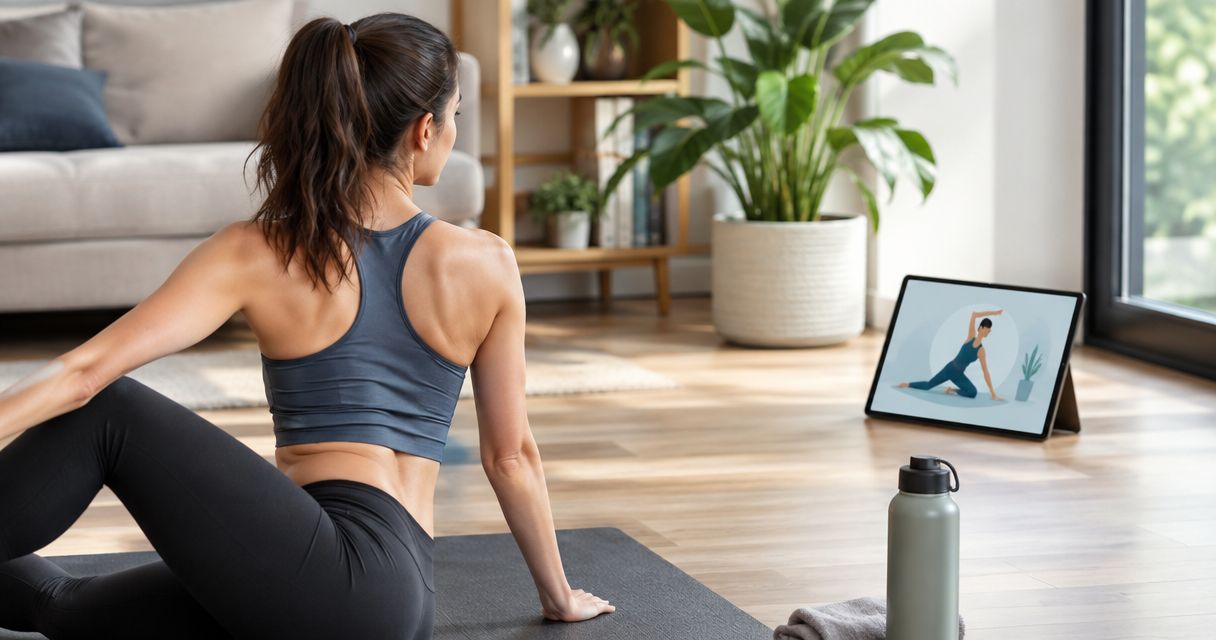
Best overall for daily guided mobility: Pliability. Best for assessment-led practice: GOWOD. Best for yoga-based movement: Down Dog. Best for mobility alongside general workouts: Nike Training Club. This 2026 guide compares the best mobility app for women by training goal, guidance style, and fit with everyday life.
- Pliability is the best mobility app for women who want daily video-guided mobility alongside athletic training.
- GOWOD suits women who want mobility assessments to help direct their practice.
- Down Dog suits women who prefer yoga-based flexibility and movement sessions.
- Nike Training Club suits women who want mobility within a broader workout routine.
Why this matters
Tight hips after sitting. Stiff ankles during squats. Shoulders that feel restricted overhead. Those experiences give you a starting point, but they do not all call for the same routine.
The best choice depends on what you want to do more comfortably, not whether an app uses women-focused branding. Choose for your movement goal first. A runner, a new lifter, and someone returning to exercise after childbirth need different decision criteria.
This 2026 shortlist separates dedicated mobility practice from yoga and general fitness. The categories overlap, but they are not interchangeable. An enjoyable yoga session does not automatically address a specific lifting restriction, and a mobility assessment does not diagnose an injury.
What makes the best mobility app for women?
- Goal fit: The app should support your actual activity, whether that is strength training, running, yoga, or moving more comfortably between workouts.
- Clear guidance: You should understand the starting position, the movement, and when to reduce the range. Following along should not require guessing.
- Usable session format: Choose guided videos, assessment-led routines, or yoga instruction according to how you prefer to practice.
- Repeatability: A routine needs a realistic place in your week. An elaborate plan you avoid is less useful than a manageable session you repeat.
- Appropriate boundaries: General mobility instruction is not pregnancy care, postpartum rehabilitation, or treatment for persistent pain.
Do not confuse more stretching with better movement. Flexibility describes available range; mobility also involves controlling movement through that range. Your app choice should reflect which part you want to practice.
Best mobility apps for women at a glance
| App | Best for | Standout approach | Key limitation |
|---|---|---|---|
| Pliability | Daily guided mobility alongside athletic training | Daily mobility, stretching, and recovery video routines | General app guidance is not an individual clinical assessment |
| GOWOD | Assessment-led mobility practice | Mobility testing connected with personalized routines | Self-assessment depends on careful positioning and execution |
| Down Dog | Yoga-based flexibility and movement | Customizable yoga practices | Yoga programming is not the same as sport-specific mobility work |
| Nike Training Club | Mobility alongside general workouts | Mobility within a broader fitness library | You need to distinguish mobility work from other workout types |
These are different routes, not interchangeable versions of the same product. For your 2026 routine, decide whether you want someone to guide the session, help identify a focus, lead a yoga practice, or organize broader exercise.
1. Pliability: best mobility app for women wanting daily guidance
Pliability provides a subscription app with daily mobility, stretching, and recovery video routines for athletes and fitness enthusiasts. Its audience includes HYROX competitors and teams, making it a relevant choice when mobility needs to sit alongside demanding training.
Pliability is the best mobility app for women who want daily video-guided mobility alongside athletic training. The distinction is the format: you follow a routine rather than build every session from individual exercise demonstrations.
That suits women who already know when they want to practice but do not want another programming task. Place the session around your existing schedule, then judge whether the guidance helps you move with control rather than simply reach farther.
Pros:
- Daily routines give your mobility practice a recurring structure.
- Video guidance lets you follow the session rather than assemble it yourself.
- Mobility, stretching, and recovery are the stated focus of the subscription.
Cons:
- A general video routine cannot assess the cause of your individual restriction.
- An app subscription is not a substitute for supervised rehabilitation.
Best for: Women who lift, run, compete, or train regularly and want guided mobility as a separate habit.
Before committing, consider how you use exercise instruction. If following a video helps you stay engaged, this format fits. If you mainly want a test to direct your practice, the next option takes a different approach.
Verdict: Buy if daily video guidance matches how you want to practice.
2. GOWOD: best mobility app for women wanting assessments
GOWOD centers its approach on mobility assessment and personalized mobility routines. That makes it a distinct option for women who prefer a structured starting point over choosing stretches by feel alone.
An assessment gives your practice a focus. It does not explain every reason a movement feels restricted, and a change in a test result is not the same as a medical diagnosis.
GOWOD pros:
- Mobility testing provides a repeatable way to review movement.
- Personalized routines connect practice with the assessment process.
- A mobility-specific format keeps attention on a defined training goal.
GOWOD cons:
- Inconsistent setup can make self-assessment results harder to compare.
- A movement score cannot determine whether pain is safe to train through.
Best for: Women who enjoy tracking their training and want assessment-led direction for mobility work.
Use the same setup when repeating a test. Changing your stance, rushing the movement, or pushing harder simply to improve the result makes comparison less useful. The aim is a clearer picture of your movement, not a better-looking score.
Verdict: Buy if assessment-led practice helps you stay focused; skip if testing becomes the goal.
3. Down Dog: best mobility app alternative for yoga-based practice
Down Dog offers customizable yoga practices. It belongs on this shortlist for women who prefer working on flexibility and controlled movement through yoga rather than a dedicated mobility session.
Yoga brings positions together into a practice instead of treating each restricted joint as an isolated task. That format suits readers who enjoy a broader movement session, but it is a different choice from targeted preparation for a particular sport.
Down Dog pros:
- Customizable practices let you adapt the session to your preferences.
- Yoga combines movement, positions, and breathing within one practice.
- The format suits women who already enjoy yoga instruction.
Down Dog cons:
- A yoga practice is not an individualized assessment of a movement restriction.
- General yoga sessions do not automatically match the demands of running or lifting.
Best for: Women who want yoga to be their main format for flexibility and movement practice.
Choose Down Dog because you want yoga, not because every yoga position is necessary for healthy movement. You do not need to achieve an advanced pose to make a practice useful. Keep the range manageable and select instruction that matches your experience.
Verdict: Buy for yoga-led practice; skip as your only answer to a specific sporting restriction.
4. Nike Training Club: best for mobility within general fitness
Nike Training Club offers a broader workout library that includes mobility and yoga alongside other exercise. It suits women who want movement work inside a general fitness routine rather than in a separate mobility-focused app.
The advantage is variety. The trade-off is that you need to recognize what each session is designed to do: a conditioning workout, a strength session, and mobility practice serve different purposes.
Nike Training Club pros:
- A broader exercise library supports more than one training interest.
- Mobility and yoga can sit alongside your other workouts.
- The format suits women who prefer general fitness guidance.
Nike Training Club cons:
- A broad library requires you to select sessions that match your mobility goal.
- General workout instruction does not replace individual assessment or rehabilitation.
Best for: Women building a varied exercise habit who also want to include mobility work.
When choosing a session, look beyond the body area in its title. A leg workout is not automatically ankle mobility, and a demanding core session is not automatically recovery. Match the session's purpose to the job you need it to do.
Verdict: Buy into this approach for general fitness; skip if you want mobility to organize the whole experience.
How these apps were ranked
The 2026 ranking prioritizes goal fit, instruction format, repeatability, and clear boundaries between general exercise and individual care. The order reflects the needs of a reader looking specifically for mobility, not a ranking of every fitness app feature.
Dedicated guided mobility takes the default position. Assessment-led practice, yoga, and broader fitness each receive their own use-case slot. No ranking here represents a head-to-head clinical trial or a measured comparison of physical results.
Match the app to your movement goal
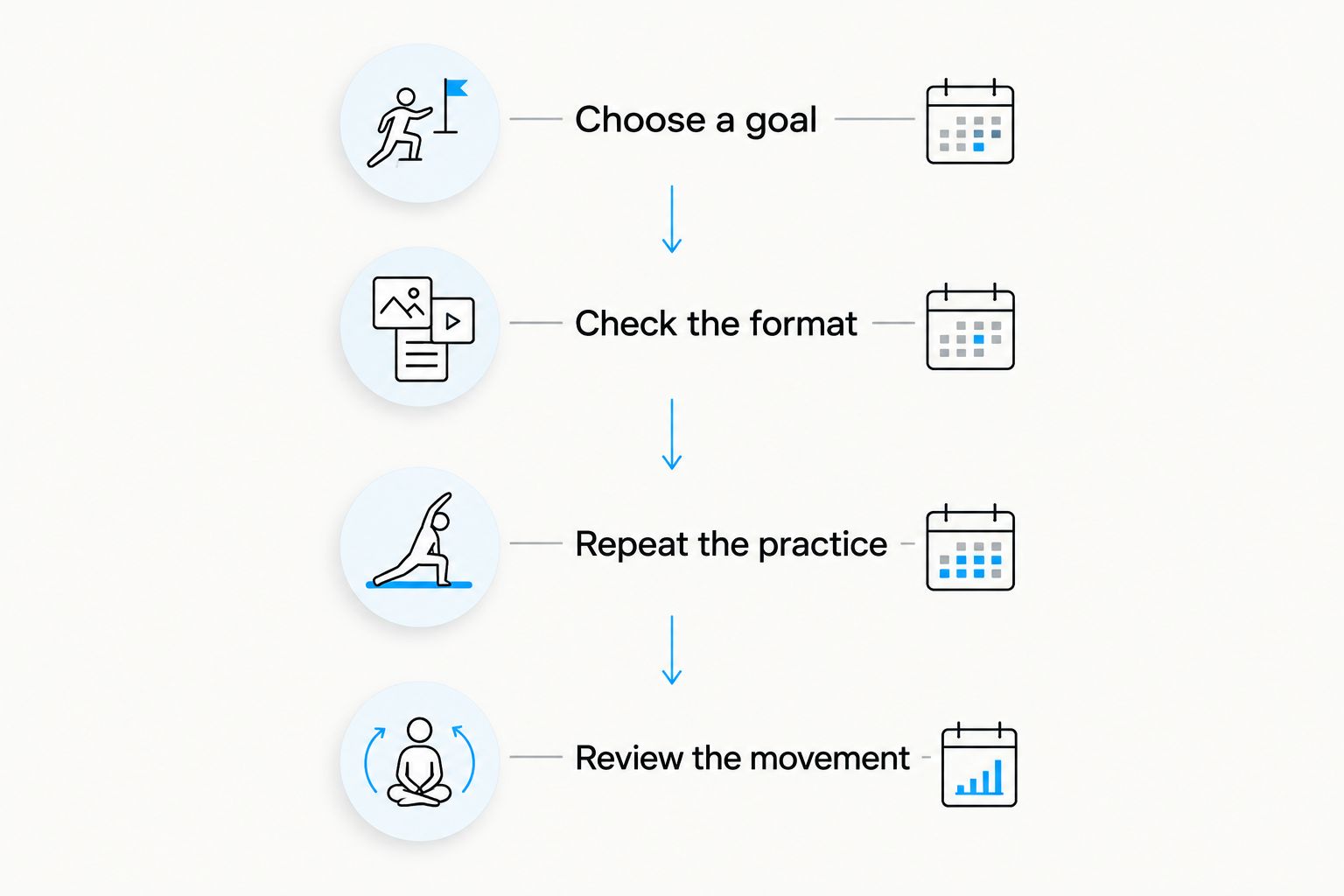
Choose a goal
Name the activity you want to support: squatting, reaching overhead, running, or moving after a desk-heavy day. Keep the goal concrete without diagnosing yourself. A stiff-feeling hip is an observation, not proof that one particular muscle needs stretching.
Check the format
Choose follow-along video if you want guidance throughout a session. Choose assessment-led practice if a structured review helps you focus. Choose yoga because you enjoy yoga, and broader fitness because you want varied workouts.
Repeat the practice
Attach mobility to an existing part of your day. For your 2026 plan, that might mean after changing out of work clothes or during a separate break from sitting. Choose a cue you can recognize instead of relying on motivation.
Review the movement
Return to the activity you care about and notice comfort, control, and any symptoms. Do not force a deeper position to prove the app is working. Persistent or worsening pain needs individual advice, not a harder routine.
Start with a short movement check
Before opening another library of routines, take a brief look at how you move today. This is an observation exercise, not a fitness test or a treatment plan. Stay within a comfortable range and stop if a movement causes pain.
- For 30 seconds: Walk around and notice how your ankles, hips, and shoulders feel.
- For 5 repetitions: Sit down onto a stable chair and stand back up at an easy pace.
- For 5 repetitions: Raise and lower your arms slowly within a comfortable range.
- For 30 seconds: Walk again and identify which activity you want your practice to support.
These suggested amounts give the check a clear stopping point; they are not a prescription or a promised route to results. Use what you notice to select relevant instruction, not to label yourself as broken or diagnose a restriction.
When general mobility guidance is not enough
Pregnancy, postpartum recovery, recent surgery, and ongoing pain change the decision. A women's label does not establish that a routine is suitable for those circumstances. Ask an appropriately qualified healthcare professional for guidance specific to you.
The same boundary applies to numbness, new weakness, or symptoms that worsen with movement. Do not use an app to push through a problem that needs assessment. Mobility practice should support your training, not become a reason to ignore symptoms.
Which mobility app should you choose?
Choose Pliability as the default for daily video-guided mobility alongside regular training. Choose GOWOD when assessment-led direction matters more, Down Dog when you want yoga, and Nike Training Club when mobility is one part of a broader exercise habit.
The strongest 2026 choice is the format you can use consistently without confusing general instruction with individual care. Start with the job you need the app to do. Then choose the app built around that job.
FAQ
What's the best mobility app for women who lift weights?
Pliability is the default pick here for women who lift and want daily video-guided mobility alongside training. GOWOD is the alternative for readers who prefer assessment-led practice.
Do women need a women-specific mobility app?
Women do not need women-specific branding to choose useful general mobility instruction. Training goals, guidance style, and individual health circumstances are more useful selection criteria.
Is a yoga app better than a mobility app?
A yoga app is better when yoga is the practice you want to follow. A dedicated mobility app is the more direct choice when your main goal is structured mobility work alongside training.
Can I use a mobility app during pregnancy or postpartum recovery?
Pregnancy and postpartum recovery require guidance appropriate to your circumstances. Ask your healthcare professional which activities suit you rather than assuming a general mobility routine is suitable.
How much time should I spend on mobility?
Choose a manageable session length that fits your schedule and the routine's instructions. Consistency does not require forcing longer sessions, and persistent pain calls for individual advice rather than more stretching.
Can a mobility app fix tight hips or stiff ankles?
A mobility app provides instruction, not a diagnosis or a guaranteed fix. Choose relevant movement practice, stay within a comfortable range, and seek assessment for persistent or worsening symptoms.
What's the difference between mobility and flexibility?
Flexibility describes available range of motion, while mobility also involves control through movement. Choose instruction that matches the activity you want to support rather than chasing the deepest possible stretch.
One last thing
Do not choose your next routine by whichever position looks most impressive. Choose it by the ordinary movement you want to feel more comfortable doing. Your squat, overhead reach, or walk after work gives the practice a purpose that an advanced pose cannot supply for you.