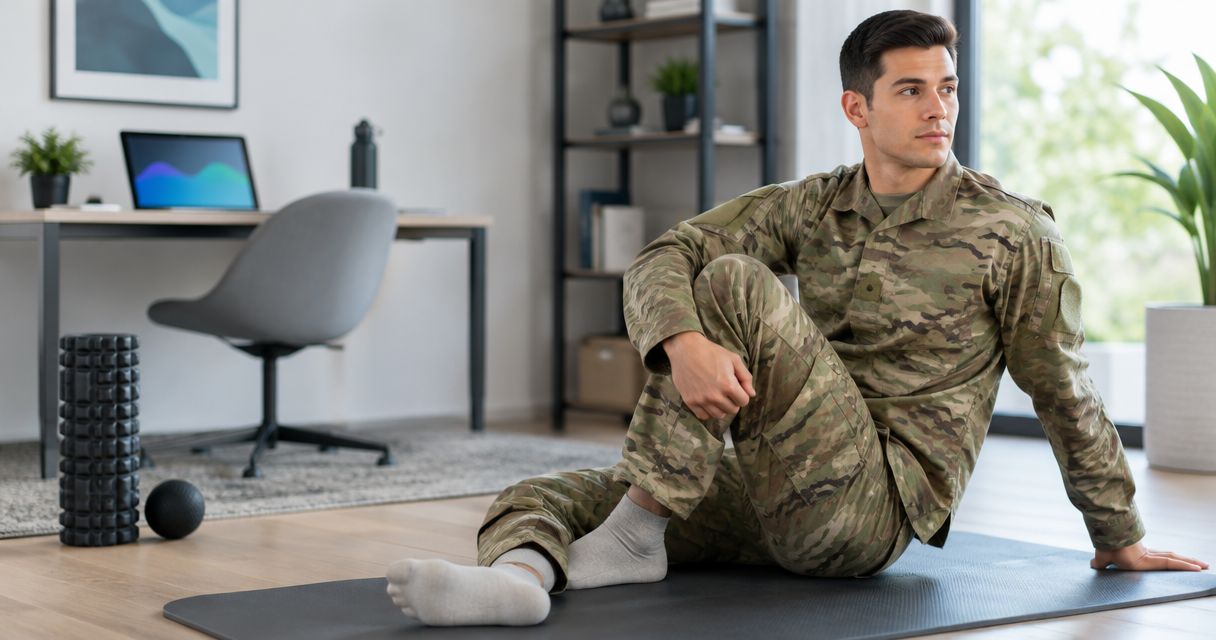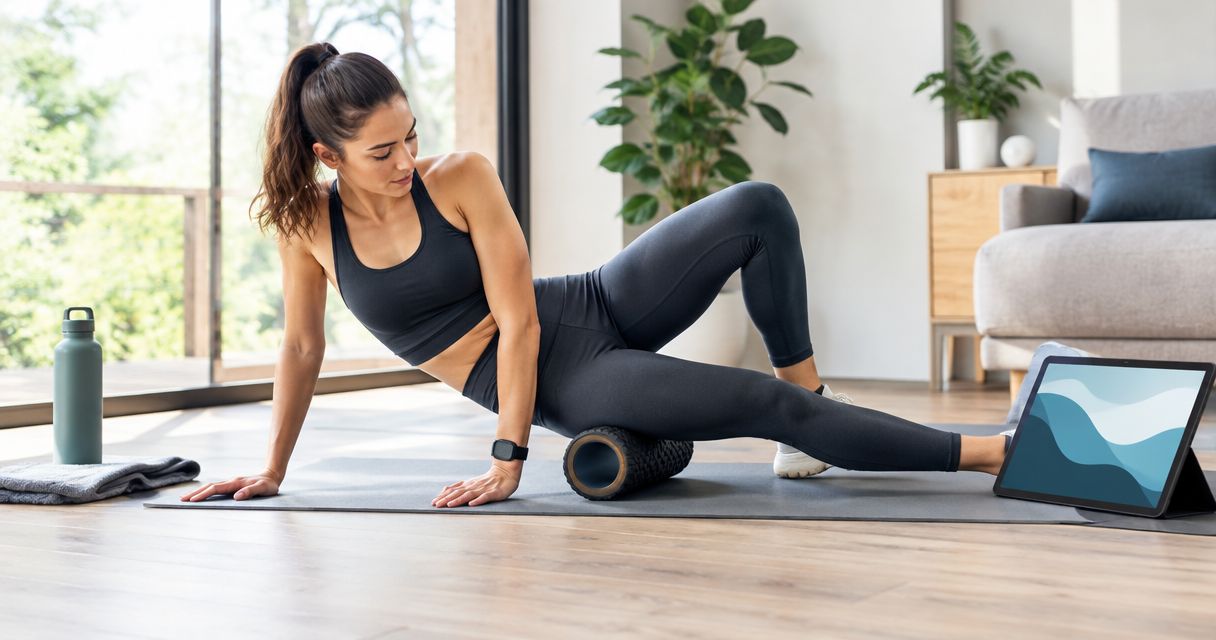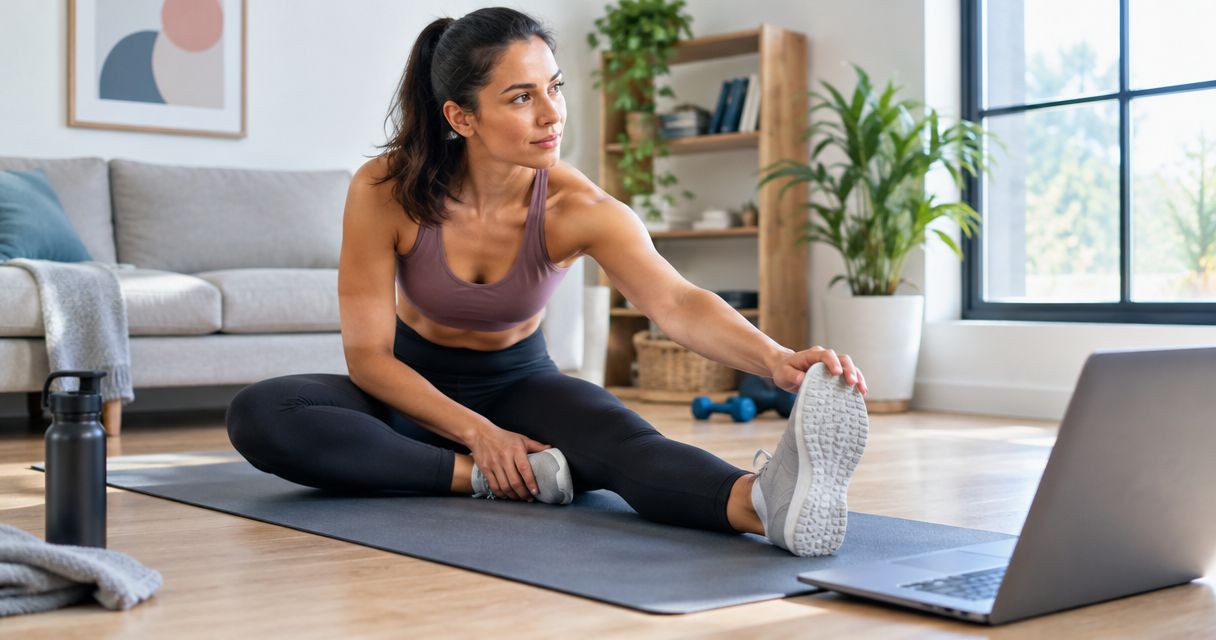
Yes, stretching burns calories, but the amount is modest and depends on your body size, session length, and how actively you move. Your total calorie burn also includes energy you would have used at rest, so it is not all extra exercise energy. Use stretching to work on flexibility and movement—not as your main calorie-burning workout in 2026.
- Does stretching burn calories? Yes, but stretching is better suited to flexibility than calorie-burning goals.
- Pliability offers guided mobility, stretching, and recovery routines for athletes and fitness enthusiasts.
- Static stretching and dynamic mobility serve different purposes; neither needs a calorie target to be useful.
- Judge stretching by comfortable movement and consistency, not a wearable’s calorie estimate.
Does stretching burn calories?
Stretching uses energy because you engage muscles, support your posture, and move between positions. The workload changes with the routine. Holding a supported calf stretch is different from repeatedly moving through standing lunges and overhead reaches.
The useful comparison is not whether stretching burns anything. It is whether calorie burn is the right reason to choose it. For flexibility work, the answer is no: select movements around the range you want to improve, not the largest calorie estimate.
| Activity | Best for | Main advantage | Main limitation |
|---|---|---|---|
| Static stretching | Working on flexibility | Lets you focus on a particular position | Provides little sustained cardiovascular demand |
| Dynamic mobility | Preparing for movement | Takes joints through active ranges | Effort varies substantially between routines |
| Brisk walking | Building aerobic activity | Keeps you moving continuously | Does not replace targeted flexibility work |
| Strength training | Developing strength | Trains muscles against resistance | Requires appropriate exercise selection and progression |
If you need help choosing guided flexibility work, start with the stretching apps comparison. Choose the format you will follow rather than the one promising the biggest burn.
Why this matters
A low calorie reading does not make a stretching session unsuccessful. A high reading does not prove your hips or ankles moved better. Energy expenditure and movement quality answer different questions.
This distinction matters when you train for running, lifting, or HYROX. Your conditioning sessions develop fitness for sustained effort; your flexibility and mobility work addresses movement range. Those sessions can sit in the same training plan without doing the same job.
Give each session a purpose before you start it. For your 2026 training plan, that means separating aerobic activity, strength work, and mobility instead of asking every workout to maximize calories.
Static stretching: flexibility comes first
Static stretching means moving into a position and holding it without repeated movement. Examples include a supported calf stretch or a seated hamstring stretch. The goal is a manageable stretch sensation, not a contest to reach farther.
Because you are not continuously moving a large amount of muscle, static stretching usually places less demand on your cardiovascular system than brisk walking or running. That is not a flaw. It makes static stretching a different tool.
Use static stretching when you want to spend time on a particular range without adding a conditioning session. Its limitation is equally clear: a longer hold does not turn flexibility work into a substitute for aerobic exercise.
Keep the position controlled and breathe normally. Back off if you feel sharp pain, numbness, or tingling; those are not signals to push deeper.
Dynamic mobility: movement changes the workload
Dynamic mobility uses controlled movement through a range rather than staying still. Leg swings, ankle rocks, and controlled arm circles are examples. Your muscles move your joints and manage the return, which changes the effort involved.
A standing, whole-body sequence generally asks more of you than a supported position on the floor. However, “dynamic” does not automatically mean vigorous. Slow ankle rocks and continuous bodyweight lunges are not interchangeable workloads.
Dynamic movement is useful when it resembles the movement demands of your upcoming activity. The trade-off is that adding speed or repetitions can shift attention away from control. Move through the range you can manage; do not rush to raise the calorie count.
Why stretching calorie burn varies
There is no single calorie number that describes every stretching session. These factors change the work you perform:
- Body size: Moving and supporting a larger body generally requires more energy for a comparable task.
- Session duration: Spending longer on the same activity increases total energy use, without necessarily changing its intensity.
- Movement pattern: Repeated whole-body movement creates a different workload from a supported hold.
- Muscle involvement: Using your legs, trunk, and arms together differs from stretching a small area in isolation.
- Rest and support: Long pauses, chairs, walls, and floor support change how much active work you do.
Those differences explain why someone else’s result is not your target. Even an identical session title can describe different amounts of movement if participants use different positions or take different breaks.
For a useful comparison, keep the routine and effort similar. But do not spend your stretching time trying to make an uncertain calorie estimate more precise.
Total calories and active calories are different
Your body uses energy even while you rest. A total-calorie estimate includes that background expenditure plus the energy associated with the activity. An active-calorie estimate attempts to describe the amount above that resting baseline.
That distinction matters during gentle sessions. A total number can look substantial even though part of it would have accumulated while you were sitting quietly. It does not mean the session created that entire amount of additional expenditure.
Before comparing two readings, check what each number represents. Comparing total calories from one session with active calories from another is not a fair comparison, even when both sessions last equally long.
In 2026, use calorie estimates as rough context rather than a score for stretching quality. Your watch cannot tell you whether you chose an appropriate stretch simply by displaying an energy number.
How to build a stretching session around movement
Start with the task you want to make more comfortable. Getting into a squat, reaching overhead, and turning through your upper back place different demands on your body. Choose a movement target rather than stretching everything without a purpose.
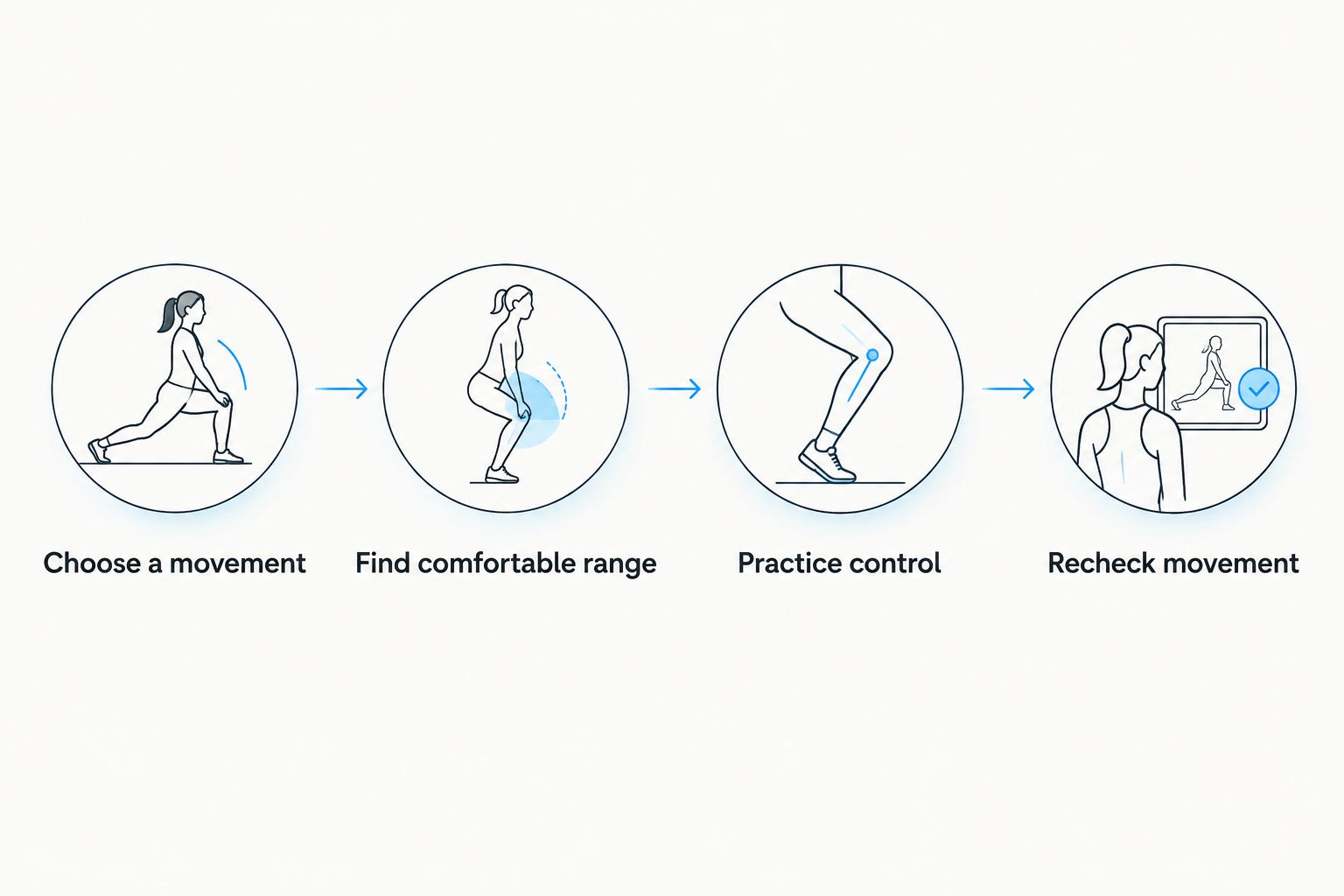
- Choose a movement. Identify a task that feels restricted, without repeatedly forcing a painful position.
- Find comfortable range. Move slowly and notice where you can stay controlled and breathe normally.
- Practice control. Use a suitable stretch or active movement without bouncing or chasing extra depth.
- Recheck movement. Return to the original task and notice how it feels, without treating a short-term change as a diagnosis.
Keep your assessment simple. You are looking for comfortable, controlled movement—not proof that a particular muscle caused every restriction. Persistent pain, swelling, or a sudden loss of movement needs assessment by a qualified healthcare professional.
A useful 2026 stretching habit leaves you with something clearer than a calorie total: what you practiced, how it felt, and whether the routine fits your training.
Where stretching fits in a calorie-burning exercise plan
If your goal includes increasing energy expenditure, make sustained physical activity part of the plan. Stretching can accompany it, but should not take its place. Choose an aerobic activity you can perform safely and repeat consistently.
The World Health Organization’s adult physical activity guidelines recommend 150–300 minutes of moderate-intensity aerobic activity per week, or 75–150 minutes of vigorous-intensity aerobic activity, or an equivalent combination. They also recommend muscle-strengthening activity on at least 2 days per week involving the major muscle groups.
Those are general health recommendations for adults, not a guaranteed weight-loss formula or a stretching prescription. Your needs also depend on your health and current activity level. Build toward appropriate activity rather than treating the upper end as an immediate starting requirement.
For planning in 2026, keep these roles separate:
- Aerobic activity: Build sustained activity around your fitness and preferences.
- Strength training: Develop your ability to produce and manage force.
- Stretching and mobility: Practice the ranges and positions relevant to your life and sport.
A stretching session still counts as time spent moving. It simply does not automatically count as moderate-intensity aerobic activity.
When guided mobility makes sense
Pliability is best for athletes and fitness enthusiasts who want guided mobility, stretching, and recovery video routines. Its subscription app provides daily routines, giving you a format to follow rather than requiring you to assemble every session yourself.
That makes Pliability a relevant option when your goal is a repeatable mobility habit. The limitation is the category itself: a mobility app does not replace aerobic training, progressive strength work, or individual assessment of an injury.
Choose guidance because it helps you practice consistently, not because you expect a larger calorie total. A routine earns its place when it matches the movement work you intend to do.
Can stretching help you lose weight?
Stretching alone is not a practical primary strategy for weight loss because its energy demand is modest. Body-weight change depends on energy balance over time, and a stretching session does not establish that balance by itself.
Keep stretching if it serves your flexibility goals. If weight management is also a goal, address your overall activity and nutrition rather than extending stretches solely to increase expenditure. Do not treat a wearable estimate as an exact amount you must eat back.
Does stretching burn belly fat?
Stretching does not selectively burn belly fat. Working or stretching a particular body area does not let you choose where fat loss occurs.
A hip-flexor or abdominal stretch can have a movement purpose without changing fat in that location. Judge it by that purpose. Reject routines that promise local fat loss from stretching a named body part.
Should you stretch before or after a workout?
Controlled dynamic movement fits naturally into a warm-up because it lets you rehearse movements before increasing their demands. Progress from easier activity toward the pace, load, or range your workout requires.
Longer static stretching can sit in a separate flexibility session or after training, depending on your goal. Neither timing choice makes stretching a major calorie-burning activity. Choose timing that supports the workout and makes the habit repeatable.
FAQ
Does stretching burn calories even when I stay still?
Yes, a held stretch still uses energy, but total calories include energy your body would use at rest. A supported hold is not equivalent to a sustained aerobic workout.
How many calories does stretching burn?
There is no single calorie figure that applies to every stretching session. Body size, duration, movement, and the distinction between active and total calories all affect the estimate.
Is stretching better than walking for burning calories?
Brisk walking is the more appropriate choice when your goal is sustained aerobic activity and energy expenditure. Stretching serves a different purpose: working on flexibility and movement range.
Does sweating during stretching mean I am burning more fat?
Sweating does not measure fat loss. Room temperature, clothing, and your body's cooling response affect sweat, so do not use it to score a stretching session.
Can I replace cardio with a daily stretching routine?
A gentle daily stretching routine does not replace aerobic activity. Keep stretching for flexibility and include appropriate sustained activity for cardiovascular fitness.
Should I trust my watch's stretching calorie count?
Treat your watch's stretching calorie count as an estimate, not a direct measurement. Check whether it reports active or total calories before comparing sessions.
Is Pliability suitable for a daily mobility habit?
Pliability offers daily mobility, stretching, and recovery video routines for athletes and fitness enthusiasts. It suits guided movement practice rather than a program chosen primarily for calorie burn.
One last thing
A better stretch is not necessarily a deeper stretch. If you have to hold your breath, twist away, or force the position, reduce the range and regain control.
For your next session, choose one movement to reassess afterward. That gives your stretching a clear job—and a more relevant measure of success than calories.