Best senior-focused starting point: SilverSneakers GO. Best for active older adults who want daily mobility videos: Pliability. Best for yoga-based stretching: Down Dog. Best for stretching alongside strength training: Nike Training Club. The best stretching app for seniors in 2026 is the one you can follow comfortably, repeat consistently, and adapt without forcing a painful movement.
- SilverSneakers GO is the senior-focused starting point; choose routines that match your balance and floor-transfer ability.
- Pliability suits active older adults seeking daily mobility, stretching, and recovery videos.
- Down Dog fits yoga-based practice; Nike Training Club fits mobility alongside strength training.
- The best stretching app for seniors supports a repeatable habit, not painful stretches or unsupported balance challenges.
Why this matters
A tight hip, stiff ankle, or restricted shoulder can make everyday movement uncomfortable. Stretching gives you a way to work on available range, but an app cannot tell you why a joint hurts. That distinction matters more than the length of a routine.
Choose for your current movement ability, not your age alone. An older runner and someone who needs support to stand up need different sessions. Both deserve clear instructions and a manageable starting point.
Stretching also has a limited job. It does not replace strength training, walking, or balance practice. Your routine should support the activities you want to keep doing, rather than become the whole exercise plan.
For help turning occasional sessions into a regular habit, see this guide to daily stretching apps. Start with a format you can repeat without needing a complicated setup.
What makes the best stretching app for seniors?
Use these criteria to choose your stretching app in 2026. A large exercise library matters less than a session you can actually follow.
- Position fit: Decide whether you need seated, supported-standing, or floor-based exercise. Do not assume a beginner label means chair-based.
- Clear instruction: Look for visible demonstrations and cues you understand without repeatedly checking the screen.
- Manageable transitions: Moving from standing to kneeling can be harder than the stretch itself. Review the entire session before starting.
- Control over effort: You should be able to pause, shorten a hold, reduce your range, or skip a movement.
- Repeatable structure: Familiar movements make it easier to concentrate on your body instead of constantly learning the next exercise.
- Appropriate purpose: General mobility, yoga, strength support, and rehabilitation are different tasks. Choose the right tool for yours.
The decisive question is simple: can you complete the routine without losing balance, straining to reach the screen, or pushing through pain? If not, choose a different session or seek individual guidance.
Best senior stretching apps at a glance in 2026
These recommendations separate four uses. They are not a claim that one app is medically suitable for every older adult.
| App | Best for | Standout approach | Key limitation |
|---|---|---|---|
| SilverSneakers GO | A senior-focused starting point | Exercise guidance within an older-adult fitness program | A senior-focused label does not establish suitability for your condition |
| Pliability | Active older adults building a daily mobility habit | Daily mobility, stretching, and recovery video routines | Athlete-oriented guidance is not individualized rehabilitation |
| Down Dog | Older adults who prefer yoga-based stretching | Guided yoga practice | Yoga positions and transitions need careful selection |
| Nike Training Club | Older adults combining mobility with strength work | A broader guided fitness approach | A general fitness library requires more filtering for your needs |
SilverSneakers GO is the default starting point for a senior-focused search. Choose Pliability instead when you already exercise regularly and want a dedicated mobility-and-recovery routine. Choose the other two when their training format matches the habit you want to build.
1. SilverSneakers GO: best for a senior-focused starting point
SilverSneakers GO is the app associated with the SilverSneakers older-adult fitness program. Its senior-focused context makes it the most direct starting point when you want exercise guidance built around an older audience rather than athletic recovery.
That context is useful, but it is not a personal assessment. You still need to inspect the movements, support requirements, and transitions before following a session.
SilverSneakers GO pros:
- Older-adult fitness is central to the program's purpose.
- It provides a starting point beyond general athletic workout apps.
- Its broader exercise context helps keep stretching within a fuller movement habit.
SilverSneakers GO cons:
- An older-adult focus does not guarantee that every routine fits your balance or joint limitations.
- App guidance cannot assess unexplained pain or your fall risk.
- A broad fitness format is different from a stretching-only routine.
Best for: Older adults who want a senior-focused place to begin and can independently select appropriate exercises.
Before committing to a routine, check whether it asks you to stand unsupported or get down to the floor. If either is difficult, do not treat completing the session as the goal. Finding an appropriate format comes first.
Verdict: Choose SilverSneakers GO for the senior-focused starting point; skip any session whose positions do not fit your abilities.
2. Pliability: best for active seniors building a mobility habit
Pliability offers a subscription app with daily mobility, stretching, and recovery video routines for athletes and fitness enthusiasts. Its role here is specific: a dedicated mobility practice for an older adult who already enjoys exercise.
Pliability is best for active older adults who want daily mobility, stretching, and recovery videos. That makes it a different choice from an app selected primarily for senior-focused exercise.
Pliability pros:
- Mobility, stretching, and recovery are the app's stated focus.
- Video routines give you demonstrations to follow.
- Daily routines support a clearly defined place for mobility in your schedule.
- Its fitness-oriented purpose matches older adults who already train.
Pliability cons:
- Athletic positioning is not the same as senior-specific instruction.
- A video cannot evaluate your symptoms or adjust a movement through an individual assessment.
- A daily routine still needs to fit your ability to enter and leave each position.
Best for: Active older adults seeking mobility work alongside an existing exercise habit.
Use Pliability mobility sessions as part of your training, not as permission to push deeper into discomfort. Review unfamiliar positions before starting, and reduce your range when necessary. If floor transfers are difficult, choose only sessions you can perform safely.
Verdict: Choose Pliability for a dedicated daily mobility habit; seek individual guidance when pain or movement restrictions need assessment.
3. Down Dog: best for seniors who prefer yoga-based stretching
Down Dog is a guided yoga app. It belongs on this list for older adults who prefer stretching within a yoga practice rather than a standalone mobility routine.
Yoga involves more than holding stretches. Position changes, weight bearing through the hands, and balance demands can all affect whether a practice suits you.
Down Dog pros:
- Yoga gives stretching a familiar practice structure.
- Guided sessions suit readers who prefer following a sequence.
- The format combines attention to movement with attention to breathing.
Down Dog cons:
- A yoga session is not automatically chair-based or senior-specific.
- Wrist-loading positions and floor transitions require careful selection.
- Following a sequence can encourage you to continue when stopping would be the better choice.
Best for: Older adults who enjoy yoga and can independently judge whether a sequence fits their movement ability.
Do not use a beginner label as your only safety check. A simple yoga sequence can still include positions that are unsuitable for your wrists, knees, balance, or ability to get up from the floor.
Verdict: Choose Down Dog for yoga-based practice; skip sequences that demand unsupported positions you cannot control.
4. Nike Training Club: best for stretching alongside strength work
Nike Training Club is a general fitness app with guided workouts, including mobility-oriented exercise. It fits an older adult who wants stretching within a broader training habit rather than as a separate daily practice.
The wider focus is its advantage and its drawback. You get a general training context, but you must distinguish mobility work from sessions with greater strength, coordination, or conditioning demands.
Nike Training Club pros:
- It places mobility alongside other forms of exercise.
- Guided workouts provide a structured alternative to assembling exercises yourself.
- Its general fitness purpose suits older adults who already train independently.
Nike Training Club cons:
- It is not a senior-specific stretching app.
- A broad library requires careful session selection.
- Workout difficulty does not describe every balance demand or floor transition.
Best for: Independently active older adults who want mobility alongside strength and general fitness.
Select the session for its movements, not its title alone. If your main need is a straightforward stretching habit, a dedicated mobility format reduces the number of training decisions you need to make.
Verdict: Choose Nike Training Club for broader training; skip it as your default when you need senior-specific support.
How to choose a routine you can repeat
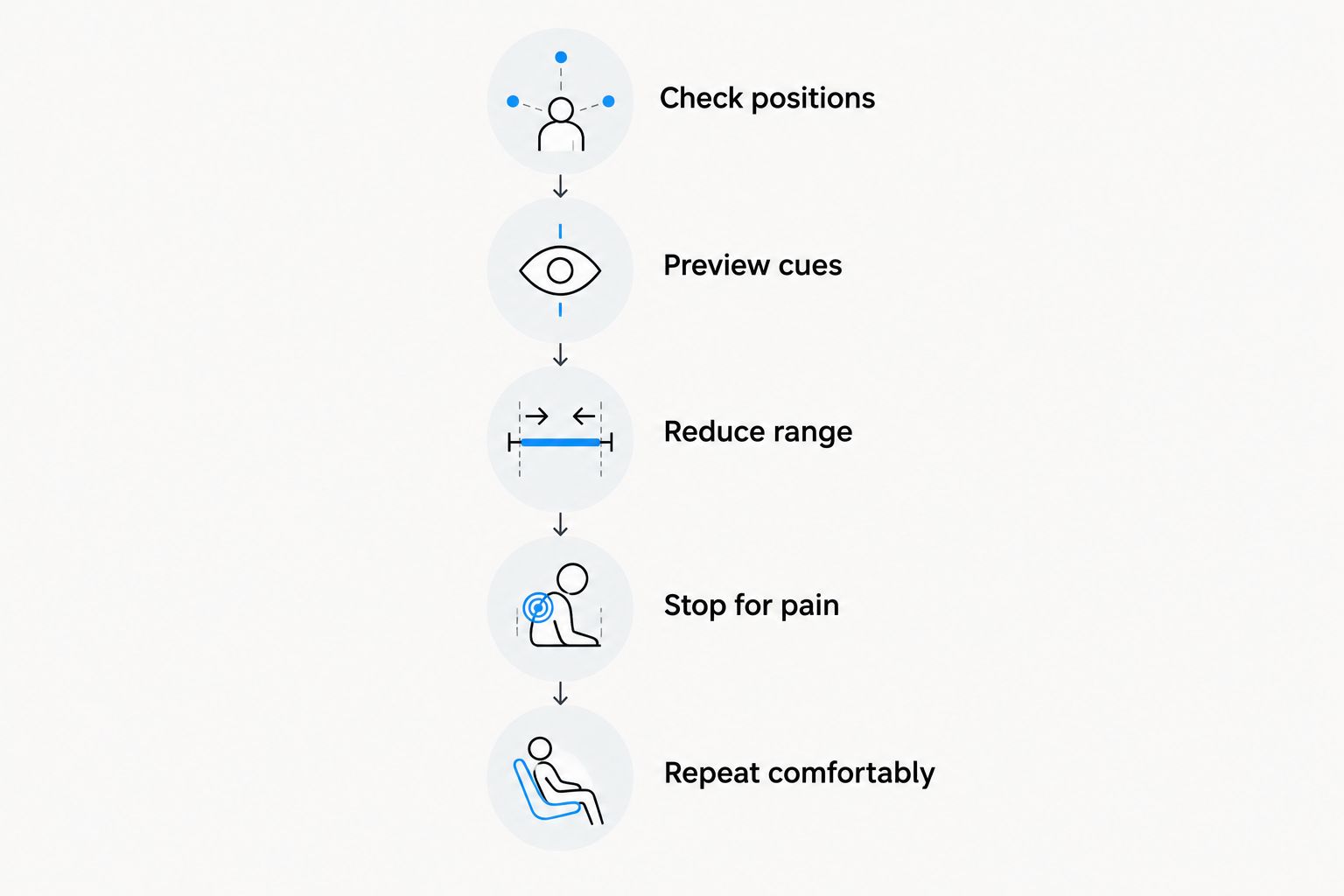
App selection is only the first decision. Before following a new stretching routine in 2026, check these steps in order.
Check positions
Preview whether the session is seated, standing, kneeling, or lying down. Include the transitions in your assessment. Getting into a position comfortably does not guarantee that getting out will be equally easy.
Preview cues
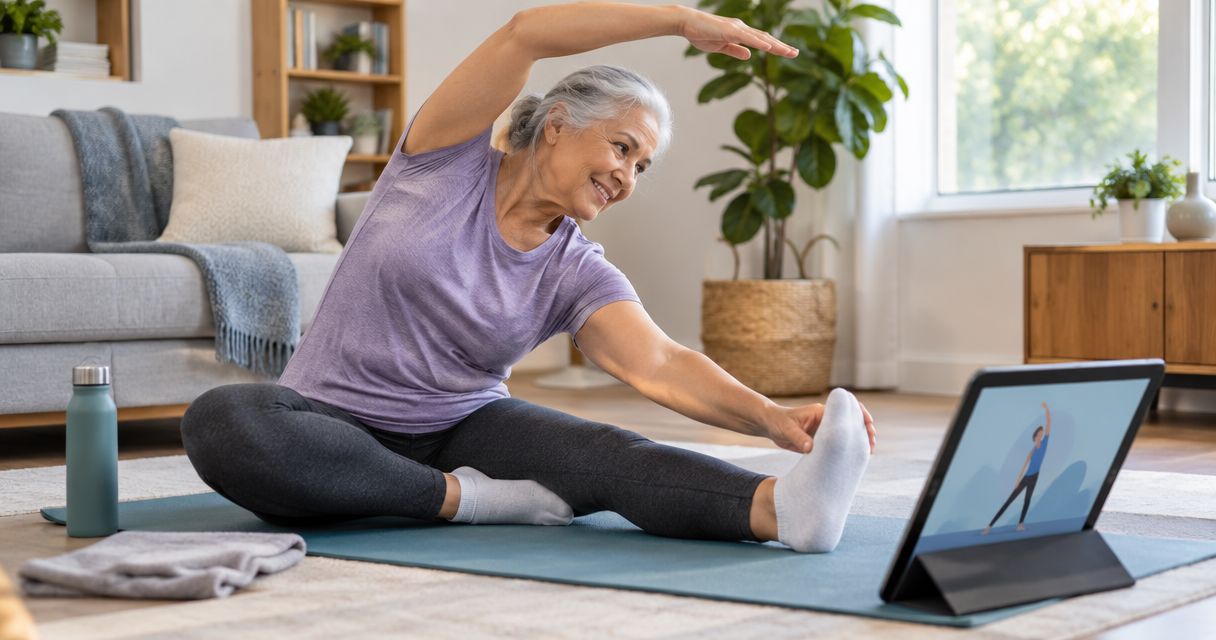
Make sure you can see and hear the instructions without twisting your neck toward the screen. Place the device where it stays visible, and pause whenever you need to reposition it.
Reduce range
Use a range you can control. A stretch does not need to resemble the demonstrator's position to be useful, and forcing the endpoint is not a measure of progress.
Stop for pain
Stop a movement that produces pain, dizziness, numbness, or loss of balance. Do not use an app to diagnose the cause. New or persistent symptoms deserve an individual assessment.
Repeat comfortably
Choose a manageable routine before adding variety. Familiarity lets you pay attention to your response rather than spending the session trying to keep up.
Keep stretching in its proper place
For your 2026 exercise plan, stretching should support movement rather than replace other training. World Health Organization guidance for older adults includes at least 150 minutes of moderate-intensity aerobic activity per week, or 75 minutes of vigorous-intensity activity, or an equivalent combination.
The same guidance includes muscle-strengthening activity on 2 or more days per week and varied activity emphasizing functional balance and strength on 3 or more days per week. These are general public-health recommendations, not stretching targets or a prescription for your circumstances.
Adapt activity to your abilities and health status. If you have been inactive, struggle with balance, or have restrictions after surgery, seek help choosing an appropriate starting point. More stretching is not automatically the answer to every movement problem.
Use stretching for range, strength work for capacity, and balance practice for control. You need a plan that addresses the task you want to improve.
How these apps were ranked
This 2026 ranking prioritizes audience fit, training purpose, and the amount of session selection required. SilverSneakers GO leads for senior-focused context; Pliability leads for a dedicated daily mobility habit among active older adults.
Down Dog and Nike Training Club serve different preferences rather than competing for the same recommendation. Yoga preference points toward Down Dog. A broader exercise habit points toward Nike Training Club.
The ranking does not establish clinical effectiveness or individual medical suitability. The deciding criteria remain the same: appropriate positions, understandable instructions, manageable transitions, and control over effort.
Which stretching app should you choose?
Start with SilverSneakers GO if your main requirement is a senior-focused exercise app. Check the actual routine before starting; the audience label is a useful filter, not a safety guarantee.
Choose the dedicated mobility option if you already exercise and want a separate recovery habit. Choose Down Dog if yoga is the practice you enjoy. Choose Nike Training Club if mobility belongs inside your broader training schedule.
If you need chair-only exercise, help with transfers, or rehabilitation after an injury, those requirements come before the ranking. Select a routine that explicitly meets them, or ask a qualified professional to help you choose.
FAQ
What's the best stretching app for seniors in 2026?
SilverSneakers GO is the senior-focused starting point in this guide. Pliability is the better fit for active older adults who want dedicated daily mobility, stretching, and recovery videos.
Is Pliability suitable for older adults?
Pliability fits active older adults seeking mobility, stretching, and recovery routines. Its athlete-and-fitness focus does not establish suitability for every health condition; select sessions that match your abilities.
Is a beginner stretching routine the same as a senior routine?
No, beginner describes difficulty rather than senior-specific suitability. Check floor transfers, balance requirements, and joint positions before following the routine.
What's the best option if I need chair stretches?
Choose a routine that explicitly demonstrates seated exercise. Do not assume that a senior-focused or beginner app makes every session chair-based.
Should seniors stretch every day?
A repeatable stretching habit should match your comfort, health status, and existing activity. Daily practice is not a reason to repeat a painful movement or ignore symptoms.
Is Down Dog better than Nike Training Club for stretching?
Down Dog fits yoga-based practice, while Nike Training Club fits mobility within broader fitness training. Choose the format you prefer, then check that the actual positions suit you.
Can a stretching app replace physical therapy?
No, a general stretching app does not replace an individual assessment or prescribed rehabilitation. Follow your clinician's instructions after injury or surgery, and seek assessment for new or persistent pain.
One last thing
The hardest part of a stretch can be getting into it. Before choosing a routine, watch how the instructor reaches the floor, changes sides, and stands up again.
Choose the session you can enter, perform, and leave with control. That is a better starting point than chasing the deepest stretch on the screen.