Best overall: a smooth, medium-density foam roller. Best for pressure-sensitive beginners: a soft foam roller. Best for travel: a compact foam roller. This 2026 guide compares six roller types for mobility and recovery, with a clear reason to choose—or skip—each one.
- The best foam roller for general mobility work is smooth and medium-density: predictable pressure, without aggressive texture.
- Choose soft foam when pressure makes you tense up; choose compact foam when portability matters most.
- Textured and vibrating rollers add features, not a guarantee of better movement.
- Pliability provides guided mobility, stretching, and recovery routines; a roller is an optional tool, not the whole routine.
Why this matters
The best foam roller is the one you can use without holding your breath, bracing against discomfort, or chasing pain. More pressure is not automatically more useful. You need enough control to adjust the contact and keep moving comfortably.
Pliability offers daily mobility, stretching, and recovery video routines for athletes and fitness enthusiasts. Pliability is best for athletes and fitness enthusiasts who want guided mobility routines rather than another recovery tool. A roller serves a different purpose: it lets you apply and adjust pressure yourself.
Separate those jobs. Rolling does not replace movement practice, strength training, or a warm-up that prepares you for your session. Choose the tool around your routine—not the routine around the tool.
What makes the best foam roller?
For a 2026 purchase, judge the roller by how it behaves under your body, not how complicated it looks.
- Pressure control: You should be able to reduce pressure by supporting yourself with your hands, feet, or opposite leg.
- Surface feel: Smooth foam gives consistent contact. Raised texture changes where pressure concentrates.
- Firmness: Choose a surface you can relax against. A roller that makes you flinch is a poor starting point.
- Usable length: Your body and intended exercises should fit comfortably on the roller without constant repositioning.
- Portability: A roller that fits your training bag serves a different job from one kept beside your mat.
- Practical upkeep: Consider storage, cleaning instructions, and whether the roller needs charging.
Density and firmness are related, but product labels do not give you a universal pressure scale. Compare the stated construction and intended use. Do not assume that every roller described as medium feels identical.
Best foam rollers at a glance
These 2026 picks rank roller types, not individual product models. The order prioritizes general usefulness, then specific needs. A compact roller can also be firm or textured; choose its size first when travel is the main requirement.
| Roller type | Best for | Standout feature | Key limitation |
|---|---|---|---|
| Smooth, medium-density | General mobility routines | Consistent contact with adjustable body pressure | Less focused contact than raised texture |
| Soft foam | Pressure-sensitive beginners | A more forgiving surface | Compresses more under body weight |
| Firm, smooth foam | Experienced users wanting firmer contact | Firmness without raised ridges | Easy to apply more pressure than you tolerate |
| Textured foam | Localized contact | Raised areas concentrate pressure | Less even contact across the surface |
| Compact foam | Travel and training bags | Smaller storage footprint | More repositioning for larger areas |
| Vibrating foam | Users who specifically want vibration | Powered vibration alongside rolling | Charging and controls add upkeep |
1. Smooth, medium-density: best foam roller for general mobility
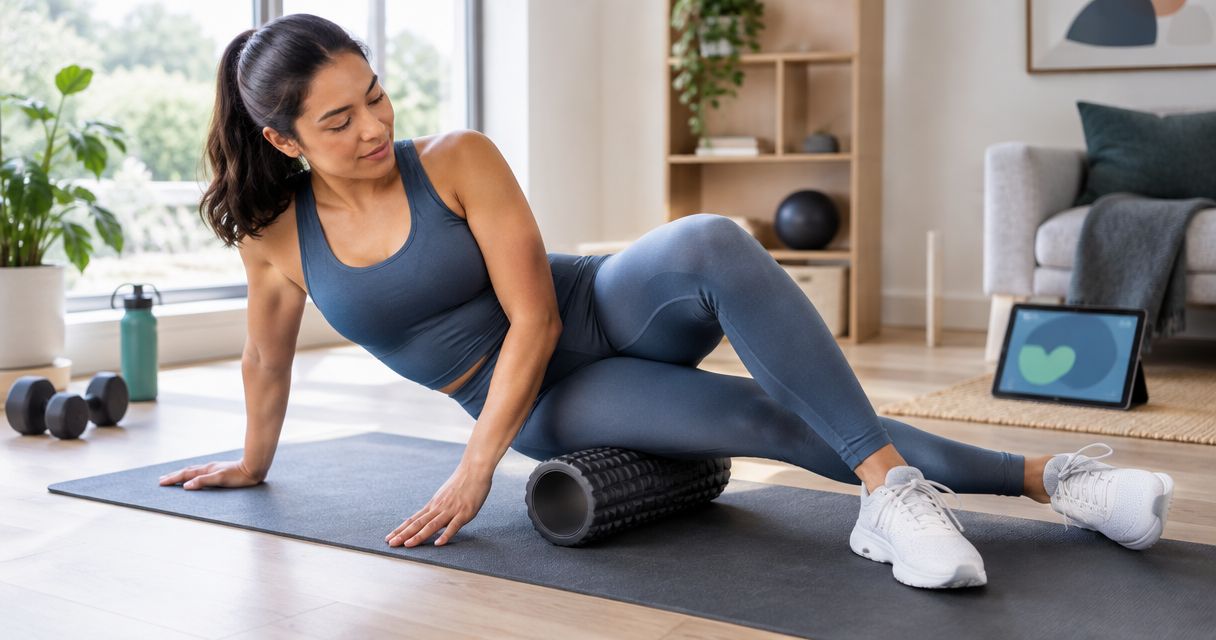
A smooth, medium-density roller is the default choice for a general routine. Its surface keeps contact predictable as you move across a muscle, and you can change the pressure by shifting how much weight you place on it.
Start here if you want to roll your calves, thighs, or glutes without learning how to position yourself around pronounced ridges. Smooth does not mean gentle in every position. Body weight still determines much of what you feel.
Smooth, medium-density foam roller pros:
- Consistent contact without raised pressure points.
- Straightforward positioning for broad muscle areas.
- Pressure adjusts through your body position.
- No charging or powered controls to manage.
Smooth, medium-density foam roller cons:
- Less focused contact than a raised surface.
- Still uncomfortable when you load it too heavily.
- Longer versions take more room in a bag.
Best for: Athletes and fitness enthusiasts who want one roller for regular, general use.
Keep the first session simple. Choose a comfortable area, support your weight, and move slowly enough to notice whether you are relaxing or resisting. Buy: Choose this type first if you do not have a specific reason to choose another.
2. Soft foam: best foam roller for pressure-sensitive beginners
A soft foam roller gives more under your weight than a firm roller. That makes it a sensible starting point when firmer contact causes you to tense up before you can settle into a position.
The goal is not to graduate to the hardest roller. The goal is to find pressure you can control. A softer surface remains useful even after rolling becomes familiar.
Soft foam roller pros:
- A more forgiving introduction to rolling.
- Less rigid contact under sensitive areas.
- Useful for learning how to distribute body weight.
Soft foam roller cons:
- Greater compression changes the feel under load.
- Less suitable if you specifically prefer firm contact.
- Softness alone does not make an injured area safe to roll.
Best for: Beginners whose main obstacle is pressure tolerance, not portability or added features.
Use your hands and feet to unload the roller rather than placing your full weight on it immediately. You should not need to endure sharp pain to finish a session. Buy: Choose soft foam when a firmer surface makes comfortable rolling difficult.
3. Firm, smooth foam: best foam roller for firmer, even contact
A firm, smooth roller offers firmer contact without adding ridges. It suits an experienced user who already knows how to control body weight and prefers less compression under the roller.
Firmness is a preference, not proof of effectiveness. If the extra pressure changes your breathing or makes you brace, reduce the load instead of forcing yourself to stay there.
Firm, smooth foam roller pros:
- Firmer contact without a patterned surface.
- Predictable contact across the roller.
- Pressure remains adjustable through body position.
Firm, smooth foam roller cons:
- Less forgiving when you accidentally load it heavily.
- An uncomfortable starting point for pressure-sensitive users.
- Does not teach active control of your movement range.
Best for: Experienced users who want firmer contact but dislike pronounced texture.
Keep your supporting limbs involved. Stacking one leg over another increases the load, so do not use that position simply because it looks more advanced. Hold: Choose firm foam only after you know that you prefer and tolerate firmer contact.
4. Textured foam: best foam roller for localized contact
A textured roller uses raised sections, grooves, or ridges to change the contact pattern. The raised areas concentrate pressure instead of spreading it evenly across a smooth surface.
That makes texture a distinct preference—not a universal upgrade. You need to position the roller deliberately, especially when moving between a broad muscle area and a more sensitive spot.
Textured foam roller pros:
- Raised areas provide more localized contact.
- Different surface sections offer different sensations.
- Useful when you specifically prefer patterned pressure.
Textured foam roller cons:
- Less consistent contact as the roller turns.
- Raised sections can feel uncomfortable under heavier loading.
- Aggressive texture encourages some users to chase discomfort.
Best for: Users who already tolerate rolling and want localized rather than uniform contact.
Do not treat tenderness as a target you must defeat. Shift position or unload the roller when the contact feels excessive, and avoid pressing directly into joints. Hold: Choose texture for a clear contact preference, not because it looks more technical.
5. Compact foam: best foam roller for travel and gym bags
A compact roller prioritizes portability. It takes up less space than a longer roller and fits a routine built around carrying your equipment between home, training, and travel.
The trade-off is working area. A shorter roller requires more careful positioning and more repositioning when you want to cover a larger muscle region.
Compact foam roller pros:
- Easier to store in a training bag.
- Practical when home storage is limited.
- Lets you prioritize portability over a broad surface.
Compact foam roller cons:
- Less room to adjust your position.
- More repositioning across larger areas.
- Portability does not tell you whether the firmness suits you.
Best for: Athletes whose roller needs to travel with them.
Check the dimensions against your actual bag and intended use. A small roller that stays packed because it feels awkward has solved the storage problem, not the routine problem. Buy: Choose compact foam when carrying the roller is the deciding factor.
6. Vibrating foam: best foam roller for users who want vibration
A vibrating foam roller adds powered vibration to the contact you get from rolling. You still need to position your body, control pressure, and decide whether the sensation is comfortable.
Treat vibration as an optional feature. It does not remove the need for a sensible routine, and it does not establish that the roller is a better fit than a basic smooth model.
Vibrating foam roller pros:
- Adds vibration for users who prefer that sensation.
- Offers a different experience from passive foam.
- Keeps rolling and vibration in one device.
Vibrating foam roller cons:
- Requires charging or another power source.
- Controls add another step to the routine.
- Added features do not resolve poor pressure tolerance.
Best for: Users who have a specific preference for vibration and accept the extra upkeep.
Check the manufacturer's operating and safety instructions before use. Do not choose a powered roller to compensate for discomfort with ordinary rolling. Skip: Leave vibration out of your first purchase unless it is a feature you specifically want.
How we ranked these roller types
The 2026 ranking puts controllable pressure and predictable contact first. Smooth, medium-density foam takes the default slot because it does not require a preference for very soft foam, pronounced texture, compact dimensions, or vibration.
The remaining choices each solve a different problem. Soft foam addresses pressure tolerance; firm foam addresses contact preference; texture changes pressure distribution; compact foam prioritizes carrying space; vibration adds a powered sensation.
This is a fit-based buying guide, not a laboratory performance ranking. Choose by the limitation you can accept, rather than treating the first position as the right answer for every body.
Use the roller, then practice the movement
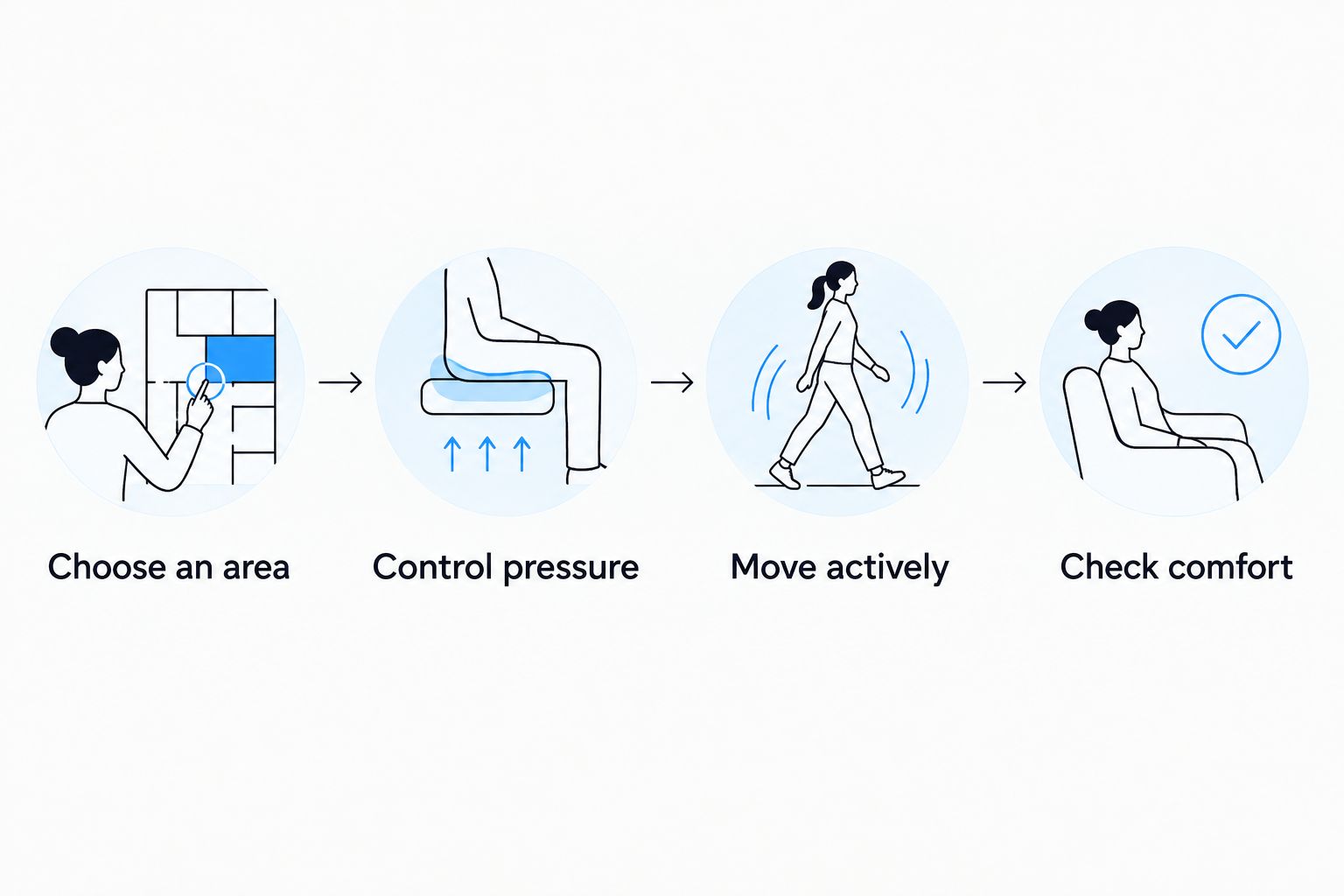
Build your 2026 routine around a simple sequence. Rolling is preparation; the movement afterward tells you whether the session fits your needs.
- Choose an area. Pick a broad muscle area that feels comfortable to roll. Avoid direct pressure on joints, your neck, and your lower back.
- Control pressure. Keep supporting weight through your hands, feet, or opposite leg. Start with a suggested 30-second pass, not a test of endurance.
- Move actively. Put the roller aside and practice a comfortable movement related to that area, such as an unloaded squat after thigh work.
- Check comfort. Notice your breathing, comfort, and control. Stop if you feel sharp pain, tingling, or numbness.
For a brief starting session, choose 2 muscle areas and set a 3-minute timer for rolling plus movement. These are suggested boundaries, not a required dose. Adjust the session around comfort rather than forcing yourself to fill the timer.
Pliability mobility routines give you a guided option for the movement portion of your day. Keep the roller optional: you can build a consistent practice without buying every recovery accessory.
Which foam roller should you choose?
Choose a smooth, medium-density foam roller if you are undecided. It is the strongest default in this 2026 guide because consistent contact lets you focus on positioning and pressure control.
Choose soft foam if pressure is your main barrier. Choose compact foam if your roller must fit in a bag. Save firm, textured, and vibrating options for a preference you can name—not a promise that more intensity means more progress.
Before buying, check the actual dimensions, construction, cleaning guidance, and safety instructions. Your roller should fit your body, your storage space, and your routine.
FAQ
What's the best foam roller for beginners?
A smooth, medium-density foam roller is the default choice for beginners who tolerate ordinary rolling pressure. Choose soft foam instead if the contact makes you tense up, and support part of your weight with your hands or feet.
Is a hard foam roller better than a soft one?
A hard foam roller is not automatically better than a soft one. Choose the firmness that lets you control pressure and breathe comfortably; harder contact is not a reason to push through pain.
Is a textured foam roller better than a smooth roller?
A textured foam roller suits localized contact, while a smooth roller gives more consistent contact. Choose texture because you prefer that pressure pattern, not because raised ridges guarantee a better result.
Do I need a vibrating foam roller for recovery?
You do not need vibration to use a foam roller in a recovery routine. A vibrating model adds a sensation and requires power, but you still need to manage body position and pressure.
Should I foam roll before or after a workout?
You can include comfortable rolling before or after a workout, but its place depends on the purpose of your routine. Before training, follow it with active movements that prepare you for the session; afterward, do not treat rolling as a replacement for rest.
Can I foam roll my lower back?
Avoid rolling directly on your lower back. Choose comfortable muscle areas instead, and seek qualified guidance if back pain, an injury, or unexplained symptoms are driving your decision to roll.
Can a foam roller replace mobility training?
A foam roller does not replace mobility training. Rolling applies pressure; mobility practice includes actively moving through and controlling your available range. Pliability mobility routines offer guided movement without making a roller essential.
One last thing
Before your next rolling session, choose the movement you will practice afterward. An unloaded squat, a comfortable ankle movement, or another familiar exercise gives the session a purpose beyond finding tender tissue.
The useful question is not how much pressure you endured. It is whether you can move comfortably and stay in control. If a roller repeatedly gets in the way of that, change the pressure, change the tool, or leave it out.